
Europe's Electric Freight Future Depends on Corridors, Not Just Ships
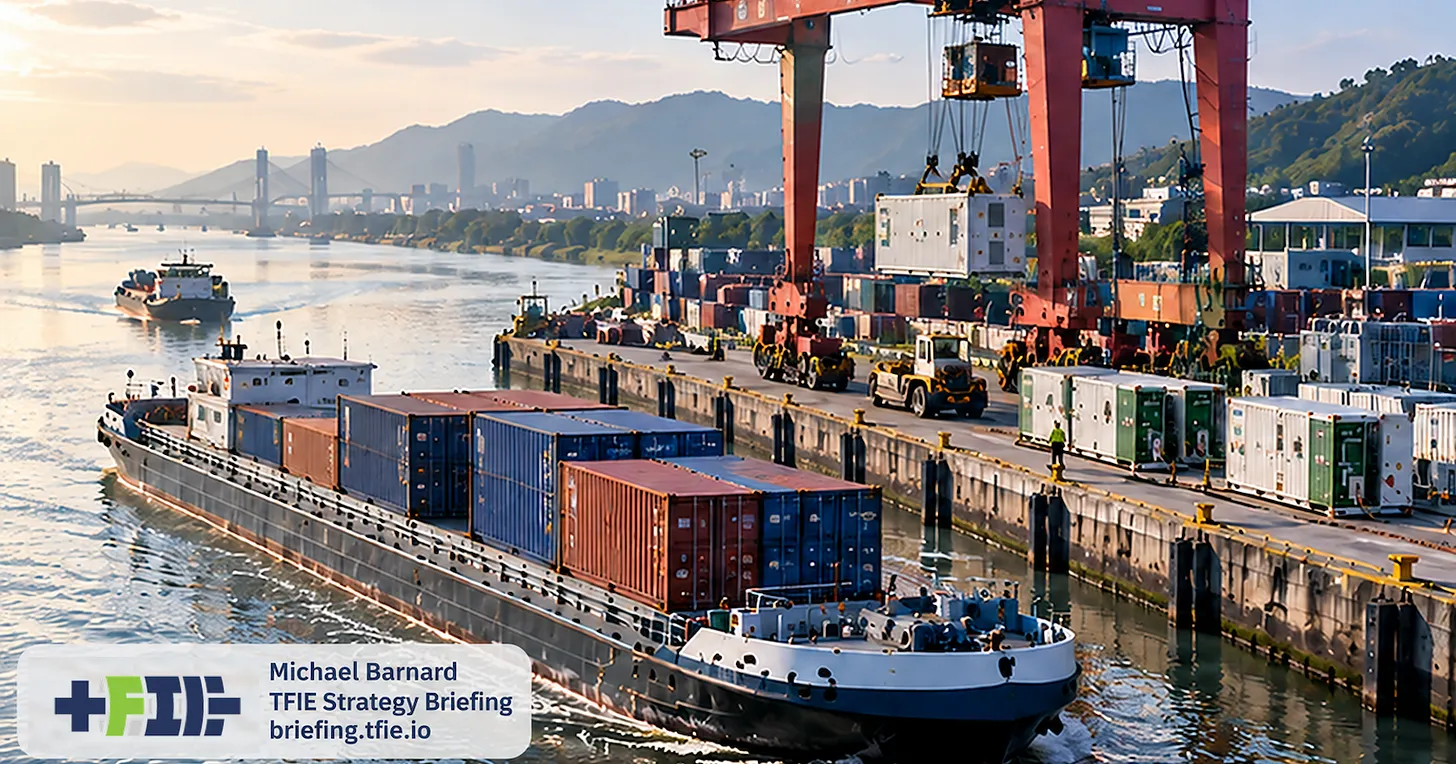
Electric cargo vessels tend to dominate the conversation because the ship itself is the tangible part of the story. Swap a diesel drivetrain for motors and a large battery pack, and the path to cleaner inland shipping looks deceptively simple. Repeatable routes between fixed terminals make inland waterways a natural fit, since batteries can be charged or exchanged on a predictable schedule in a way that oceangoing vessels cannot match.
China’s approach shows why focusing on the vessel alone misses the bigger picture. Its electric shipping sector increasingly pulls together ports, battery makers, utilities, logistics firms and financiers alongside the shipyards themselves. The notable shift is not merely that more battery-powered vessels are appearing on Chinese waterways, but that companies are starting to build the infrastructure and commercial ties those ships need to function as real freight operations. Hubei province’s Thousand Sails programme, for example, links ports, builders, energy companies and financial institutions around demonstration routes, while CATL has committed to work on electric vessels, battery leasing, charging and swapping, renewables, storage and microgrids on the recently opened Pinglu Canal.
The numbers deserve careful reading. Research identified 42 electric cargo ships in China by the end of 2025, up from just four in 2022, while a separate tally of nearly 900 battery-equipped vessels at the end of 2025 includes ferries, passenger boats and harbour craft. Hubei’s own target of 1,000 green and intelligent inland vessels by 2030 is a broader programme goal still. Forty-two freight ships is a modest start, yet the surrounding system is being developed in parallel.
Battery swapping is the clearest example of why coordination matters. An inland vessel can trade a drained containerized battery for a charged one rather than idling while a large onboard pack recharges, keeping the ship earning while the battery charges ashore at a gentler rate. That only pays off if terminals hold enough charged packs, cranes and staging space can move them without disrupting cargo handling, power is available on demand and enough vessels share the network to make it worthwhile. The Netherlands has run interchangeable battery containers on inland vessels since 2021, but its partners have reported operating costs still sitting above conventional shipping, so the real test is utilisation rather than technical feasibility.
That is where European policy can stumble. A charger without a viable route, or an electric ship without dependable energy on its schedule, can leave a technically sound demonstration commercially stranded. The smarter sequence starts with the freight itself: identify cargo flows likely to persist through the energy transition, such as construction materials, agricultural goods, chemicals, industrial inputs, scrap and containers. Because coal, petroleum and refinery-linked cargoes will shrink over time, mechanically electrifying every existing route risks sinking money into services that are already fading. Once a route is chosen, the whole service has to be in scope, with cargo customers committing volumes, terminals reserving space and windows, utilities planning grid capacity and someone financing and maintaining the batteries, insurers and regulators included.
For investors, that reframes the opportunity from selling batteries once to selling energy as a recurring service. Leasing, shared battery pools, charging, maintenance and availability guarantees can shift capital costs off individual shipowners while giving specialist providers steady revenue, though the model only works at high utilisation. China enjoys structural advantages here, pairing vast battery manufacturing with shipbuilding, inland freight demand and institutions able to coordinate across sectors. Europe cannot copy those assumptions wholesale, but it can treat the pieces as one freight system rather than a pile of pilots. The most credible response would be a handful of well-designed electric freight corridors where all parties are identified before major capital is committed, with public support solving the first-mover problem but funding tied to credible services rather than equipment counts. Counting ships says something about technology adoption and counting chargers says something about infrastructure, yet neither reveals whether freight is moving reliably at a price customers will keep paying once the demonstration money runs out.
What do you think?