
Citroën Dresses Up the 2CV Fourgonnette as an Electric Van Concept
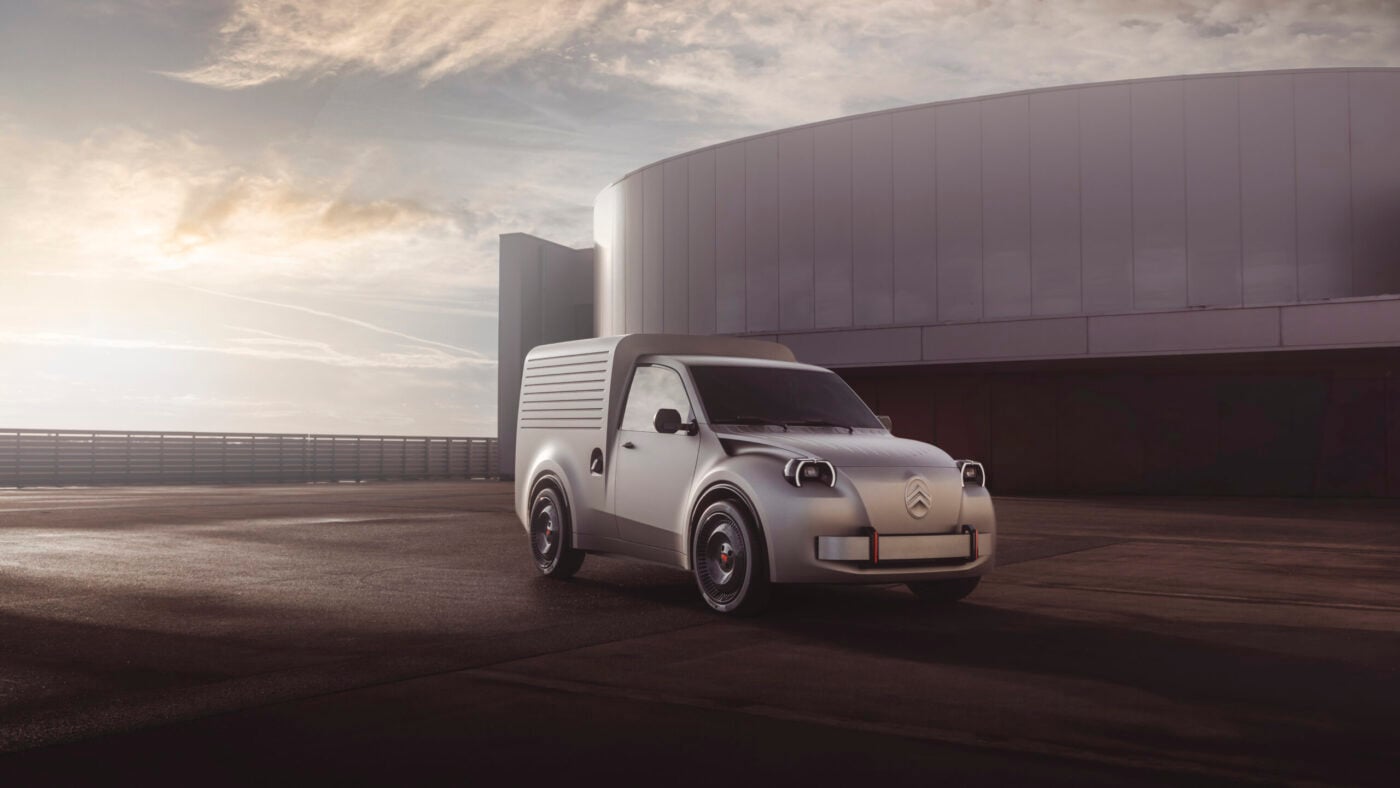
Citroën is using the 2026 Paris Motor Show to present the 2CV Fourgonnette Concept, a battery-electric take on the historic “boxy duck” delivery van. The study borrows its thinking from the equally fresh 2CV Concept that shares the stand, carrying that model’s simple, lightweight and comparatively affordable electric formula over to a small commercial vehicle. Citroën is careful to frame the Fourgonnette as a design study, and no production decision has been taken.
The concept keeps the unmistakable shape of the original 2CV Fourgonnette — the Kastenente, as it is known in Germany — and applies a battery-electric work-vehicle philosophy built around the easiest possible operation, everyday practicality and deliberately pared-back technology. What Citroën has not published is just as telling: there are no figures for battery capacity, driving range, charging output, payload or load volume, and no date for a possible series version. For fleet buyers those numbers are usually the deciding factor, so for now the Fourgonnette reads mainly as a design and concept statement.
Underneath the idea sits the standard 2CV Concept, also shown in Paris. That car measures roughly 3.76 metres long and is conceived around low weight, minimal equipment and a relatively modest battery. For a potential production version, Citroën has pointed to a starting price in the region of €15,000 and a launch by 2028, with the model positioned between the Ami and the C3. It is also meant to satisfy upcoming European rules aimed at very compact and affordable battery-electric cars. As with the van, Citroën has not disclosed battery, power or range specifics for the passenger car.
The commercial angle is where the Fourgonnette gets interesting. Rather than chasing long ranges and big battery packs, the concept leans on light weight, uncomplicated hardware and low cost — a package that could fit the short, predictable duty cycles of urban delivery fleets, tradespeople and other business users. Whether it ever reaches showrooms is another matter: Citroën explicitly labels the vehicle a design study and says it offers no near-term production outlook.
The strategic question left open is whether Citroën will eventually stretch its new 2CV idea into a battery-electric light commercial vehicle for real. If the promised emphasis on low weight and low cost does carry over to a series-production LCV, the Kastenente could carve out a niche where today’s electric vans are simply too big and too expensive for the job at hand.
What do you think?