
Chery Sets Sights on 70% Overseas Build Share by 2030
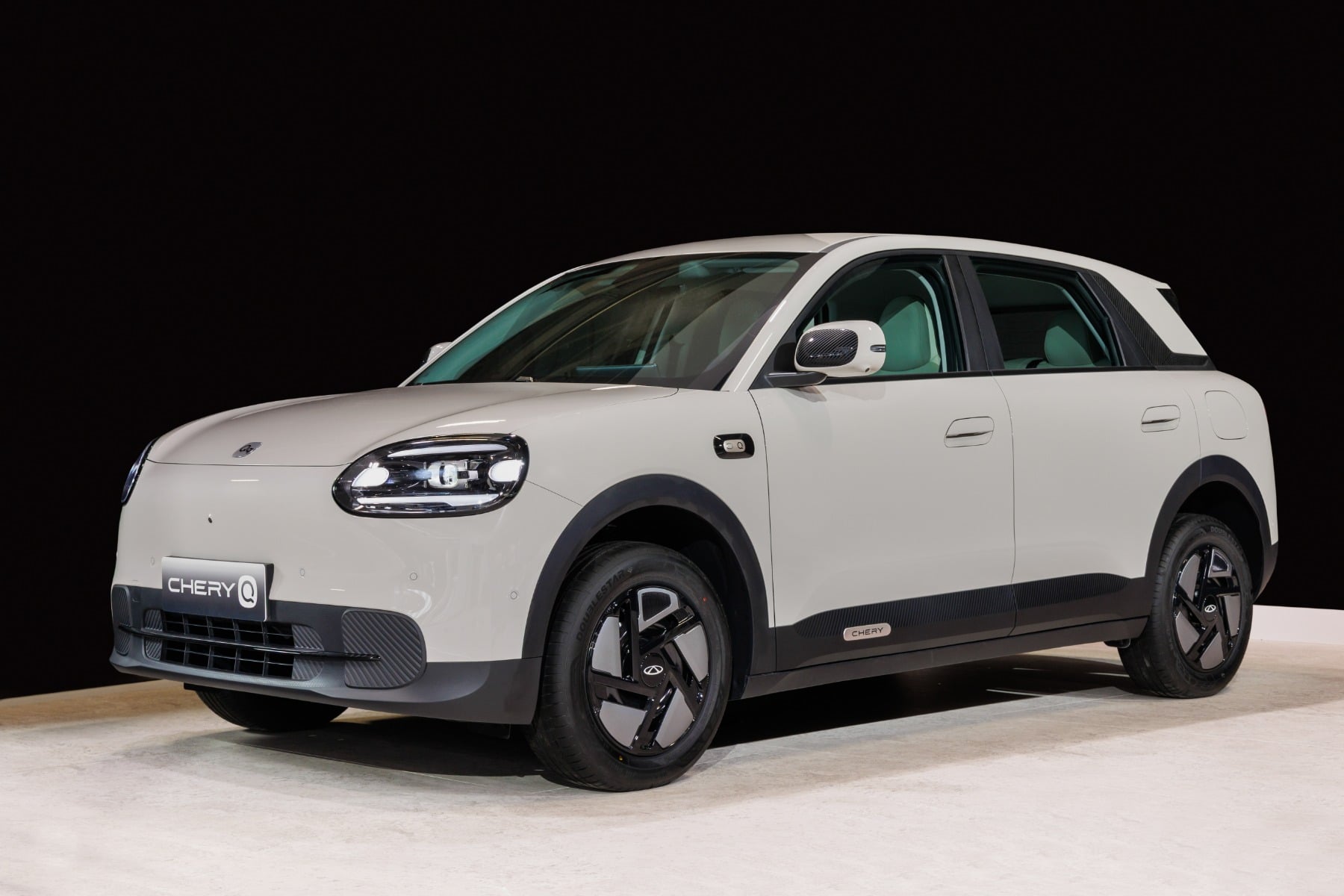
Chery wants most of the cars it sells abroad to come out of factories outside China. Executive Vice President Zhang Guibing laid out the timeline at the company’s Wuhu headquarters: roughly half of overseas sales are already built locally in 2026, that figure should top 50% before the year is out, then climb to 60% in 2027 and reach 70% by 2030.
The Localisation Ladder: ~48% overseas-built in 2026 · 50%+ by year-end · 60% in 2027 · 70% by 2030
The logic is simple enough. Tariffs are the wall, and factories are the door. Zhang framed the push as a mix of job creation and partnership with local technology players rather than a pure tariff workaround. “Step by step, we are trying to localise production and rely mainly on local manufacturing,” he said.
Four Main Bases, Several Kit Plants
Chery’s overseas footprint already rests on four full manufacturing hubs, plus kit assembly operations in Indonesia, Thailand and Pakistan. Local partners typically run the plants:
- Brazil: CAOA handles flex-fuel and hybrid SUVs aimed at South America
- Egypt: GB Auto supplies North African markets
- Malaysia: Inokom runs the local operation, with right-hand-drive EV and hybrid output centred on Thailand
- Kazakhstan: part of the four-base core network
What ties many of the newer sites together is where they came from. Chery bought Nissan’s Rosslyn facility in South Africa in January 2026, reopened it that July and expects vehicles to roll off the line in mid-2027. In Spain, a tie-up with Ebro at Nissan’s former Barcelona plant should see pre-series builds of the Jaecoo 5 BEV before year-end, with volume production following in the first quarter of 2027.
Turning a Rival’s Surplus Into a Route Around Tariffs
The Nissan link goes further. Chery has signed a memorandum of understanding to look at contract manufacturing at Nissan’s Sunderland plant in the UK, though talks are still ongoing. It’s an opportunistic play: Nissan is in the middle of a restructuring that will close seven of its 19 global factories and cut up to 20% of its workforce.
Europe’s trade policy is adding urgency. EU duties on China-built EVs reach up to 45%, with Chery facing 41.3%, and the UK has signalled it may follow a similar path. Brussels’ forthcoming Made in Europe rules would also favour vehicles assembled inside the bloc — so building locally keeps Chery on the right side of measures drawn up to contain Chinese brands.
Chery isn’t alone in this. BYD is pursuing the same playbook with its Hungarian plant and has said it needs three European assembly sites plus a local battery factory. Leapmotor and Geely are leaning on Stellantis and Ford respectively to share capacity at existing European plants.
The strategy reaches Asia too. Chery plans to enter Japan’s kei segment in 2027 under the Emta brand, initially importing from China while weighing Japanese production from 2030. Backing the whole network is a June agreement with CMA CGM and its Ceva Logistics subsidiary covering finished vehicles, parts and EV batteries across Europe, Asia-Pacific, Latin America and the Middle East.
And the company is building infrastructure alongside the cars. Fast-charging and energy storage stations are slated for markets including the UK, Spain and Thailand from 2027. Chairman Yin Tongyue, speaking at the Rosslyn reopening, put it plainly: wherever Chery invests, it will try to integrate into the local economy and community.
For European buyers, the practical upshot is more Chinese-badged metal arriving with a European postcode attached — and a quieter ride through the tariff barrier.
Source: Automotive World
What do you think?