
BYD Patent Would Submerge Battery Cells Directly in Cooling Liquid
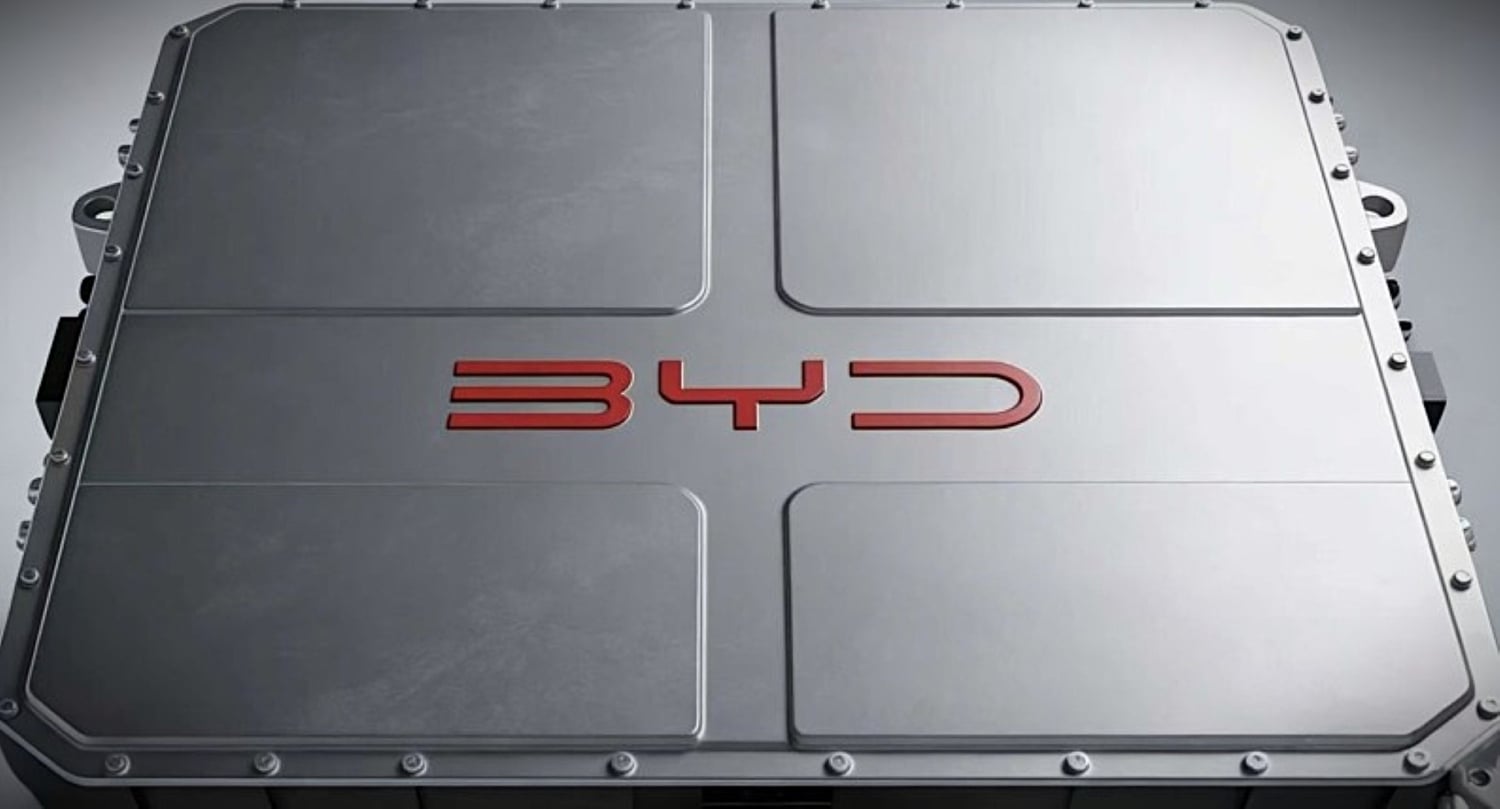
BYD has filed a patent for a battery pack design that places individual cells directly into a circulating cooling liquid, an approach that would mark a significant departure from the indirect cooling methods used in most electric vehicles today.
In conventional liquid-cooled packs, coolant flows through channels, plates, or cold plates that sit adjacent to the cells. Heat has to travel through several layers of material before it reaches the fluid, which slows down heat transfer. BYD’s patent instead proposes immersing the cells themselves in a dielectric coolant, putting the liquid in direct contact with the cell surfaces. That setup removes the thermal barriers between the cell and the cooling medium, allowing heat to be pulled away more quickly and more evenly across the pack.
The core problem the design targets is thermal management. Fast charging, high-performance driving, and hot climates all push lithium-ion cells toward elevated temperatures, and uneven temperatures between cells can accelerate degradation and reduce pack lifespan. Direct liquid immersion is one way to address both the peak temperature and the temperature spread, because every cell is surrounded by the same cooling medium rather than relying on a shared plate whose effectiveness varies by distance.
Placing cells in liquid also raises engineering challenges that the patent appears to address. The coolant must be electrically insulating so it does not short the cells, and it must be compatible with the materials used in the pack over many years of operation. Sealing, weight, and cost all become more complex when the fluid is in direct contact with the cells rather than confined to dedicated channels. How BYD plans to solve those trade-offs is the kind of detail that patents typically cover through specific claims about the pack structure and the coolant path.
For BYD, the filing fits a broader pattern of vertical integration in battery technology. The company already produces its own cells and packs, and has been a major proponent of the blade-style cell format. A direct-immersion design, if it ever reaches production, could give the company another lever for improving charging speed and durability without changing cell chemistry. For now, the patent is a signal of the direction its engineers are exploring rather than a confirmed product plan, and no timeline or production commitment has been announced.
What do you think?