
Beyond the Badge: BYD's Empire Rests on Batteries, Not Just Cars
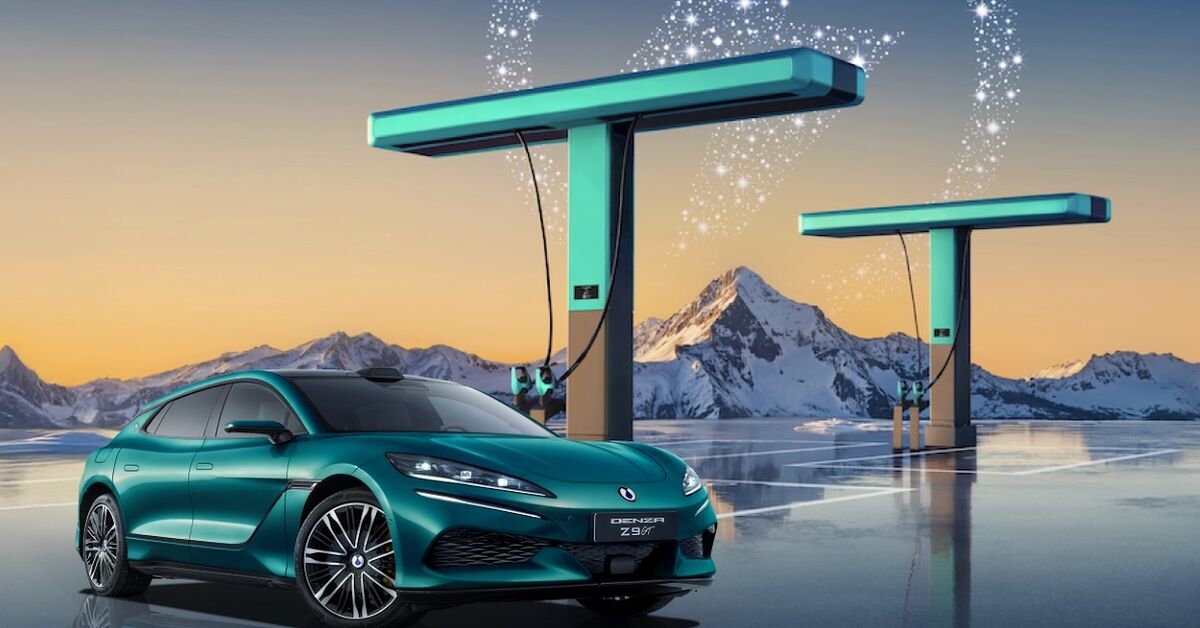
Most consumers know BYD as an electric vehicle manufacturer. That label, while convenient, captures only a fraction of what the Shenzhen-based conglomerate actually does. Founded in February 1995 by Wang Chuanfu as a rechargeable battery maker, the company has spent three decades expanding into energy storage, solar panels, semiconductors, forklifts, and even full monorail systems. The automotive division, established in 2003, is merely the most visible branch of a far broader industrial tree.
The company’s origins lie in a strategic opening. Wang, formerly a vice supervisor at Beijing’s Nonferrous Research Institute, recognized that Japanese battery giants were abandoning nickel-cadmium production in favor of more advanced chemistries. BYD seized that niche using a labor-intensive model rather than expensive automation, undercutting Japanese competitors’ unit costs by a factor of five to six. A 1996 supply order from Sanyo signaled its global arrival, and by July 2002 the firm had overtaken Sanyo to control 65% of worldwide NiCd battery output.
Today, BYD’s Blade Battery powers not only its own EVs but also rivals’ products. The pack has survived nail penetration testing and withstands compressive loads up to 445 kN, equivalent to a 45-ton truck, with warranties covering up to 621,371 miles in some markets. Its subsidiary FinDreams Battery held 17% of the global EV battery market in 2024, second only to CATL. Toyota’s China-only bZ3 sedan uses BYD cells, and regulatory filings indicate Tesla has fitted BYD batteries in Model Y units.
The energy storage arm, launched in 2008, has deployed projects across 110 countries. In 2025, BYD captured the top spot in global battery energy storage system shipments with over 60 GWh, pushing Tesla into second place. According to Benchmark Mineral Intelligence, BYD claimed 13% of the global BESS market versus Tesla’s 10%, with Tesla shipping 46.7 GWh that year. The company’s SkyRail monorail venture further illustrates its reach: a five-year, 1,000-engineer R&D effort costing over €600 million that produced a transit system priced at roughly one-fifth of a subway, with lines operating in Shenzhen and São Paulo.
Financially, BYD’s 2025 net profit reached CNY 32.62 billion (about $4.72 billion), outperforming Tesla by 1.25 times while generating 1.23 times the revenue and selling 2.81 times as many vehicles. However, revenue growth slowed to 3.46% — the weakest in six years — and net profit fell 18.97%, the first annual decline in four years, attributed to a domestic price war. Exports surpassed one million units for the first time, jumping 145%, and overseas operations now account for 38.65% of revenue. For investors, the real story lies in segment breakdowns filed under 002594.SZ and 01211.HK, where battery and handset revenue reveal the full picture — and where U.S. regulatory barriers looming for 2027 and 2030 will determine how much of this empire reaches American roads.
What do you think?