
A2Z Joins Indonesia's First BVLOS Food Delivery Drone Trial in Bali
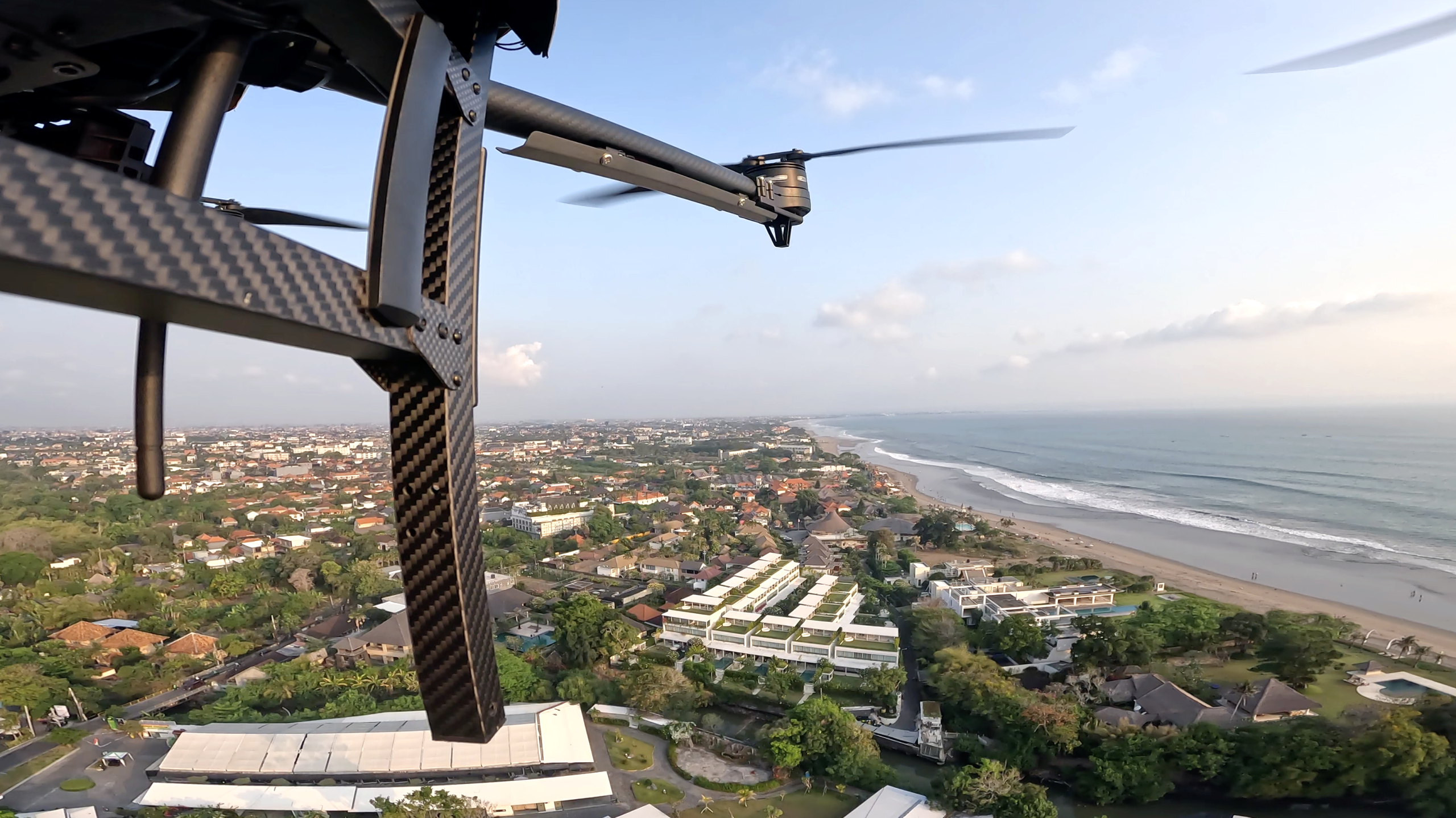
A2Z Drone Delivery will serve as the technology partner for a commercial drone delivery pilot in Bali, Indonesia, marking the country’s first beyond-visual-line-of-sight (BVLOS) food delivery trial, according to the company. The operation is being run by drone services provider SKYY Network alongside Grab Indonesia, with orders placed through the Grab app and delivered by air to Nuanu Creative City from Café del Mar Bali.
At the centre of the trial is A2Z’s Longtail Dual delivery aircraft, chosen for its twin-battery setup. The design allows the drone to keep flight control on a single battery if one power system fails, an important safety margin for flights that pass over populated areas. Missions are supported by A2Z AirDocks, which handle automated launch, recovery and recharging between sorties, keeping the aircraft cycling without manual intervention.
The route sits in controlled airspace linked to Bali’s Ngurah Rai International Airport, and the partners are studying how local terrain, weather and patchy cellular coverage affect operations. Indonesia’s Directorate General of Civil Aviation issued the certificate allowing the flights, and the programme has gone through a Specific Operations Risk Assessment (SORA) — the framework used to gauge risk in commercial drone operations.
Beyond proving that drones can fly the route, the pilot is designed to produce operational data on infrastructure needs, safety, customer experience and how airborne deliveries mesh with ground-based logistics. Grab has framed the drone element as a complement to its existing delivery network rather than a replacement for its driver partners.
A2Z CEO Aaron Zhang said the operating environment is especially demanding, citing constant high winds, complex shared airspace and flights over populated zones. Proving the service can run safely and consistently, he said, would be solid evidence for scaling drone services across Indonesia. The company also sees the AirDock network as a foundation that could later extend to emergency response, offshore logistics, port operations and inspection work.
What do you think?