
Drones Take to the North Sea: Ørsted and Skyports Test Cargo Flights to Offshore Wind Turbines
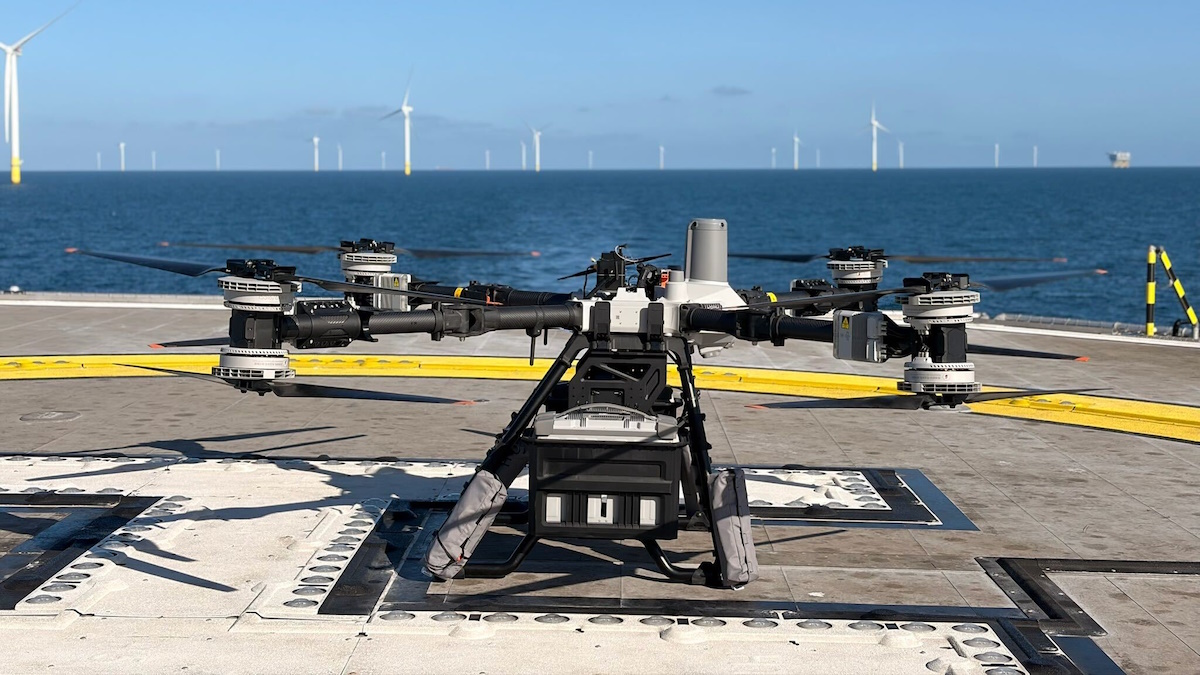
Offshore wind maintenance has long depended on service vessels shuttling people and parts between turbines, but Ørsted and Skyports Drone Services have just wrapped up a four-week experiment that suggests some of that maritime legwork could be handled from the air instead. The trial took place at the Hornsea 2 wind farm in the North Sea, where large cargo drones carried tools, spare components and other materials straight from a service operations vessel (SOV) to individual turbines.
The logic behind the exercise is straightforward. Every trip a vessel makes between turbines costs time, fuel and money, and it also puts crew members in situations that carry operational risk. By letting drones handle routine resupply, the two companies believe vessel movements could be cut back, safety margins improved and turbine uptime increased. Each maintenance kit flown during the trial weighed between 55kg and 65kg and was tailored to a specific job, packed into cargo bags and delivered ahead of the technicians who would later carry out the work. When a task was finished, the drone flew the bags and equipment back to the SOV.
A notable technical step was Skyports’ automated cargo handling setup. Rather than having ground or vessel personnel manually attach loads before each flight, the system uses an automatic hook mounted on the drone to collect cargo. According to the partners, this cuts down on handling requirements and pushes more of the delivery sequence toward full automation.
The trial drew on teams spanning aviation, safety, warehousing and offshore operations, all working inside the UK Civil Aviation Authority’s regulatory framework. Flights were planned and tracked with weather, airspace and offshore conditions factored in. As part of the programme, the team also completed a beyond-visual-line-of-sight (BVLOS) flight inside the wind farm, with a drone covering roughly 4km while being coordinated and monitored from a specialist vessel.
Ørsted says the system supported both scheduled maintenance and reactive tasks, allowing equipment to reach turbines quickly when needed. Because generation could continue while deliveries were underway, the approach also trimmed maintenance-related downtime. Beyond the operational savings, the company points to potential ergonomic and environmental benefits: less manual lifting for offshore technicians and fewer vessel trips, which could translate into lower fuel consumption and reduced operating costs over time.
What do you think?