
Samson Switchblade: The $170,000 Flying Car Owners Assemble Themselves
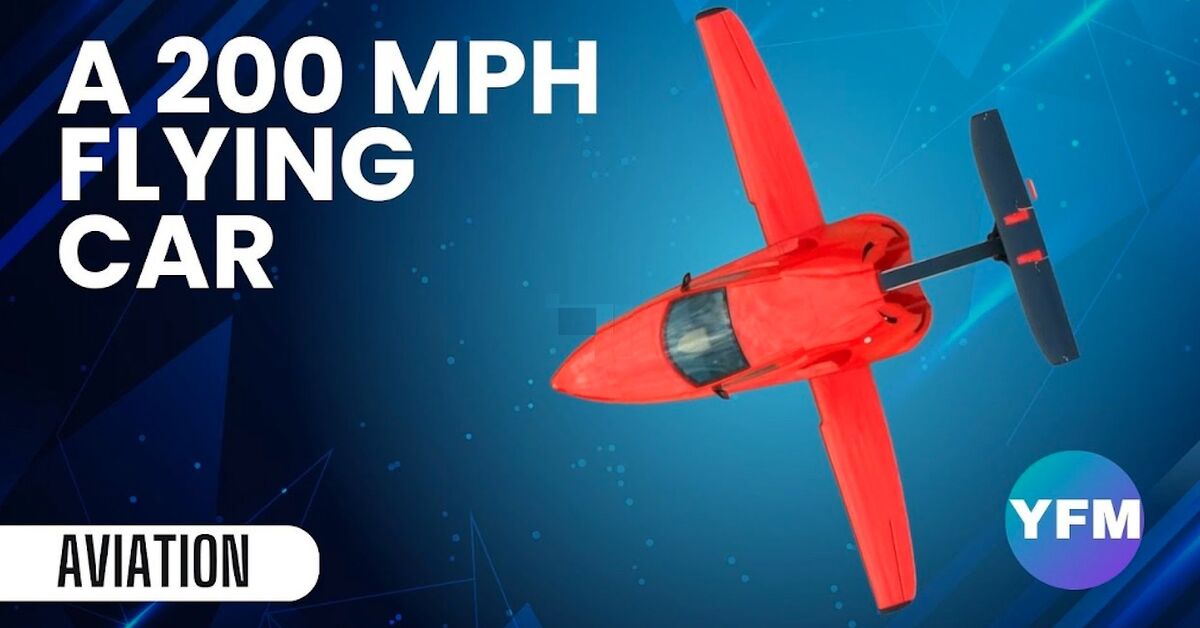
Most attempts at a road-legal aircraft have ended up as hangar curiosities, but the Samson Switchblade is at least trying to clear a hurdle that has tripped up flying-car concepts for decades: being usable as a car. The vehicle is a three-wheeled, street-legal machine that converts into an aircraft in under three minutes, letting an owner leave the garage, drive to a nearby airfield, deploy the wings and tail, and take off without loading anything onto a trailer.
On paper, the numbers lay out two very different personalities. In drive mode the Switchblade is claimed to reach up to 100 mph with a range of roughly 450 miles, while flight mode pushes the ceiling higher, with speeds up to 200 mph and a maximum altitude of 13,000 feet. It seats two side by side and carries a payload of 575 pounds. A hybrid drive system, regenerative braking and reverse thrust while airborne round out the mechanical package.
The catch is where the Switchblade sits in regulatory terms. It falls under the Experimental category, which means the owner is responsible for building at least 51 percent of the aircraft, a process Samson supports through its Builder Assist Program. Pricing is listed from about $170,000. That arrangement puts the Switchblade in a niche occupied by kit aircraft rather than Turnkey certified planes, and it explains why the machine is aimed at aviation hobbyists, regional commuters, recreational pilots and early adopters who are comfortable turning wrenches before they turn the ignition.
Flying cars have a long history of ambitious promises and slow delivery, and the Switchblade’s DIY component is the clearest sign that this one is not a conventional showroom product. Buyers are not simply purchasing a vehicle; they are signing up for a project. Whether that appeals depends on how much someone values the idea of skipping traffic from above versus the reality of construction, certification and maintenance on something that has to be both roadworthy and airworthy.
The pitch rests on a simple fantasy: a garage-to-runway machine with no trailer, no hangar shuffle and no second vehicle. For now, the Switchblade remains a proposition for the mechanically committed rather than the mass market, and the gap between production and promise is exactly where most flying-car stories have stumbled before.
What do you think?