
1951 Plymouth Cranbrook Club Coupe: A Rare Find in Show-Ready Shape
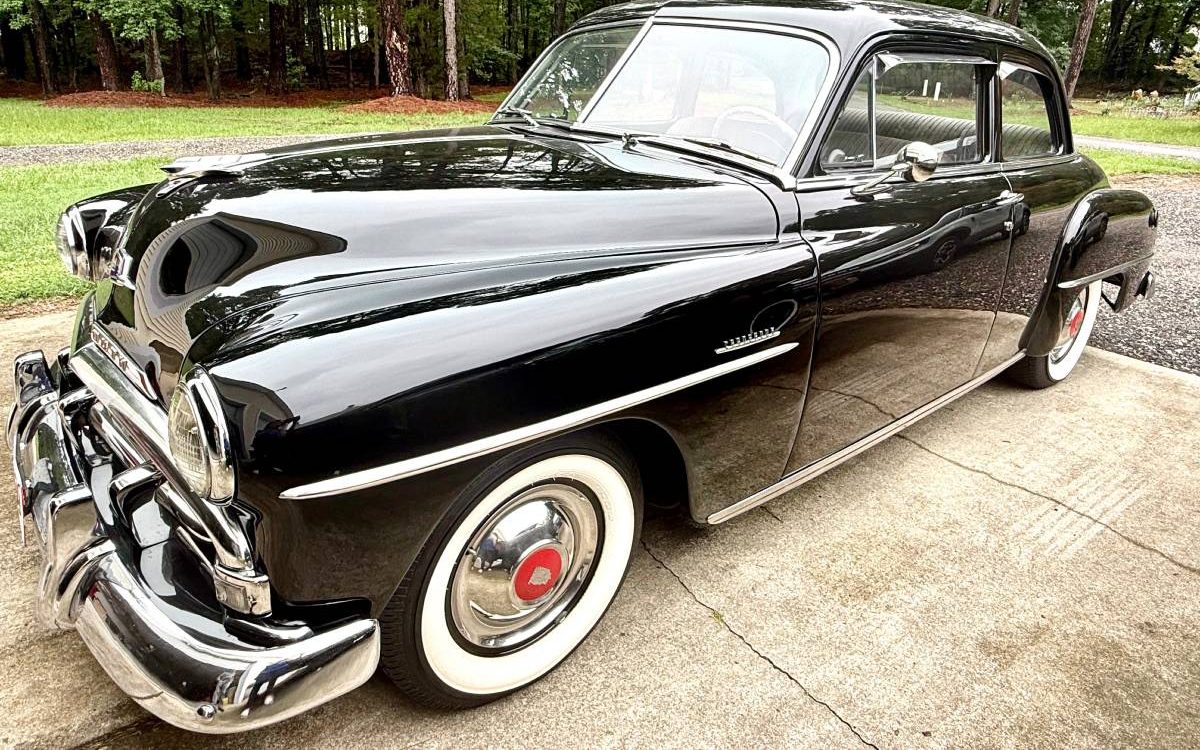
Plymouth may not draw the same collector attention as Chevrolet or Ford from the early 1950s, but every so often a survivor-quality example turns up that demands a second look. This 1951 Cranbrook Club Coupe, currently offered for sale in Raleigh, North Carolina with an asking price of $16,500, is exactly that kind of car — a seldom-seen model presented in what appears to be freshly restored condition inside and out.
The Cranbrook sat at the top of Plymouth’s 1951 range, above the Concord and Cambridge, and was available as a two-door coupe or convertible, a four-door sedan, and a pillarless hardtop that the brand marketed as the Belvedere. Plymouth built roughly 124,000 Club Coupes that year as part of a total production run of about 611,000 units, yet these cars surface far less often today than their cross-town rivals. The listing itself is thin on written detail and exterior photography, though the seller describes the paint and interior simply as “nice” — a modest claim for what the images suggest.
Under the hood sits the era’s familiar 217 cubic-inch flathead inline-six, rated at 97 gross horsepower and paired exclusively with a column-shifted three-speed manual. The seller reports the car “runs and drives beautifully,” and the odometer shows 102,000 miles, which raises the question of whether the drivetrain has been refurbished at some point. The interior photographs are extensive and show a cabin free of visible wear, soiling, or signs of age, including a factory radio and a seller claim that all lighting and instrumentation remain functional.
Early-’50s Plymouths have slipped down the popularity ladder as collector tastes shift toward later decades, which makes a restoration of this caliber something of a labor of love. Whether the market will reward that effort at the asking price remains an open question, but for a buyer who appreciates the overlooked corners of American car history, this Cranbrook stands out.
What do you think?