
WeRide Signs Allianz and Ping An to Insure Its Robotaxi Expansion
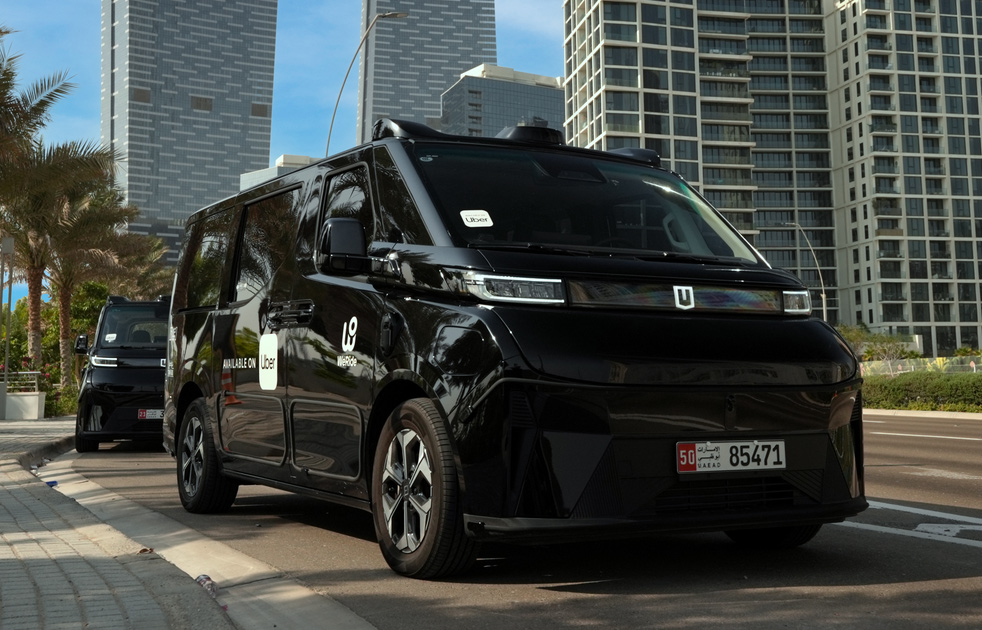
WeRide is putting an insurance backbone under its driverless business before it leaves familiar ground. The Chinese autonomous driving firm has set up a global insurance programme with Allianz Insurance Singapore and Ping An Property & Casualty Insurance as founding members, with coverage designed to eventually stretch across tens of thousands of vehicles.
The timing says a lot. WeRide already runs robotaxis in China, the Middle East and Southeast Asia, and Europe is next on the map. Each market brings its own rules, its own liability questions and its own price for risk — which is exactly what the new programme is meant to untangle.
What the policies will cover
The scope goes well beyond a conventional motor policy. According to WeRide, the partners will build cover around Level 4 operations:
- Motor and general liability for day-to-day driverless service
- Product liability, covering the vehicle and its autonomous systems
- Privacy and cybersecurity risks, a growing concern for any connected fleet
WeRide’s logic is straightforward: long-term contracts, pooled programmes and a larger fleet should push insurance costs down over time. Cheaper cover per vehicle means better returns per vehicle. That math matters for a company still far from scale.
Fleet snapshot: Roughly 3,600 vehicles in total · More than 1,800 of them robotaxis · Target coverage measured in tens of thousands
Singapore and the Gulf as proof points
Both insurers are already inside WeRide’s operations rather than watching from the sidelines. Allianz became the first insurer in Singapore to cover a fully driverless vehicle when WeRide’s Robobus began running on Sentosa. It now also insures robotaxis on the Ai.R service operated with Grab in Punggol — a service that had carried over 13,000 individual riders across 135,000km by October 2026.
Ping An, meanwhile, covers WeRide robotaxis in Abu Dhabi, Dubai, Beijing and Guangzhou. That includes trips booked through WeRide Go and Uber, so the policies are being tested on real commercial rides, not pilot loops.
Jennifer Li, WeRide’s Chief Financial Officer and Head of International, framed the deals as more than a procurement exercise. “Our partnerships with leading insurers reflect the strength of WeRide’s technology,” she said, adding that insurance is a critical part of the infrastructure needed to bring autonomous driving to scale globally.
Why insurers matter more than another funding round
For robotaxi operators, insurance has long been the quiet bottleneck. Actuaries need data before they can price driverless risk, and fleets need affordable cover before they can grow. By locking in two major insurers early and expanding coverage market by market, WeRide is effectively building a pricing track record as it goes.
The gap between ambition and reality is still wide, though. A fleet of about 3,600 vehicles — just over 1,800 of them robotaxis — is a small fraction of the tens of thousands the programme is meant to cover. Whether the cost curve bends as promised will depend on how quickly those numbers climb, and on how Europe’s regulators and insurers read the same risk data.
Photo: WeRide / Automotive World · Official Press Kit / Editorial (Editorial / Press Kit)
Source: Automotive World
What do you think?