
Volvo Enlists Nvidia for Hands-Free, Point-to-Point Driving
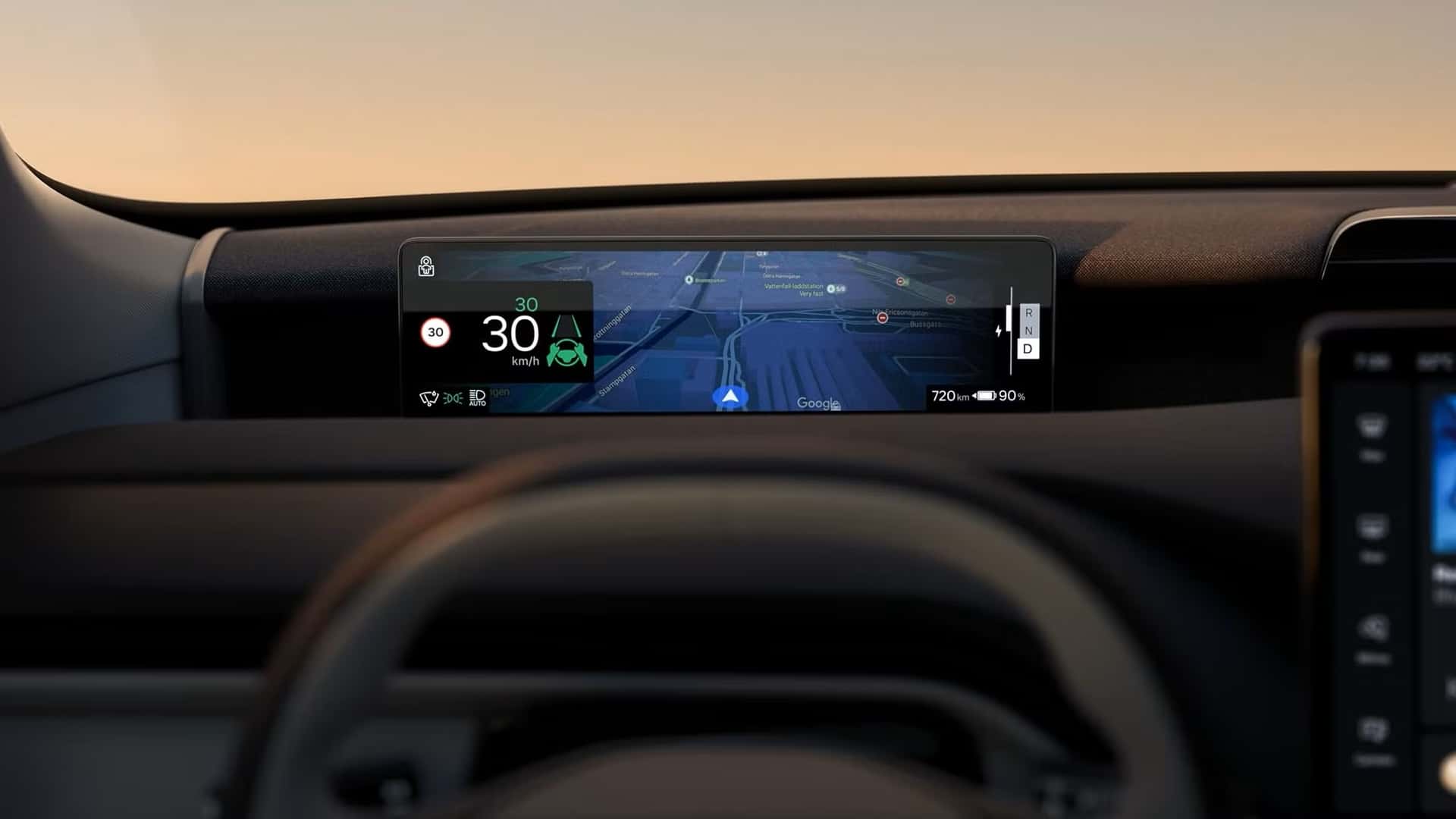
Volvo is teaming up with Nvidia to rebuild its driver assistance system from the ground up, aiming to introduce hands-free, point-to-point automated driving in its next-generation models by the end of 2030. The Swedish automaker, owned by China’s Geely, said the system will handle urban routes without requiring the driver to keep hands on the wheel — a significant step up from today’s Pilot Assist, which only works on clearly marked roads.
The setup leans on Nvidia’s Hyperion platform, a bundle of high-performance chips and a full sensor suite mounted around the vehicle. Volvo says the resulting system will deliver Level 2++ functionality, a designation not found on the SAE’s official levels chart, but one the company uses to describe an advanced system that can navigate stop signs, traffic lights and unprotected left turns without explicit driver input. Nvidia’s Ali Kani, VP and general manager of the automotive team, told The Verge that the system can interpret complex urban environments on its own. Crucially, it does not depend on pre-mapped areas to make decisions, similar in spirit to Tesla’s Full Self-Driving (Supervised) and Rivian’s Universal Hands-Free features.
Beyond hardware, Volvo will adopt Nvidia’s Alpamayo software stack, which uses “reasoning” models to work through road conditions and decide when to brake, accelerate or steer. Nvidia says this reasoning-based approach improves safety because the vehicle can handle rare situations it was never explicitly trained on, with each decision leaving a transparent, auditable trace. The initial configuration does not include lidar, though the platform can accommodate it if Volvo later chooses to add the sensor.
Looking further ahead, Volvo claims the AI-powered system will eventually enable “eyes-off and mind-off” driving, though the company has not disclosed a timeline or which models would get the feature first. That ambition puts Volvo’s long-standing safety reputation on the line. A successful rollout could draw more customers to a brand that has been under pressure lately, while a misstep could further dent its image as a trustworthy automaker.
Volvo’s current Pilot Assist bundles adaptive cruise control, steering assistance, lane change assistance and curve speed assistance, but it remains a far cry from true hands-free driving. By integrating a system that actively adapts to road conditions, Volvo is betting that Nvidia’s technology can close that gap — and keep it competitive in an industry where hands-free driving has become one of the most sought-after features.
Source: InsideEVs
What do you think?