
Volkswagen ID. Tiguan Debuts: The ID.4's Replacement Fixes Its Biggest Flaws
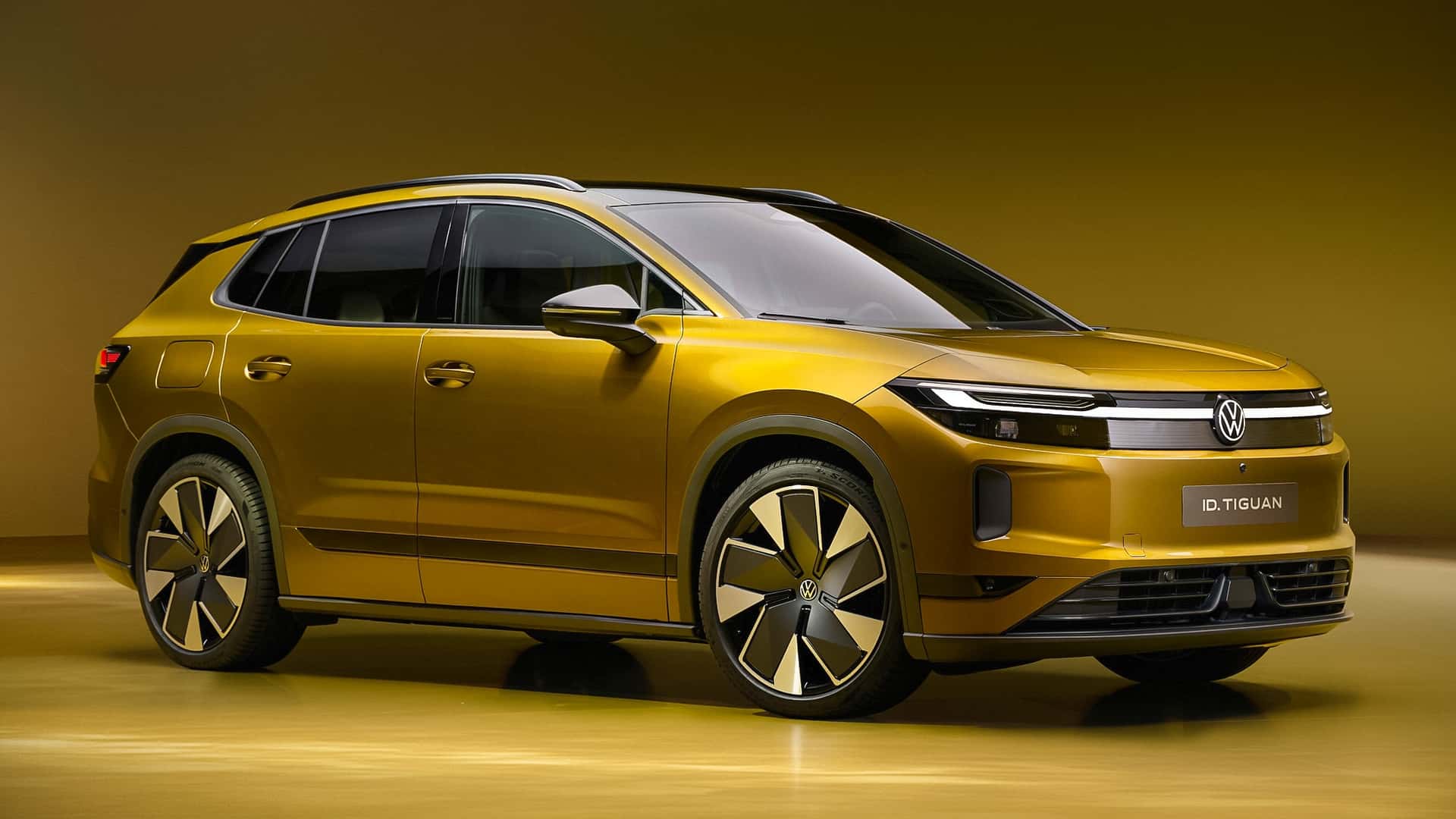
Volkswagen has drawn the curtain back on the ID. Tiguan, the compact electric crossover that takes over from the ID.4 and, in some markets, the ID.5. Sized closely to the model it replaces, the newcomer adopts a name buyers already recognize and arrives with a long list of corrections aimed squarely at the complaints that dogged its predecessor.
Launched in 2021, the ID.4 earned praise for cabin space and value, particularly during the period it was assembled in the United States and qualified for the federal EV tax credit. Yet owners and reviewers kept returning to the same sore points: glitchy software and a driving experience that felt half-finished. Volkswagen has clearly listened. The ID. Tiguan brings a reworked infotainment and software package with as many as three displays, including a dedicated screen ahead of the passenger for apps and entertainment. Both the driver’s cluster and the central touchscreen grow in size and offer a “retro” mode that renders virtual gauges inspired by classic Volkswagen dashboards. The same setup already appears in the new ID. Polo.
The most tangible change is the return of physical controls. Button pads now sit on the steering wheel, a row of hard keys lines the area beneath the main screen, and a volume dial is back on the center console, replacing the touch-sensitive sliders that frustrated drivers since launch. The widely criticized two-window switches have also been retired in favor of four conventional ones. Beyond ergonomics, the crossover adds features the ID.4 never offered: a modest 1.1-cubic-foot front trunk, one-pedal driving, and vehicle-to-load capability that draws power through an adapter plugged into the charge port.
Visually, the ID. Tiguan reads as a more grown-up interpretation of the ID.4, with a longer, more upright hood and body surfacing that signals a higher price bracket. Inside, R-Line versions step up to Alcantara or suede trim. European specifications mirror the old ID.4 formula: rear- or all-wheel drive paired with two battery options. The smaller 58-kWh pack delivers 187 horsepower in rear-drive form only, while the 77-kWh unit offers 282 hp with rear-wheel drive or 294 hp in 4Motion all-wheel-drive guise. Volkswagen quotes a maximum WLTP range of 600 kilometers (372 miles) for the rear-drive 77-kWh variant, a 26-km improvement over the ID.4’s European figure that hints at a possible range gain for American buyers.
Pricing opens at roughly 42,695 euros, about $49,000, close to what the current ID.4 commands across much of Europe. The European launch is scheduled for early 2027, and a spokesperson confirmed the model will reach the United States as well, with U.S.-specific details to follow after the overseas debut. The timing matters: Volkswagen halted U.S. production of the ID.4 earlier this year to free up capacity for gasoline SUVs, briefly leaving its American lineup without a mainstream electric option. The ID. Tiguan is positioned to fill that gap.
What do you think?