
VI-grade Taps Audi Dakar Chief to Lead Software Validation Drive
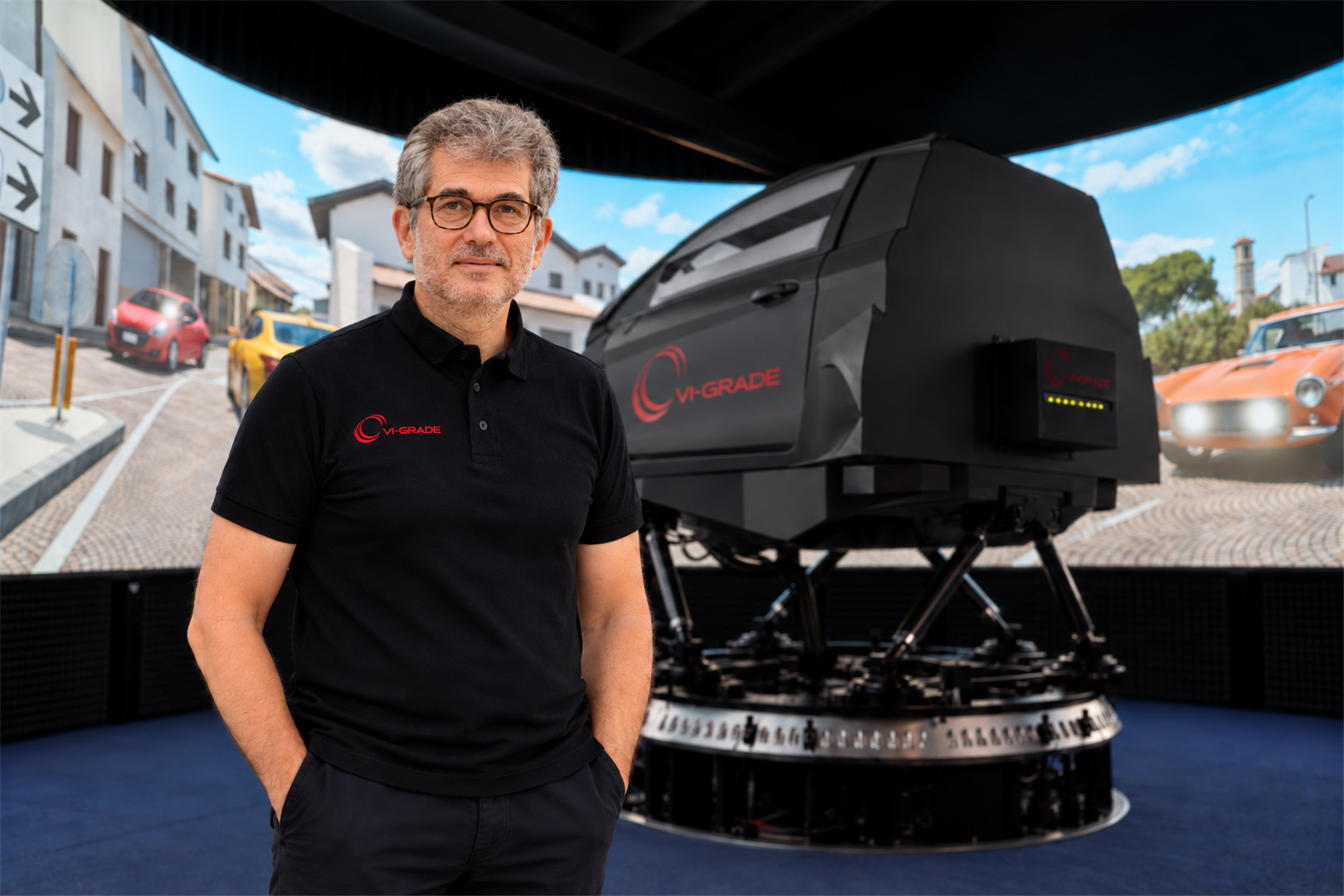
Simulation specialist VI-grade has turned to motorsport engineering leadership to sharpen its software-validation offering, appointing Dr Leonardo Pascali as Managing Director effective 1 October 2026. The company, which operates as the simulation arm of Hottinger Brüel & Kjær, is positioning the hire as a statement about where vehicle development is heading.
Pascali arrives with a résumé built around both competition and road-car engineering. Most recently he served as Audi Sport’s Dakar Technical Director, overseeing engineering on the RS Q e-tron that carried Carlos Sainz and Lucas Cruz to overall victory at the 2024 Dakar Rally. Before that he led chassis and vehicle technology at McLaren Automotive, and his earlier career included stints at Porsche and Centro Ricerche Fiat.
His mandate centers on a shift that has been quietly reshaping the simulation industry: as vehicles become increasingly defined by their software, the question of how to validate that software before production is becoming a competitive battleground. VI-grade wants hardware testing and human judgment folded into a single workflow, so automakers can exercise real electronic control units against virtual vehicle models through Hardware-in-the-Loop, while drivers assess the resulting behavior in a Driver-in-the-Loop setup. Physical testing would sit alongside those tools rather than apart from them.
In his own framing, Pascali argues that machines alone cannot settle whether a vehicle is good. Objective measurements and simulation are indispensable, he says, but so is the test driver’s read on how individual systems interact. That perspective, he adds, is what drew him to VI-grade’s human-centric approach, and he sees an opening to move the full driving experience into virtual development while letting customers reach firmer decisions earlier in the process. He speaks from experience — he has signed off on cars partly on the strength of his own driving impressions.
The appointment speaks to a broader reorientation among simulation providers, who are recasting their toolchains around software validation, driver assistance and energy management as software-defined vehicles move from concept to production reality. For VI-grade, the bet is that combining virtual models, real control units and human evaluation will prove more convincing to OEMs than any one of those elements alone.
What do you think?