
Vammo Reaches 10 Million Battery Swaps and Turns EBITDA Profitable
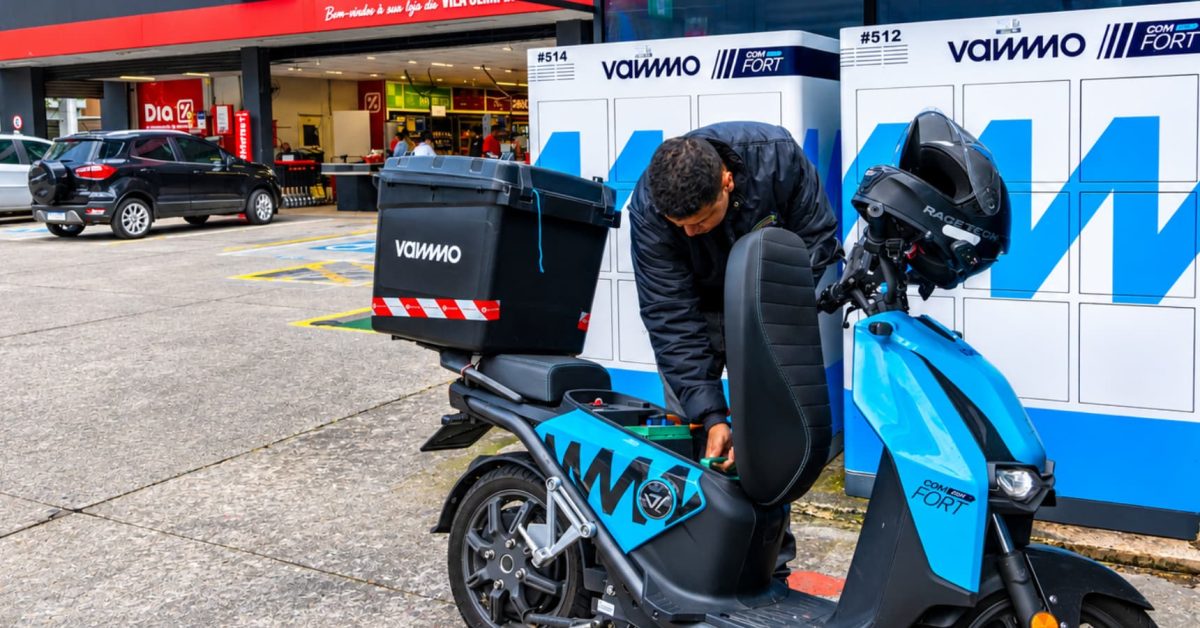
Brazil’s Vammo has quietly built one of the world’s largest battery-swapping networks for electric motorcycles, and now the São Paulo-based company says it has crossed several thresholds that most young EV startups only dream about. The operator has completed more than 10 million battery swaps, grown its active rider base beyond 10,000 and, most notably, reached EBITDA profitability — a feat achieved in June, roughly half a year ahead of its own schedule. For a capital-heavy business that has to fund both vehicles and physical infrastructure, that combination is unusually rare.
Vammo has been running in São Paulo since 2022, and its footprint now spans around 1,000 swapping points where riders trade depleted packs for fresh ones instead of waiting on a plug. That network covers a service area the company compares in size to the San Francisco Bay Area, home to roughly 26 million people. Active customers have jumped 250 percent this year alone, and the firm expects to approach $45 million in annual recurring revenue by the close of 2026. It also plans to pass 100 million cumulative swaps sometime in 2027.
Expansion is now moving beyond the home city. Campinas is set to become Vammo’s second official market, with the company intending to concentrate on the wider state of São Paulo before pushing into the rest of Brazil and, eventually, other Latin American countries. The measured pace makes sense given the scale of the local two-wheeler market: more than half a million motorcycles are sold in São Paulo state each year, a figure that exceeds the entire US motorcycle market.
On the technology side, Vammo has begun deploying third-generation swapping stations that it says cut costs by a further 15 percent. These units rely on AI-driven software to adjust charging rates dynamically according to real-time and forecast rider demand, weather conditions, delivery-app activity, individual usage patterns and battery temperature. The company has also introduced a 36-month rent-to-own plan aimed at Brazil’s notoriously expensive vehicle financing, where rates can approach 45 percent. At the end of the term, riders can buy the motorcycle for the same amount as their original deposit, then either purchase a battery outright or keep relying on the swap network.
The broader context is favorable. According to Brazilian industry association FENABRAVE, 11,587 electric motorcycles were registered between January and August this year, an 85 percent year-over-year rise, yet EVs still represent only 0.7 percent of total motorcycle sales. Within that narrow but expanding niche, Vammo claims more than 65 percent market share for 2026 so far. The company says its typical customer saves about 35 percent versus running a used 160cc gasoline motorcycle, largely through lower energy and maintenance costs — and since Brazil draws most of its electricity from renewables such as hydropower, wind and solar, the environmental case stacks up as well. Battery swapping has had a mixed record globally, but two-wheelers remain its strongest fit: the packs are light enough to handle by hand, commercial riders cannot afford hours of downtime, and dense cities make the network economics work. With profitability in hand and a first expansion underway, Vammo is starting to show what that model looks like at real scale.
What do you think?