
Trans Semarang Rolls Out 27 Locally Built Electric Buses
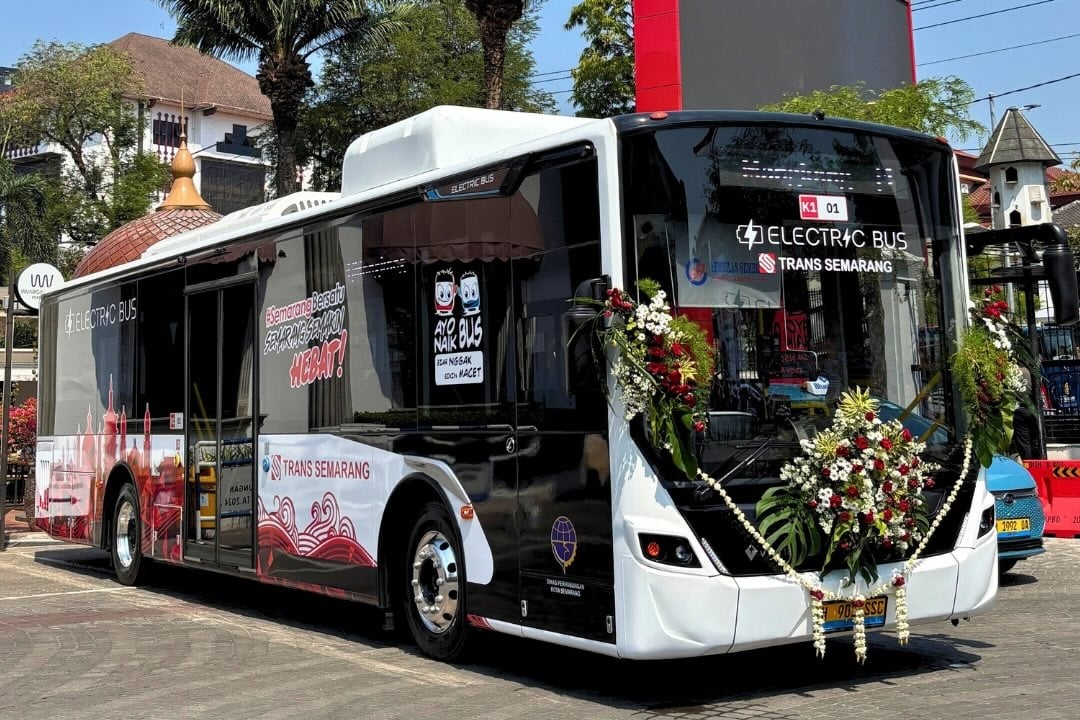
Semarang’s public transport operator is electrifying its fleet with homegrown hardware. Trans Semarang has confirmed a plan to field 27 electric city buses, with the first units already carrying passengers and the rest arriving in stages before the end of the year.
The vehicles come from a two-company Indonesian partnership: Laksana Bus Manufaktur builds the bus bodies, while VKTR assembles the finished vehicles. VKTR president director A. Ardiansyah Bakrie framed the order as more than a fleet purchase, describing it as a chance for local manufacturing, body production, supply chains and workforce skills to develop side by side as the country builds out its electric vehicle ecosystem.
The opening pair are twelve-metre low-floor buses rated for 60 passengers, fitted with roughly 340 kWh of battery capacity. That translates to about 250 kilometres of range on a full charge, though Laksana technical director Stefan Arman expects the operator to keep the cells between 20 and 100 per cent state of charge to protect battery longevity, which would trim real-world range to somewhere around 200 to 240 kilometres.
Cost per bus is put at roughly 4 to 4.5 billion rupiah, or about 198,000 to 223,000 euros, making the full 27-unit order worth an estimated 108 to 121.5 billion rupiah, roughly 5.3 to 6 million euros. The buses are initially running on Corridor 1, the roughly 29-kilometre link between Mangkang Terminal and Penggaron Terminal, and fares are being waived on the route until 14 October as an introductory gesture.
Trans Semarang head Haris Setyo Yunanto said the operator intends to add at least three buses a week, targeting a complete 27-vehicle fleet by early November. The low-floor layout was a deliberate choice: elderly riders make up about 7,000 of the roughly 35,000 daily passengers, or one in five. Mayor Agustina Wilujeng Pramestuti said the city is committed to public transport that is more comfortable, cleaner and environmentally friendlier, calling the electric buses a concrete step toward healthier, more sustainable mobility.
What do you think?