
Toyota Opens Michigan Battery Center to Handle Every Stage of EV Cell Testing
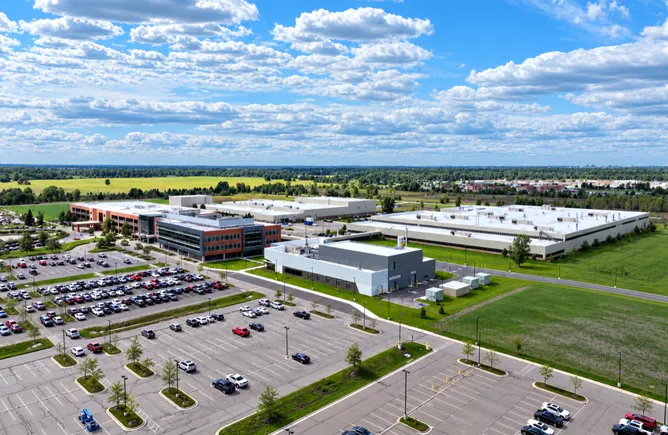
Toyota has consolidated its North American battery testing work under one roof in southeast Michigan. The automaker’s new Toyota Battery Center of North America began operating on October 1, giving its Michigan-based engineering teams the ability to follow battery technology through its entire life cycle — from raw materials and production through real-world applications and eventual recycling.
The facility sits at Toyota’s North American research and development headquarters in Saline, Michigan, and traces back to a 2023 announcement backed by a $50 million investment. Rather than betting on a single chemistry, Toyota says the center takes what it calls an agnostic approach to cell technology, evaluating a range of battery types including solid-state cells. Engineers and technicians there will assess performance and work on technologies destined for hybrids, plug-in hybrids, hydrogen models and fully electric vehicles.
According to Jordan Choby, Group Vice President of Powertrain at Toyota North America, the location gives the company a practical advantage. He said the site allows Toyota engineers to identify and address field issues faster and closer to the source, while also developing batteries built to last under the conditions American drivers encounter daily.
The center is equipped to test cells, modules and complete packs. Its hardware includes a shared hub that links design, evaluation and simulation teams so that supplier and manufacturing partners can work side by side. Toyota also lists global-level mechanical and thermal modeling tools, a torsion and shaker table for studying how road vibration affects batteries, and a containment room dedicated to safety testing.
Strategically, the Michigan site acts as a bridge between early-stage battery research and Toyota’s production footprint. It connects to the automaker’s battery plant in North Carolina and to its North American assembly operations, and Toyota says it is exploring a possible link with the University of Michigan Electric Vehicle Center. The broader context is a multi-billion-dollar push: Toyota has confirmed a $14 billion North Carolina battery facility slated to supply hybrids, plug-in hybrids and EVs built in the region, following roughly $1 billion aimed at expanding U.S. hybrid production. Meanwhile, LG Energy Solution has started building energy-dense nickel-manganese-cobalt cells in Lansing, Michigan, for the forthcoming Toyota Highlander EV. Toyota notes it has maintained R&D operations in southeast Michigan for more than five decades, calling the area a natural fit for the new center.
What do you think?