
Toyota and Isuzu Debut Second-Gen Sora Fuel Cell Bus With Over 300 km Range
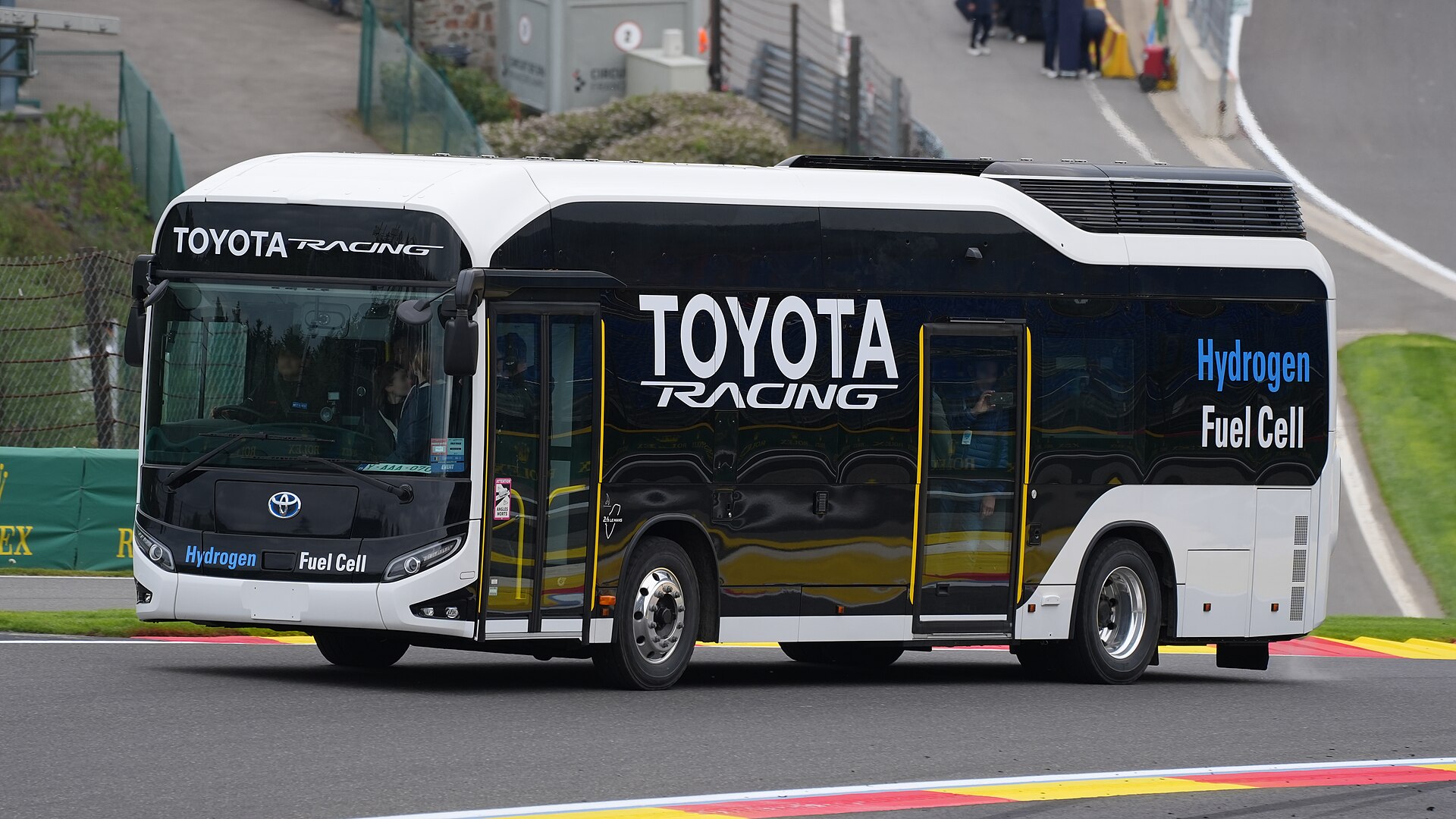
Toyota has unveiled the second generation of its Sora fuel cell route bus, a vehicle co-developed with Isuzu that pushes driving range past the 300-kilometre mark — roughly 100 km further than the original model that arrived in 2018 — even though its hydrogen tanks now carry about a fifth less fuel. The automaker attributes the gain to smarter integration of the fuel cell with a large onboard battery rather than to simply carrying more hydrogen.
The new Sora pairs Isuzu’s battery-electric flat-floor architecture with Toyota’s fuel cell technology, which has been relocated to a compact rooftop position. That layout keeps the cabin floor flat while also making servicing easier for operators. A smaller but higher-output and more durable stack contributes to the efficiency improvement.
In its urban configuration, the bus measures 10,545 mm and accommodates 70 passengers. A 113 kW fuel cell stack works alongside two 110 kW electric motors, while three 70 MPa tanks store 471 litres of hydrogen. A complete refill takes roughly ten minutes, and Toyota notes that a faster refuelling standard could cut that time in half once compatible stations are available — a significant consideration for buses that spend nearly all day in service.
Safety and accessibility features include an emergency stop system tied to driver monitoring, which brings the bus to a halt if the driver becomes incapacitated, plus a front blind-spot monitor that alerts the driver to pedestrians and cyclists. Four seating layouts are offered to suit urban and suburban routes, and a one-touch wheelchair securement option can be ordered from around April 2027.
Since 2019, Toyota has supplied more than 3,500 fuel cell systems to over 100 customers across buses, rail and stationary generators — a footprint far broader than the Mirai passenger car it launched in 2014. Mounting Toyota’s fuel cell system onto Isuzu’s existing battery-electric platform suggests hydrogen drivetrains are increasingly being treated as an add-on module rather than a ground-up design, which could lower development costs for low-volume hydrogen models. With range now approaching that of battery-electric buses, the Sora’s core advantages rest on its ten-minute refuelling and Japan’s public-private hydrogen network — an infrastructure whose expansion will ultimately determine how quickly fuel cell buses can scale.
What do you think?