
Tier IV and Taisei Put Three Autonomous Trucks to the Test in Japan's Autoflow Road Push
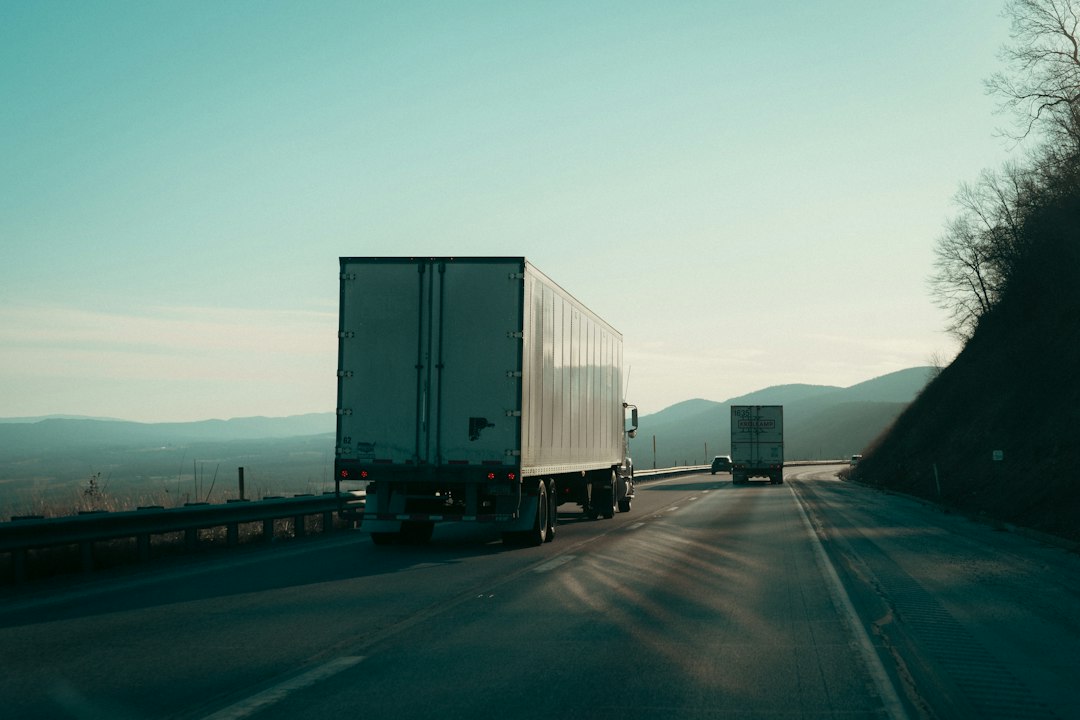
Japan is moving ahead with an ambitious idea: rather than loading every ounce of intelligence onto the vehicle, shift part of the burden onto the road itself. Tier IV, Taisei Corporation and Taisei Rotec will put that concept to the test by running three autonomous vehicles together inside a tunnel facility from late October 2026, as part of a state-backed effort to develop the Autoflow Road — a planned network of dedicated lanes reserved for driverless freight.
The trial, backed by Japan’s transport ministry, is set to last eight days and stretch into early November. It will take place at a full-scale tunnel and test track operated by the National Institute for Land and Infrastructure Management. The three companies were chosen by the ministry to carry out the work, which will examine platooning, two-way traffic, merging maneuvers and obstacle avoidance.
At the heart of the experiment is a question that could shape the economics of autonomous trucking: how should the workload be divided between the vehicle and the infrastructure it drives on? If roadside systems can shoulder more of the sensing and decision-making, trucks could potentially get by with simpler, cheaper onboard hardware. The partners plan to evaluate leaner sensor configurations along with three different lane widths and the accuracy with which vehicles stop at designated berths.
Tier IV is contributing the vehicles and its Pilot.Auto logistics driving system, which is built on the open-source Autoware platform, and will gauge how readily the setup can be scaled. Taisei is leading planning and data analysis while validating T-Localizer, its self-localisation aid, and Taisei Rotec is installing reflectors. The same trio took part in a ministry trial during fiscal 2025, combining a Tier IV vehicle with T-Localizer and T-iPower Road, Taisei’s wireless charging technology for moving vehicles. That earlier round indicated the technologies were viable but also brought operational difficulties to light.
For now, passenger-car-based vehicles are standing in for the dedicated freight hardware that would eventually run on the Autoflow Road. The partners expect the lessons from this trial to lay the groundwork for a leaner, more scalable deployment down the line.
The eight-day format matters as much as the technology under test. Multi-vehicle operations expose coordination problems that single-vehicle demonstrations rarely surface — how platoons hold formation, how opposing traffic is managed, and how vehicles behave when a lane narrows or a berth approaches. By testing three lane widths and berth-stopping precision, the partners are effectively probing how much tolerance the road design can allow before vehicle-side systems have to compensate. If infrastructure can absorb that variability, the commercial case for autonomous freight hardware becomes considerably easier to make.
Photo: Bhargav Panchal on Unsplash (Unsplash License)
What do you think?