
Think Tank Counters Automakers: Europe's Battery Cell Supply Will Be Ready by 2030
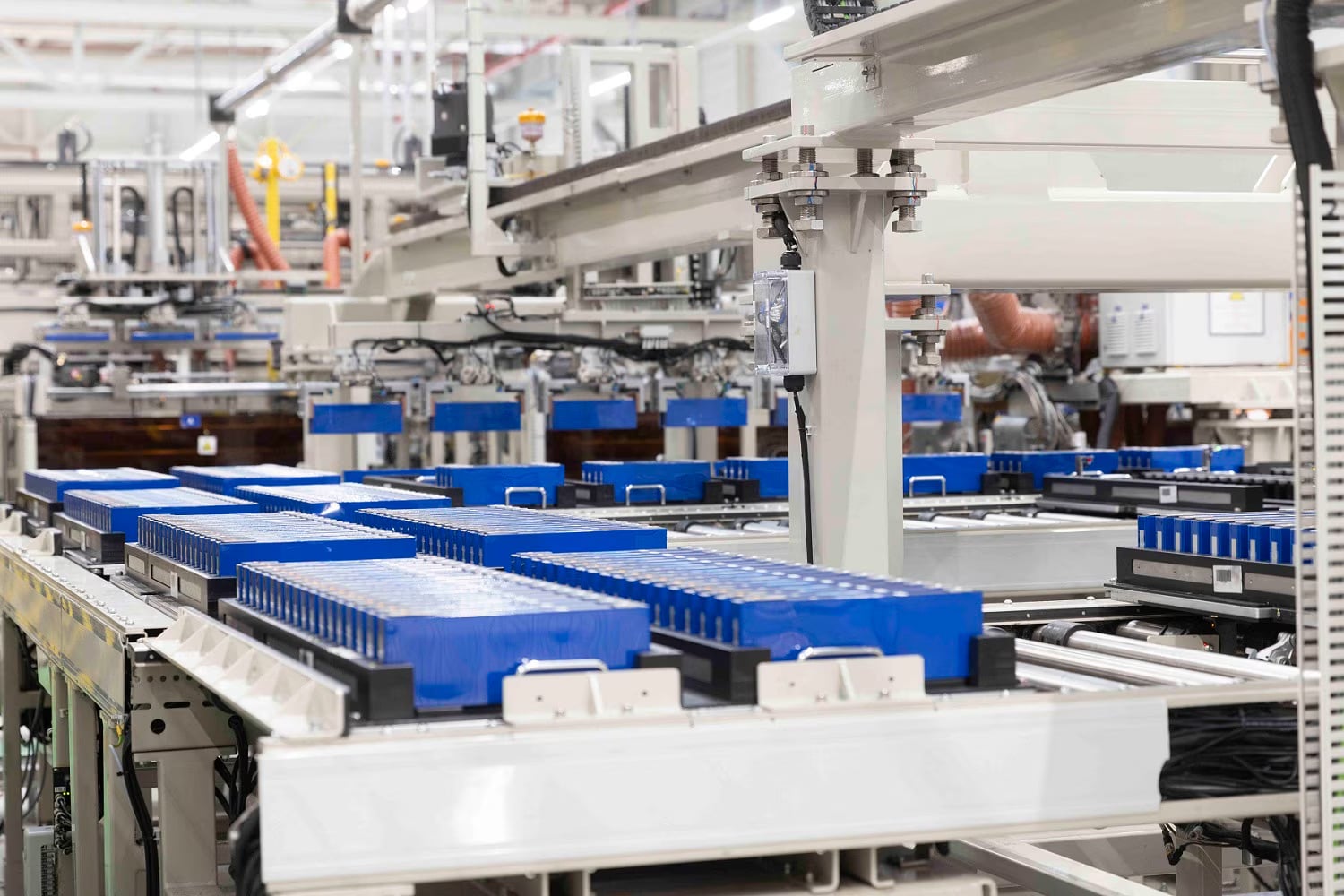
A fresh analysis from the environmental think tank Transport & Environment (T&E) argues that Europe will have enough domestically produced battery cells to satisfy upcoming EU local-content rules by the end of the decade. The findings directly challenge warnings from the European Automobile Manufacturers’ Association (ACEA), which has cautioned that the bloc’s battery supply chain cannot keep pace with the legislative package’s ambitions.
According to T&E, cell output within Europe should already be adequate by 2027 to fully cover demand from subsidised corporate fleets and a large share of funded private vehicles. By 2030, both categories could be served entirely — provided that projects currently rated as having a medium likelihood of completion actually move forward. The group does acknowledge setbacks: roughly a quarter of announced cell capacity since 2022 has been shelved or delayed, with Germany hit especially hard as its 2035 project pipeline shrank by half. T&E points to ACC’s Kaiserslautern plans and Porsche’s Cellforce shutdown as examples, while noting that Volkswagen’s PowerCo opened its first cell plant in Salzgitter in December 2025.
Ownership patterns add another wrinkle. More than 85 percent of active European cell capacity belongs to non-European firms, with South Korean manufacturers alone responsible for 72 percent of production through plants in Poland and Hungary. Chinese giant CATL also operates a facility in Arnstadt and has begun trial production at a second site in Debrecen, Hungary. Crucially, the ‘Made in EU’ criteria hinge on where cells are manufactured rather than the company’s origin, meaning Asian-run factories on European soil still count toward local-content targets. T&E’s Susanne Goetz urged Berlin to stop fixating on legacy industries like combustion engines and instead back an effective Industrial Accelerator Act to grow the battery sector.
Gaps remain further up the supply chain. For cathode active material (CAM), announced European capacity of 529,000 tonnes annually for 2030 shrinks to about 177,000 tonnes once projects are weighted by their odds of being built. The picture is even shakier for pCAM, where only 217.9 GWh of the announced 552.6 GWh cell equivalent is viewed as likely by 2030. T&E therefore backs keeping the planned cell and CAM requirements and wants minimum quotas for pCAM and anode active material starting in 2032.
What do you think?