
The Jeep Recon Doesn't Need a Bladder-Busting Range Test to Prove Its Worth
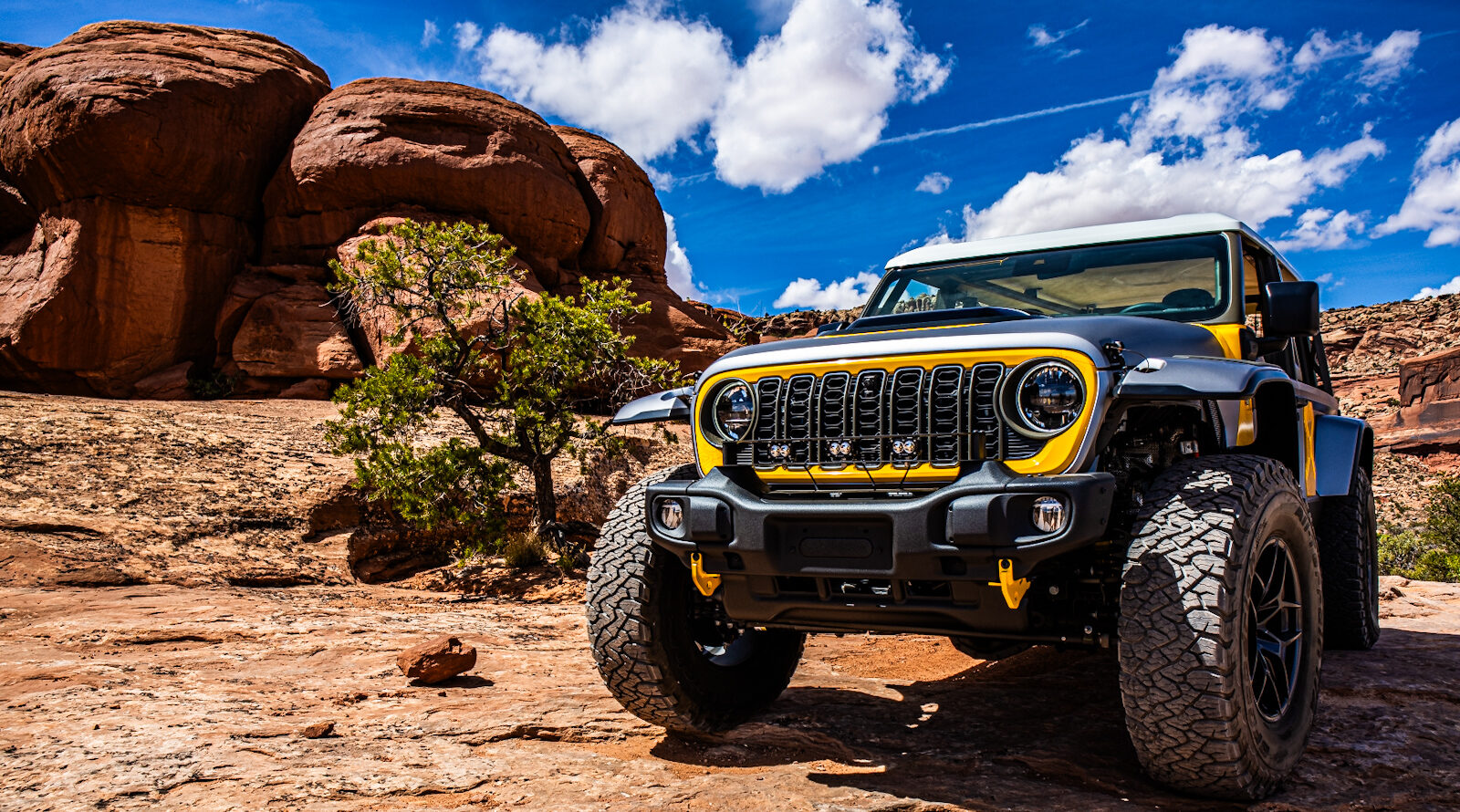
Automotive reviewers have a favorite ritual whenever a fresh electric vehicle arrives, and it goes something like this: charge it to full, blast down the interstate at 80 mph, and run it from 100 percent all the way to zero. Any vehicle that can’t keep pace with a Tesla on that metric gets written off as a disappointment. The 2026 Jeep Recon Moab launch edition recently went through exactly that gauntlet at Car and Driver, returning 160 miles of highway range — a figure that quickly drew loud criticism elsewhere in the press.
But that test tells us far less than it appears to. Real drivers don’t drain a battery in one unbroken sprint; human bodies don’t work that way. Bladders, stiff backs and the simple need to stretch your legs all force stops well before the electrons run dry. On a long interstate haul like I-10 across Texas — genuinely one of the few places where locking in at 80 mph for hours makes sense — 160 miles of total range translates into comfortable 90-mile hops between charging stops. At that speed, each leg amounts to a little over an hour behind the wheel.
For the Recon and its 94 kWh pack, that 90-mile interval lines up neatly with the 10-to-60 percent window, which happens to be where DC fast charging is at its most potent. The vehicle can pull roughly 200 kW at peak. Arrive at a charger with 10 percent showing, plug in, then go use the restroom and grab a drink, and you’ll be absorbing maximum power the entire time you’re away from the car. By the time you return, the battery is back to 60 percent and the next leg is ready to go — no painful trickle-charging at the top of the pack, no scrambling for roadside cover when nature calls.
The efficiency criticism is real, though, and worth stating plainly: on the highway the Recon manages about 1.7 miles per kWh. That’s what happens when a vehicle stands tall on knobby 33-inch tires, rides on more than 9 inches of ground clearance, and runs a 15:1 final drive in the rear for precise low-speed off-road torque. Aerodynamics were never the design brief.
That trade-off is deliberate. A Jeep engineered purely to chase 300 highway miles — smoothed out, dropped onto skinny eco tires — would surrender the approach angles, the open-air layout and the rock-crawling capability that buyers actually pay for and knowingly sacrifice efficiency to get. The Recon was never meant to set cross-country endurance records. Trail Rated has always meant something different from diaper-and-vendetta Rated, and that distinction matters whether the powertrain burns cheap electrons or expensive gasoline.
What do you think?