
The 1980 Turbo Trans Am: Pontiac's Forced-Induction Gamble That Barely Lasted Two Years
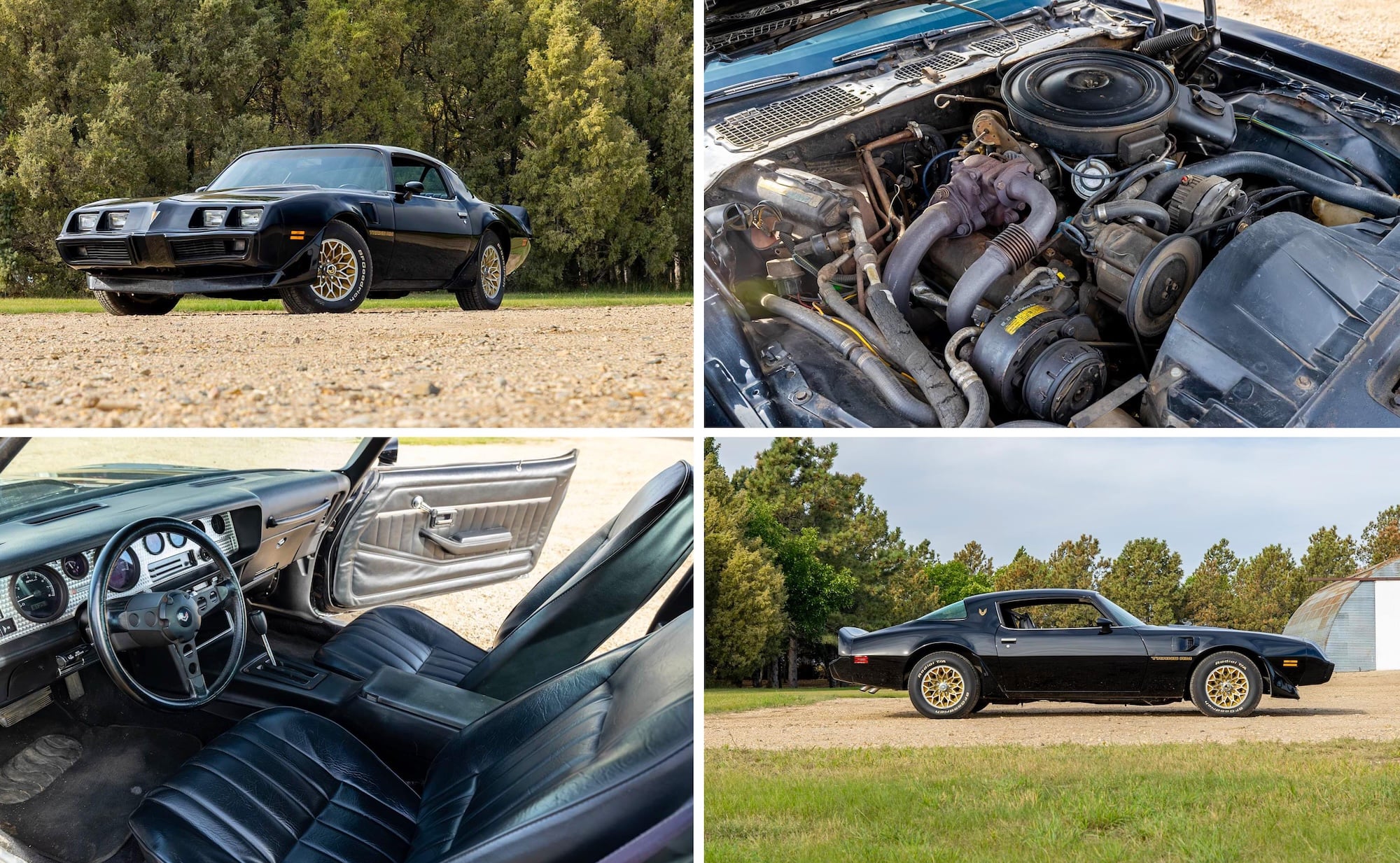
By the time the 1980 model year rolled around, the writing was on the wall for big-inch American V8s. Pontiac, like everyone else under the General Motors roof, was being squeezed by federal fuel economy rules — the 18 mpg fleet target that kicked in for 1978 spelled the end of the beloved 400 cubic inch powerplant. What Pontiac did next is one of the more curious chapters in muscle car history: they bolted a turbocharger to an economy V8 and called it a Trans Am.
The result was the LU8, a turbocharged 4.9 liter (301 cubic inch) V8 good for 210 bhp and a solid 345 lb ft of torque. That torque figure actually outpaced the final 400s, which were rated at 220 bhp.
The hardware was straightforward for the era: a single Garrett AiResearch TBO-305 draw-through turbo running 9 psi, a modified Rochester Quadrajet four-barrel, compression dropped to 7.6:1 so it would run happily on regular unleaded, and a Delco knock sensor that pulled timing when detonation crept in. Pontiac built 22,176 of them in 1980 alone.
The Odd Math of the Turbo Trans Am
Here’s where things get awkward. Every 1980 Firebird — turbo or not — came only with the THM350 three-speed automatic. No manual.
That mattered, because a 1979 W72 400 with the four-speed stick was running quarters in the low 15s, while period testers of the turbo car logged anything from mid-16s to 17 seconds flat. Zero to 60 varied wildly too, from 8.0 to 9.0 seconds depending on the car and the day. Some journalists reported detonation under hard throttle despite the knock sensor doing its job. Top speed landed around 116 mph.
The engine itself has a nice origin story. Pontiac’s turbo program started life as a student project at the General Motors Institute in Flint — a low-emissions turbo conversion of a Firebird 350 that professor Jim Lyons showed to Pontiac’s chief engine engineer, Leo Hilke.
The division announced a turbocharged 301 at the end of 1978, and by 1980 it was the only way to get serious power in a Trans Am outside California, where the car wasn’t certified at all. Golden State buyers got a Chevrolet 305 instead.
There were other quirks. An off-center hood bulge made room for the turbo housing, and from early 1980 the trailing edge could carry three sequential boost lights (option code UR4) that lit up as pressure climbed. The speedometer stopped at 85 mph, which was a federal mandate of the time and faintly ridiculous given the car’s capability. The turbo added $350 to a Trans Am, $530 to a Formula.
Why It Disappeared So Fast
GM’s push to standardize engines across its divisions killed the program almost as soon as it began. The Turbo Trans Am lasted only through 1981, and Pontiac stopped building V8s altogether. The 301 family turned out to be the last V8 the division ever designed and built in-house — an evolutionary dead end, but an interesting one.
This particular car, finished in Starlight Black with gold graphics, retains its matching-numbers turbocharged V8 and automatic transmission. Snowflake wheels, air conditioning and a set of Dakota Digital gauges round out the package. Two model years only, and the survivors are getting harder to find. If you remember these cars as slugs, you’re not wrong — but there’s more to the story than the stopwatch suggests.
Source: Silodrome
What do you think?