
Tesla Sets Q2 2027 for Unsupervised FSD — With a Geofence Attached
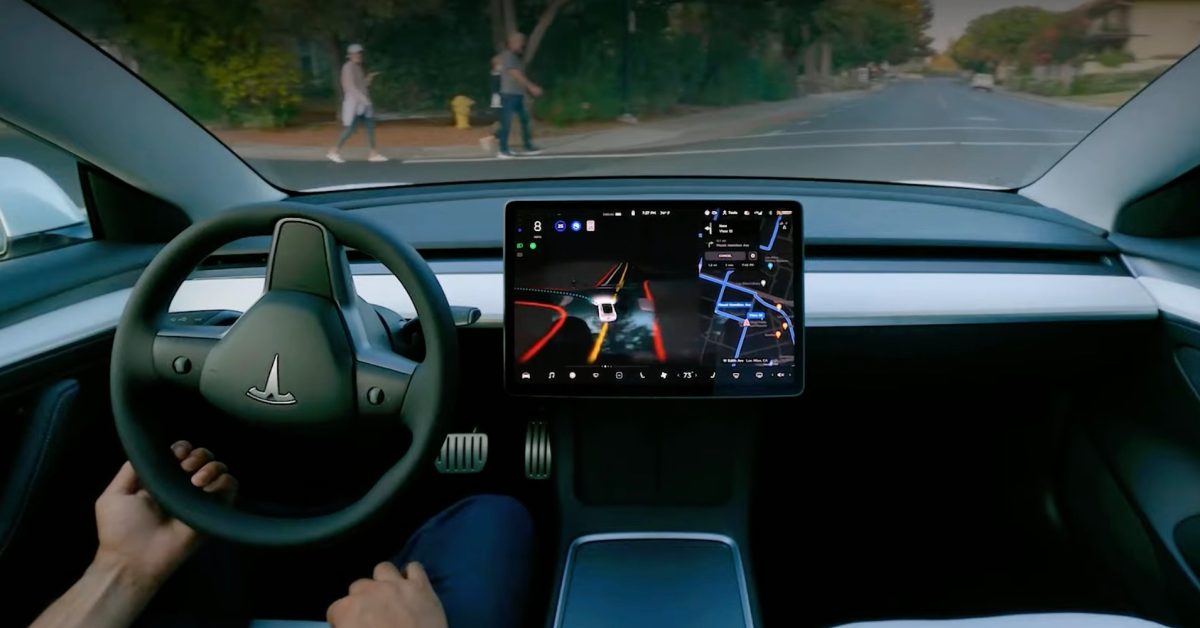
Tesla has finally put a date on unsupervised Full Self-Driving for privately owned cars: Q2 2027. But the version described on the company’s Q3 2026 earnings call looks nothing like the hands-off, anywhere-you-want-to-go feature buyers were promised years ago.
On the call, Tesla AI chief Ashok Elluswamy framed the rollout as owners opting their vehicles into Tesla’s managed Robotaxi fleet. In plain terms, your car would drive itself without a human aboard only in places where Tesla already runs its ride-hailing operation — and under Tesla’s supervision, not yours.
The question shareholders kept asking
Retail investors pushed the issue hard. “When can we anticipate FSD unsupervised in customer cars?” ranked among the most-submitted questions ahead of the call, carrying the backing of roughly 1.1 million shares.
The answer, Q2 2027, lands as the newest entry in a list of targets Elon Musk has set going back to 2016. In July 2025 he told investors unsupervised personal use would arrive “by the end of this year in certain geographies.” A year before that, he said he’d be surprised if Tesla hadn’t cracked unsupervised driving within twelve months.
HW3-era owners who paid for FSD have already been told their hardware can’t support the feature at all, with no clear path to an upgrade.
Small zones, slow speeds, short leash
Where Tesla’s Robotaxi service operates today tells most of the story. Six US metro areas are live, and the mapped areas cover only slices of each city. The Miami zone, for instance, centers on West Miami with a corridor stretching toward Doral and Sweetwater. Orlando and Tampa went live in July with similarly tight boundaries.
Within those fences, the service favors low-speed streets, mostly avoids highways and steers clear of the trickier corners of town. In the Bay Area, the cars aren’t unsupervised in the first place — California regulators still require a safety driver because Tesla won’t hand over the data the state DMV asks for beyond a Level 2 system.
Fleet by the numbers: roughly 2 million cumulative unsupervised miles through the end of Q3 2026 · six US metro service areas · Waymo already past 3 million miles
The fleet itself remains modest. Tesla says Robotaxi crossed nearly 2 million cumulative driverless miles by the close of Q3, a month after the Cybercab joined operations in Austin. Independent tracking this spring put the count of fully driverless Teslas in the dozens — a long way from the hundreds of thousands Musk once described.
Competitive context matters here too. Waymo was already operating in Orlando and Tampa before Tesla arrived, and its mileage tally sits above 3 million.
What buyers actually signed up for
The original pitch was simple: pay for FSD, and a future software update turns your car into something that drives itself anywhere. What’s now on the table is narrower on every axis.
- Geography: only inside Tesla-controlled Robotaxi zones
- Road types: largely surface streets, minimal highway use
- Control: Tesla runs the fleet; the owner hands over the keys
- Timing: Q2 2027, a date the company itself can’t pin down with confidence
No cross-town airport runs. No unsupervised commute unless home and office both happen to fall inside a geofence. Elluswamy repeated that safety is the binding constraint, which is why the program stays on slower roads and avoids harder environments. He expects those issues to be resolved next year — but by his own framing, that’s an expectation rather than a schedule.
Eight years of missed deadlines make skepticism the reasonable default here. And even a perfectly on-time Q2 2027 delivery would represent a different product than the one sold to FSD customers, not merely a later arrival of it.
Source: Electrek
What do you think?