
Tesla says it will sell Cybercab to the public this year — and it can't drive itself yet
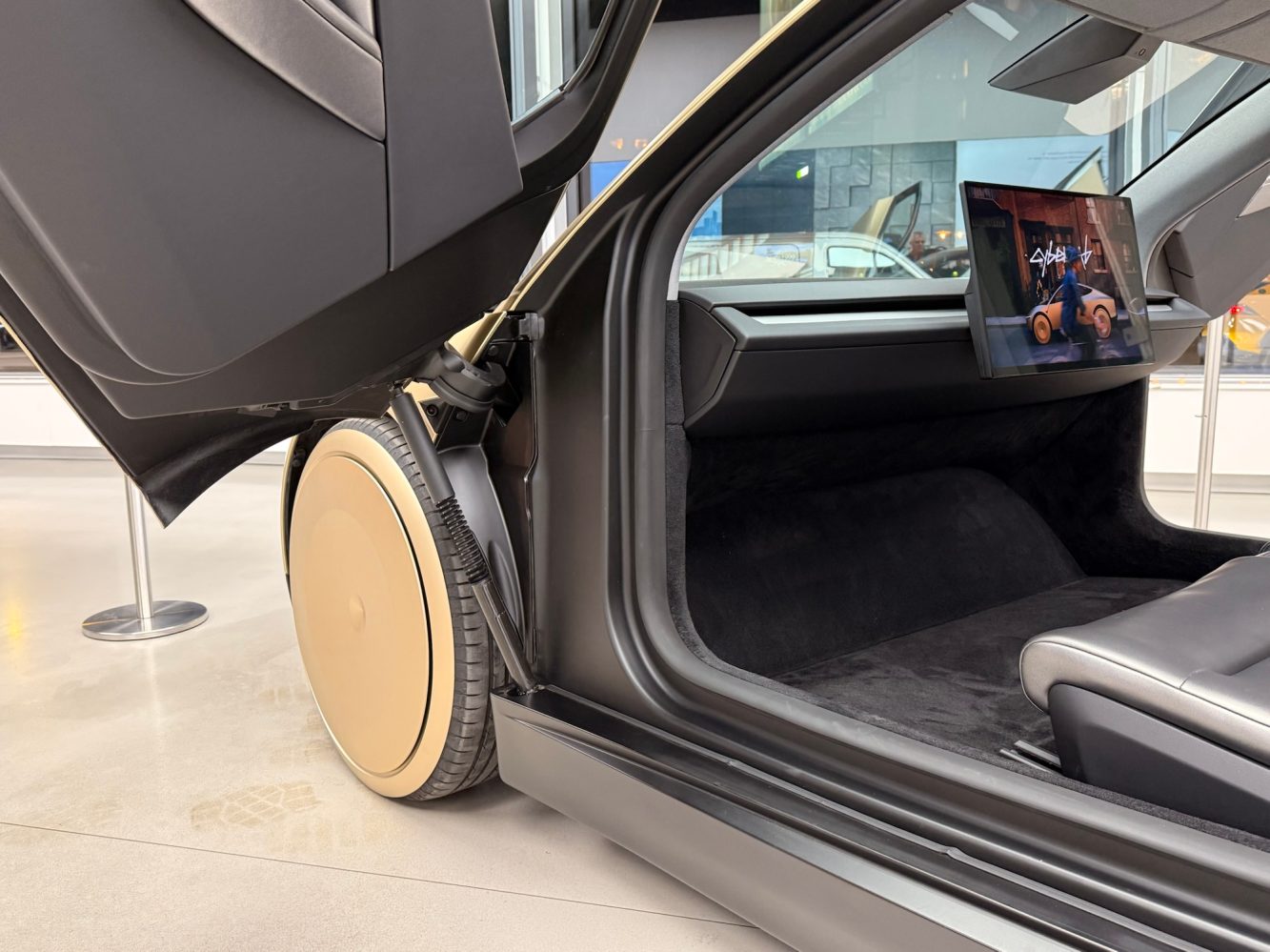
Tesla plans to hand Cybercabs to paying customers before the end of 2026, but the company also says unsupervised Full Self-Driving won’t reach customer cars until the second quarter of 2027. That gap is the whole story.
On the Q3 earnings call, someone asked when regular owners would finally get FSD that works with nobody watching. Tesla’s answer shifted from the familiar “end of next year” to “middle of next year” — Q2 2027. Then, in the same breath, VP of Engineering Lars Moravy said Cybercab deliveries to customers would start within roughly two months.
The timeline, as stated: Customer Cybercabs by end of 2026 · Unsupervised FSD in customer hands by Q2 2027 · Current robotaxi service live in parts of 6 cities across 2 states
Read those two dates side by side and a question writes itself. What exactly does a buyer do with a vehicle designed without a steering wheel or pedals while its driving software is still locked away?
A car with no controls and no permission
Cybercab was shown to the world stripped of human controls entirely — no wheel, no pedals. If that is how the first retail units arrive, then for something like six months the owner possesses a machine that cannot legally move on its own and cannot be pushed anywhere either, since there’s nothing to steer it with.
Tesla has a fallback: build the early ones with steering wheels, as nearly every Cybercab spotted in public has had so far. But then the obvious question is why not just badge it Model 2 and sell it at the $25,000 price point that has been floated for years.
There is a third possibility. Owners might get access to the same limited software Tesla uses in its own fleet, letting them run the car in the small patches of 6 cities across 2 states where the robotaxi service exists. Musk once said robotaxis would cover half the US population by the end of the previous year. They don’t.
Musk’s own comments point elsewhere
Musk followed Moravy by framing Cybercab mostly as Tesla-owned transport-as-a-service hardware. That sits awkwardly next to the call for fleet buyers Tesla issued when the vehicle was unveiled.
Moravy said production is ramping in Texas, with the current output going straight into Tesla’s internal robotaxi pool. Customer cars come later, he said, and Cybercab will be the first of what he described as purpose-built autonomous vehicles sold to the public.
The whole sequence raises a blunter reading: the dates exist because dates get announced, not because the engineering lines up. Going from today’s level 2 driver-assist stack to a genuinely unsupervised system is a large jump, and Tesla has missed this particular target every year for a decade.
What buyers actually get
For now the practical picture looks like this:
- No self-driving software: Unsupervised FSD is promised for Q2 2027, not at delivery.
- No manual controls: The production design omits steering wheel and pedals.
- Limited service area: Robotaxi coverage remains confined to small sections of six cities.
- Unclear ownership model: Musk’s comments lean toward Tesla retaining most vehicles for its own fleet.
Tesla fans will say the software arrives when it arrives and the hardware is ready ahead of it. Maybe. But selling a car that can’t be driven, to people who aren’t allowed to let it drive itself, is a strange way to start a retail program.
Source: Electrek
What do you think?