
Tesla's Supercharger Network Passes 85,000 Stalls Worldwide as Australia Eyes New 24-Bay Hub
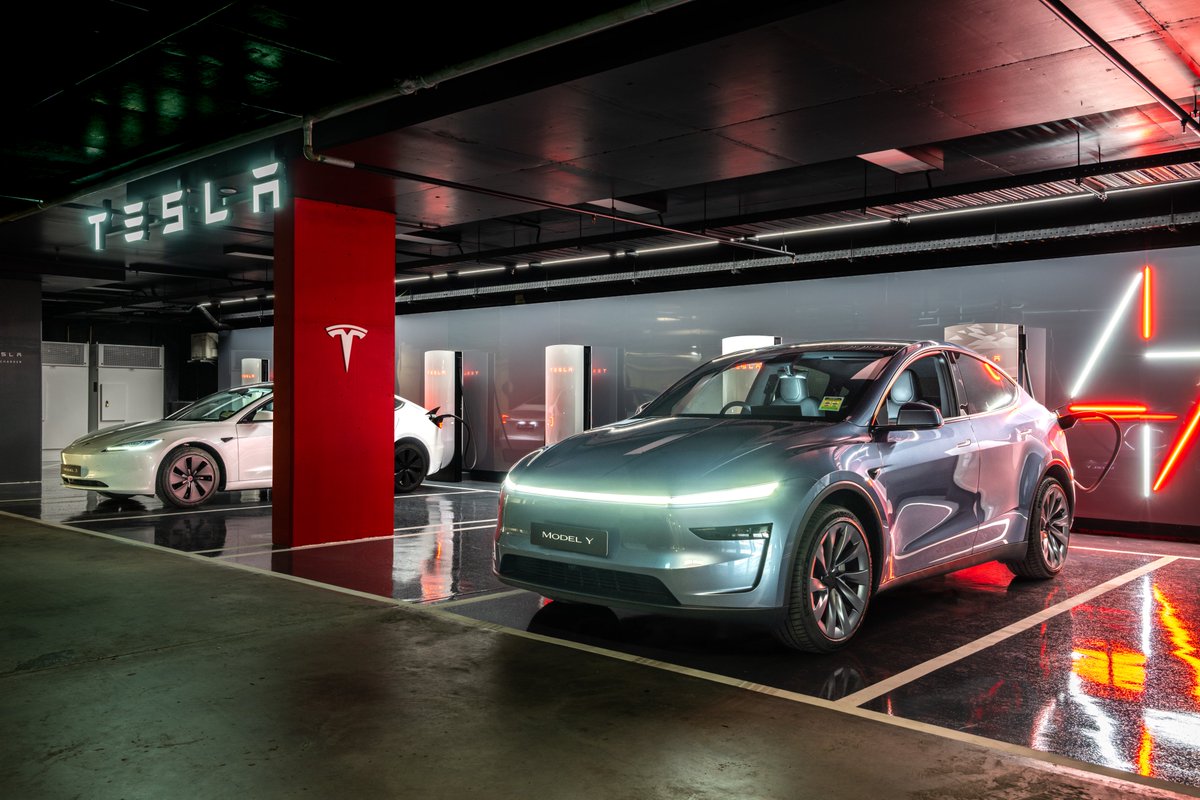
Tesla has crossed another marker in the build-out of its fast-charging footprint, confirming that its Supercharger network now spans more than 85,000 individual stalls spread across over 9,000 active sites globally. The installation that pushed the tally past the threshold went live in Tsuchiura, Japan, a detail the company highlighted as it celebrated 14 years of running the program.
The arc of that growth has been steep. Tesla opened its first Supercharger locations in the United States back in 2012, and it took roughly five years to reach 5,000 stalls worldwide. Momentum accelerated sharply from there: the 60,000th stall arrived in late 2024 at a site in Enshu Morimachi, Japan, while the 75,000th unit landed in Australia in 2025, marked by a distinctive “glacier blue” charger in Hobart, Tasmania. That trajectory has fuelled expectations that the network could climb toward the 100,000-stall mark by 2027.
Reliability has been central to how Tesla positions the network, and the company has kept expanding station sizes rather than merely adding locations. In Australia, the picture is shifting toward larger hub-style builds. A 20-stall site in Goulburn, New South Wales, long regarded as one of the country’s bigger installations, was recently overtaken by a 24-bay BP Pulse facility in Melbourne. That record may prove short-lived, however, with proposals for comparable hubs already in the pipeline, including a 24-stall Tesla site put forward for Yass in New South Wales.
The timing matters because Australia’s charging demand is climbing alongside vehicle sales. Battery-electric models accounted for a record 24.8 per cent of new car sales in August, putting pressure on infrastructure to keep pace with the growing fleet. Bigger, multi-bay charging hubs are increasingly seen as the answer to congestion at popular routes, where drivers want shorter queues and faster throughput rather than a single solitary charger.
Tesla’s milestone also underlines how the company has turned charging from a supporting service into a competitive asset, with rival networks such as BP Pulse now chasing similar scale. For Australian drivers, the practical question is less about global totals and more about whether new sites like the proposed Yass hub move from proposal to construction quickly enough to match the country’s accelerating EV adoption.
What do you think?