
Tesla's Real Robotaxi Edge Isn't the Ride - It's What Happens Inside
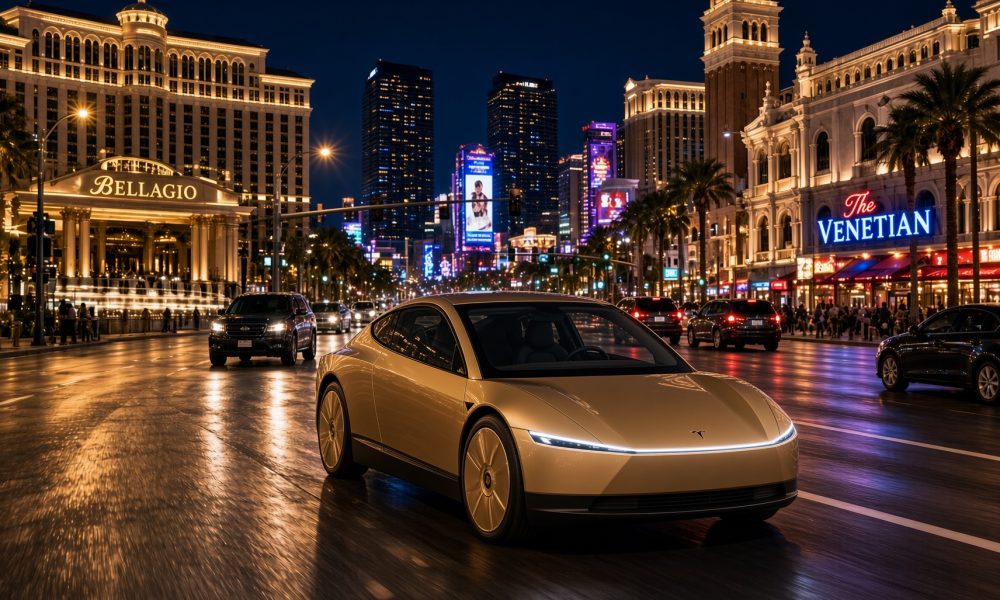
For roughly a century, driving has demanded one constant from whoever sits behind the wheel: attention. Ride-hailing apps shifted that burden to a stranger, but passengers still occupy someone else’s car, half-watching the road and weighing whether it’s rude to take a call. Tesla’s Cybercab removes the driver, the steering wheel and the pedals entirely — and with the company’s Grok @bot now running inside the cabin, the vehicle becomes something closer to a moving workspace than a taxi.
Unlike a conventional voice assistant, Grok @bot functions as an agent that acts on instructions rather than just answering them. A rider signs in once, then can order dinner, restock a grocery cart, move money, clear email, adjust a calendar or nudge a work project forward while the car handles the driving. Tesla engineer Yun-Ta Tsai has confirmed the feature is live across the Cybercab fleet as well as Model Y vehicles, with the company framing the split simply: Full Self-Driving covers the commute, Grok covers the errands.
That reframes what a 30-minute trip is actually worth. Uber sells a journey; Waymo sells the same journey with more privacy. Tesla’s pitch is different — it sells the half hour itself, handed back to the passenger with an assistant attached. Tasks that once consumed a Saturday morning can be finished between pickup and drop-off, turning transit from dead time into usable time. Your bot follows you into any Cybercab and presumably your own Tesla, logging out automatically when you exit. Plenty of companies can bolt a chatbot onto a screen; far fewer own the vehicle, the autonomy stack and the assistant simultaneously. The arrangement also quietly binds SpaceX’s Super Intelligence efforts to Tesla’s fleet, following Tesla’s conversion of its xAI stake into SpaceX equity — a relationship that is increasingly difficult to describe as two separate businesses.
The open questions are thorny. An agent authorized to spend your money inside a car shared with strangers needs answers on voice authentication, on what gets recorded and who can access it, and on what happens when a rider exits mid-task. If Tesla resolves those concerns, the metrics that matter may shift. The industry has been counting vehicles and wait times; a more revealing figure could be how much riders accomplish per trip. That is data almost no one else is positioned to collect.
What do you think?