
Tesla's Emergency Drive Away Could Cost Drivers Up to $25,000 in Supercharger Damage
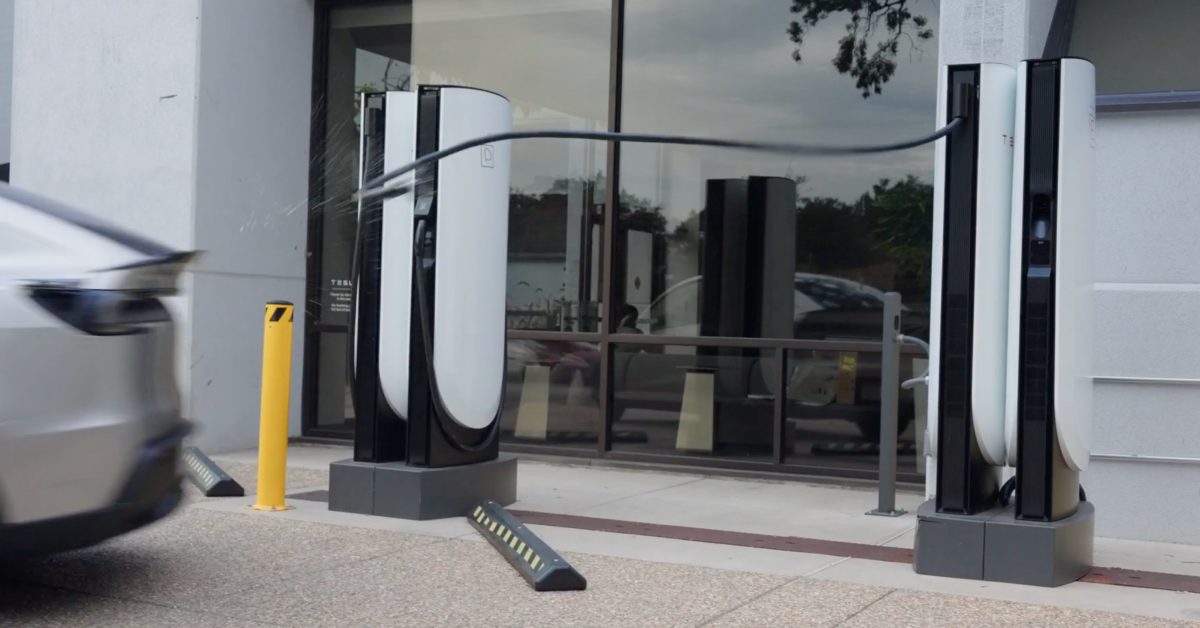
Tesla has acknowledged that its newly introduced “Emergency Drive Away” function can inflict as much as $25,000 in damage to a Supercharger unit each time a driver uses it — and the vehicle itself will need a mandatory service appointment afterward. The feature lets motorists shift into Drive and pull away while the charging cable is still connected, a capability Tesla rolled out roughly two months after a shooting at a Supercharger site in Twin Falls, Idaho, where three people were wounded inside their cars.
Tesla initially warned only that the function “will damage your vehicle and the Supercharger,” without attaching a figure. When an owner pressed for specifics on the physical and financial fallout, the company’s charging division replied that the cost “depends on the Supercharger” but that combined electrical and civil work could reach 500,000 in hardware alone, meaning a worst-case repair would swallow roughly 40% of the price of a single post. A mandatory charge-port service visit is also required, and Tesla has not disclosed what that will cost. Glycol coolant that escapes from the cable during the maneuver, Tesla added, is cleaned up as part of a required service call to the station.
Conspicuously absent from Tesla’s answers was any clarification of who foots the bill. Multiple owners asked directly whether a driver acting in a genuine emergency would be liable for the Supercharger repair; those questions went unanswered while Tesla continued responding to other queries in the same thread, confirming compatibility with V2, V3, and V4 stalls and noting the feature does not work on home chargers. Tesla did confirm that penalties exist for misuse, stating simply “Yes” when asked, and its launch announcement warned that deliberate misuse “will invoke additional penalties” — without defining what those penalties are or how misuse would be judged. The sums involved dwarf the property-damage liability minimums in many states: Idaho requires just 10,000, and Pennsylvania $5,000.
What do you think?