
Tesla Patents a Smarter Data Pipeline for Faster Full Self-Driving Gains
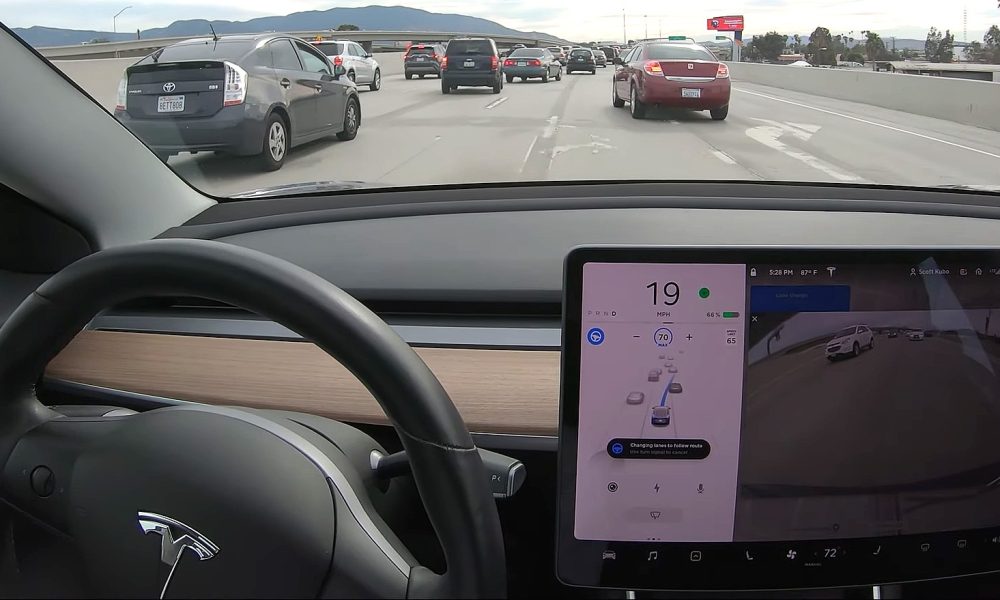
Tesla has secured a new patent covering a data pipeline designed to feed its deep learning systems more efficiently, a step the company says could shorten the cycle time between collecting real-world driving data and deploying improved autonomous driving software to customer vehicles.
At a high level, the patent describes a system that gathers footage and sensor readings from Tesla’s fleet, automatically filters out the mundane clips, and prioritizes the rare or unusual situations that actually teach the neural networks something new. Instead of engineers manually sifting through terabytes of uneventful highway cruising, the pipeline labels and routes the interesting cases toward training. Tesla frames the approach as a way to close the loop between what its cars encounter on the road and what its models learn, reducing the lag that has historically separated a data upload from a software update.
The scale of Tesla’s fleet is what makes the concept noteworthy. With millions of vehicles capable of contributing camera and telemetry data, the bottleneck has never been collection — it has been curation. Flagging edge cases such as unusual intersections, odd vehicle behavior, or adverse weather, then getting those examples into training runs quickly, is the difference between a model that improves every few months and one that improves continuously. Tesla’s patent language places the pipeline squarely in that role: an automated funnel that turns raw fleet data into usable training material without drowning engineers in noise.
The patent lands as Tesla continues to refine its Full Self-Driving (Supervised) software, a driver-assistance suite that still requires an attentive human at the wheel. Regulators in the United States and Europe have kept a close watch on how the company validates and deploys these features, and any claimed acceleration in the improvement loop is likely to draw both technical interest and scrutiny. For Tesla, the pitch is straightforward: gather better data, learn faster, ship more capable software.
Whether the patented pipeline translates into observable leaps in on-road performance remains an open question. Patents frequently describe systems that are implemented in partial form, and Tesla has not published benchmarks tied to this filing. Still, the document offers a rare window into how the automaker thinks about the unglamorous plumbing behind autonomy — the data handling that quietly determines how quickly a self-driving stack can mature.
What do you think?