
Tesla Model Y Takes Five-Star Green NCAP Sustainability Rating as LCA Data Goes Verified
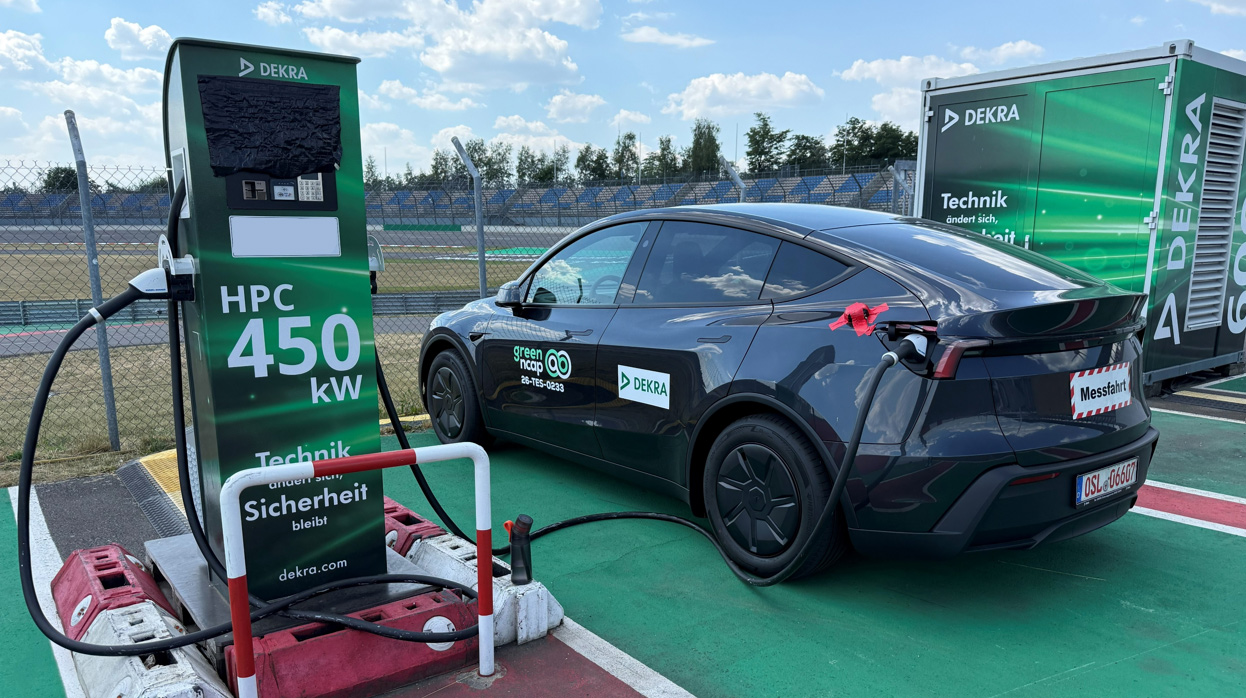
Green NCAP has handed the Tesla Model Y a full five stars and a 93% score in its Sustainability Rating — and the headline number is the carbon figure. The Berlin-built SUV’s lifecycle footprint came in at 95g of CO2 equivalent per kilometre, against 263g for the mild-hybrid Volkswagen Tayron, which settled for 2½ stars. In plain terms, a large electric SUV lands at roughly one-third of the climate burden of a comparable combustion model.
What made the difference this time is paperwork as much as engineering. Tesla supplied the assessor with verified production and battery data for a life cycle assessment (LCA) of the Model Y — the first time it has done so. Earlier ratings leaned on generic assumptions; now the numbers rest on what the factory actually reports.
Key Specs: 62.6 kWh battery · rear-wheel-drive · 1.9 tonnes · 10–80% DC charge in 24 minutes · 95 g CO2e/km lifecycle
Where the Model Y Gained — and Where It Didn’t
The rear-drive Model Y, at 1.9 tonnes, still collected full marks for greenhouse gases. Charging was brisk enough: 10% to 80% in 24 minutes. It does not offer bidirectional charging, a feature increasingly touted by rivals, and Green NCAP noted the cabin held its heat well after shutdown at −7°C.
Even so, it was not the top scorer. BYD’s China-built Dolphin Surf reached 96%, and it did so while being assessed on generic production data — the kind of baseline that usually works against a car. The little 43 kWh hatchback’s low weight and modest battery more than compensated.
Generic assumptions also shaped other results. The 1.8-tonne Suzuki e Vitara, assessed using generic figures for Indian production, was held to 4½ stars and 87%.
The Combustion Benchmark
Volkswagen’s Golf 2.0 TDI delivered the strongest showing yet for a combustion car at 69%, one point shy of the four-star cut-off. Its 3½-star rating carries over to the related Škoda Octavia, SEAT Leon and Audi A3.
Green NCAP technical manager Dr Aleksandar Damyanov credited Tesla for opening up its production and battery data. Swapping generic LCA assumptions for verified manufacturer figures, he argued, sharpens the accuracy of the ratings — and gives proper recognition to automakers that have actually moved to reduce their vehicles’ climate impact.
The subtext is hard to miss: transparency is becoming its own competitive currency in sustainability scoring.
Photo: Tesla / Automotive World · Official Press Kit / Editorial (Editorial / Press Kit)
Source: Automotive World
What do you think?