
T2 Enlists in Japan's Clean Fuel Certificate Trial, Tying Driverless Haulage to Low-Carbon Claims
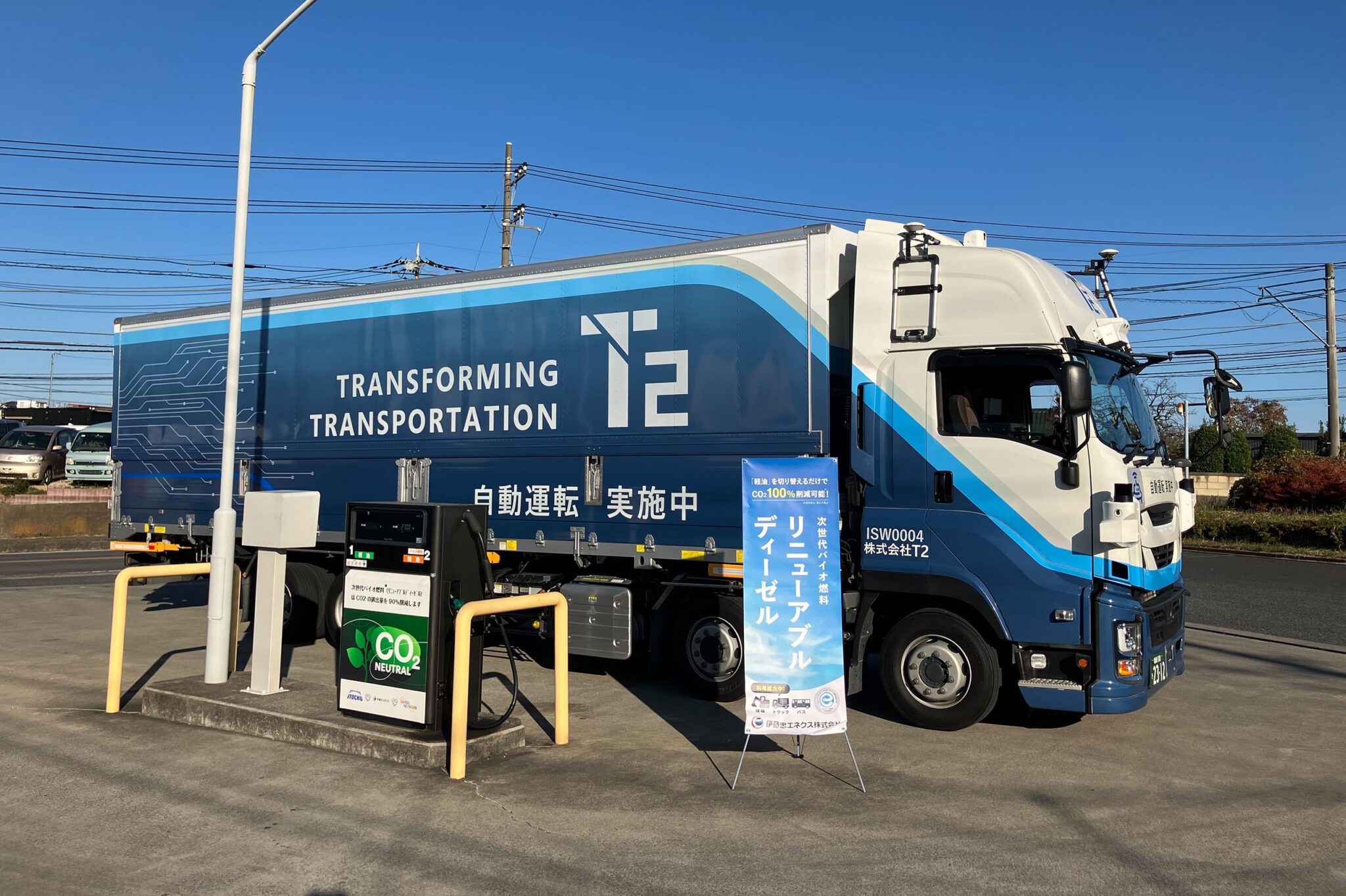
Japanese autonomous freight developer T2 has signed on to a government-run experiment for a forthcoming clean fuel certificate system, agreeing to purchase certificates that represent the low-carbon value of hydrotreated vegetable oil (HVO) supplied by energy major ENEOS. The certificates will be applied starting October 2026 across services T2 provides to roughly 30 large haulage operators and shippers. According to the company, it is the first autonomous truck logistics operator to take part in the trial.
The program is administered by Japan’s Agency for Natural Resources and Energy. Its central mechanic is that T2 can report reduced emissions figures without actually dispensing HVO into its vehicles’ tanks — the certificates stand in for the environmental benefit of the fuel. That matters because some of the Transgate hubs T2 is developing, where drivers hand off or take over trucks between driverless expressway stretches and staffed local-road segments, may not have the physical space to install fuel storage on site.
T2’s track record in automation gives the certificate move additional weight. The company has moved partner cargo using Level 2 automated trucks since 2024, launched commercial operations linking the Kanto and Kansai regions in the summer of 2025, and is aiming for Level 4 trunk haulage beginning in the 2027 financial year. If driver-hour limits can be lifted, the company reasons, the corridor’s current single daily leg could become a full round trip — which would amplify the benefit of trimming each truck’s emissions. The certificate scheme therefore hands T2 a second commercial argument at a moment when Japan’s deepening driver shortage is pushing shippers to look harder at automated alternatives.
The approach does not replace conventional fueling. Under a 2025 arrangement with seven oil companies, T2 continues to use fuel directly, and a tank for low-carbon fuel is scheduled to be installed at its Kanagawa depot this autumn. Looking ahead, the certificates could underpin a future service that lets customers reflect lower emissions in their own logistics records — a detail that could appeal to shippers under pressure to report supply chain carbon footprints.
What do you think?