
LG Electronics Provides Six Cabin Systems for Genesis GV90
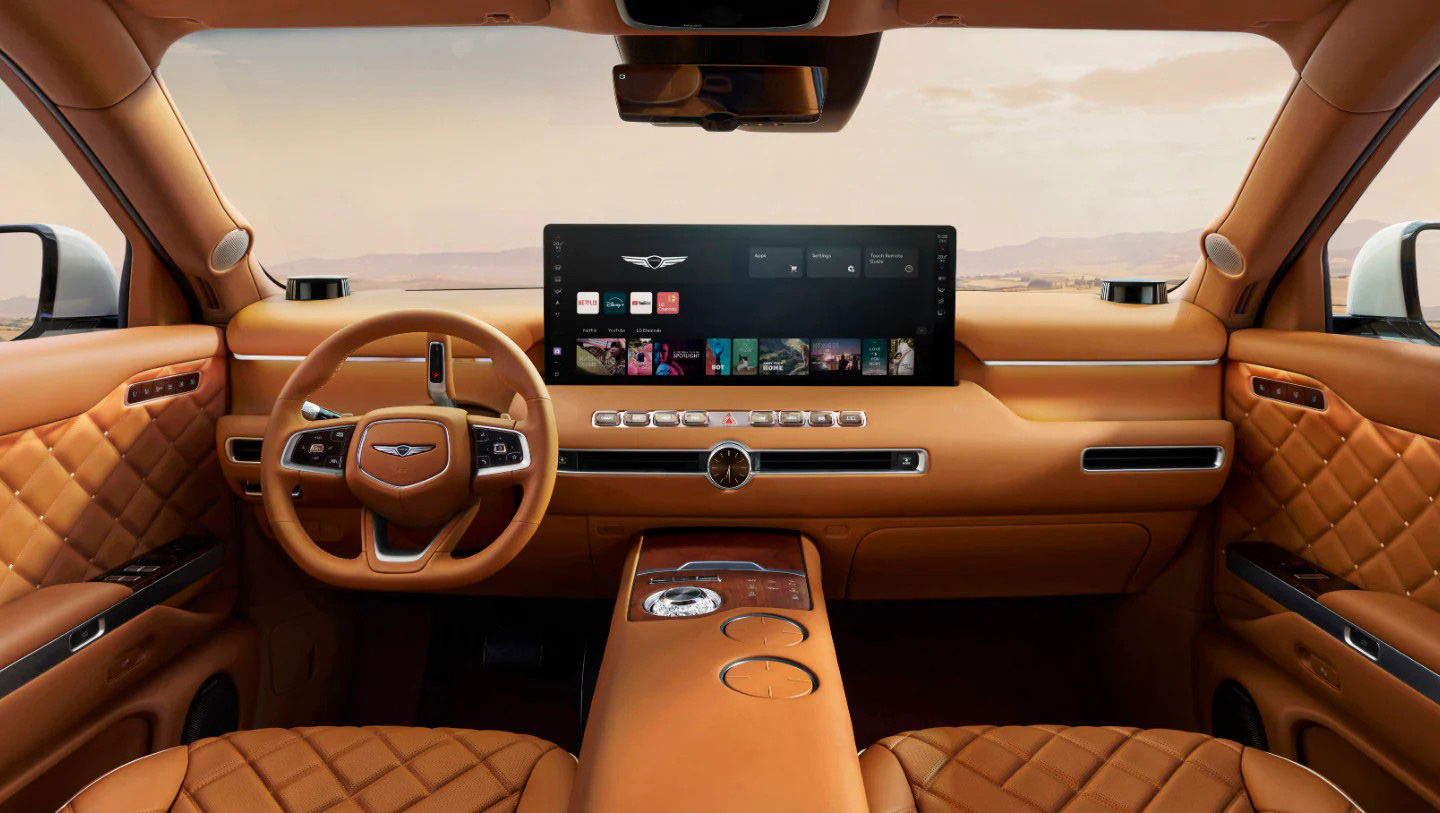
LG Electronics will supply six distinct in-cabin systems for the Genesis GV90, marking the Korean brand’s first full-size flagship SUV. The package spans displays, infotainment, content delivery and connectivity, giving LG a substantial hardware footprint inside Genesis’s most ambitious model to date.
The centerpiece is a 24.6-inch display that physically rises 90 mm when the vehicle is stationary — a first for any Genesis product. Once the vehicle is in motion, the screen retracts and shows 23.6 inches, combining navigation, media and the instrument cluster into one surface. LG’s infotainment hardware runs Hyundai Motor Group’s own Pleos Connect operating system and the Gleo AI voice assistant, a setup that keeps the automaker firmly in charge of the user experience while LG handles the underlying electronics.
Rear passengers are not left out. A second-generation entertainment system pairs a 13.2-inch OLED touchscreen with LG’s content platform, opening the door to streaming apps such as Netflix. An eight-inch console touchscreen with haptic feedback manages climate, seating, doors and massage functions, consolidating rear-cabin controls into a single interface.
Tying the whole arrangement together is LG’s central communication unit 2.0, which links key control units to external networks for remote services and over-the-air updates. TÜV Rheinland has certified the unit against the Automotive Safety Integrity Level D requirements of the ISO 26262 functional safety standard, an endorsement that matters as vehicles grow more software-dependent. Eun Seok-hyun, President of LG’s Vehicle Solution Company, said the combination of display, infotainment, content platform and vehicle control technologies is meant to deliver more seamless and intuitive experiences for drivers and passengers, adding that the company will keep advancing its integrated in-cabin solutions.
The arrangement illustrates a broader pattern in the industry: suppliers increasingly build the hardware foundation while automakers retain control of the software layer and brand identity. For Genesis, the GV90 represents a push into the flagship SUV segment, and the cabin technology is central to how the brand differentiates itself in a crowded premium market.
What do you think?