
T&E Warns Carmakers Are Gaming Plug-In Hybrid Emissions Data as Rules Face Rollback
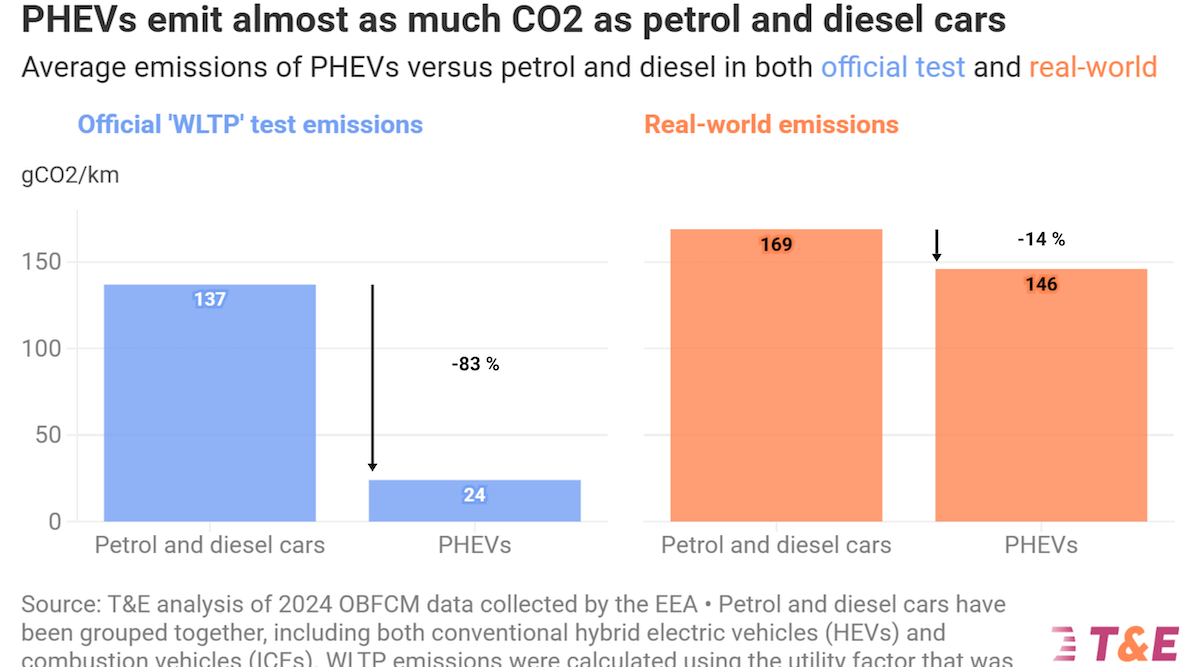
Plug-in hybrids are emitting far more CO₂ on actual roads than their official paperwork suggests, and Transport & Environment argues that rolling back upcoming accounting reforms would leave buyers paying the price. According to the group’s fresh analysis of European Environment Agency figures, PHEVs registered in 2024 produced roughly six times their stated CO₂ output in real driving, a deterioration from the five-fold gap recorded a year earlier.
The financial sting is significant. T&E calculates that the typical owner of a 2024-model PHEV spends an additional €680 per year on fuel compared with what manufacturers’ promoted efficiency claims imply. On the road, these vehicles deliver only about a 14% emissions advantage over conventional combustion and non-plug-in hybrid cars, even though official testing indicates an 83% reduction in CO₂.
Even when the battery is supplying power, T&E found the combustion engine still runs for roughly one-third of the distance travelled. That pattern undermines the premise behind the official “utility factor,” the metric that determines what share of driving is assumed to be electric when regulators calculate a PHEV’s certified emissions. The EU has begun correcting this factor, and the first adjustment in 2025/26 already pushed manufacturers toward larger battery packs and longer electric-only range, the group says. Those range improvements offset about three-quarters of the rise in official CO₂ figures tied to the correction for upgraded models.
Looking at twenty top-selling models that together represent 51% of 2025 sales, T&E points to the Volkswagen Group as the most active responder. Upgrades across five VW models neutralised 90% of the official emissions increase linked to the utility factor change. The Tiguan, for instance, more than doubled its electric range from 55 km to 119 km, ending up with official emissions of 36 gCO₂/km against 32 gCO₂/km before the correction — while giving drivers more opportunity to run on electricity.
The next correction is scheduled to begin in November 2026, but Germany is reportedly pushing to freeze it as part of broader French-German negotiations over an automotive package deal. T&E warns that halting the reform at the 2025–2026 level would keep real-world PHEV emissions underestimated by 56% and reduce the number of battery-electric vehicles carmakers must sell to meet the 2030 target. The group’s cars director, Lucien Mathieu, framed the debate as a repeat of past scandals, arguing that the correction is not merely fixing misleading figures but actively pushing manufacturers to extend electric range. For drivers, the choice T&E presents is blunt: protect household budgets, or let overstated plug-in claims stand.
What do you think?