
smart Revives the Electric Two-Seater with the #2 in Paris
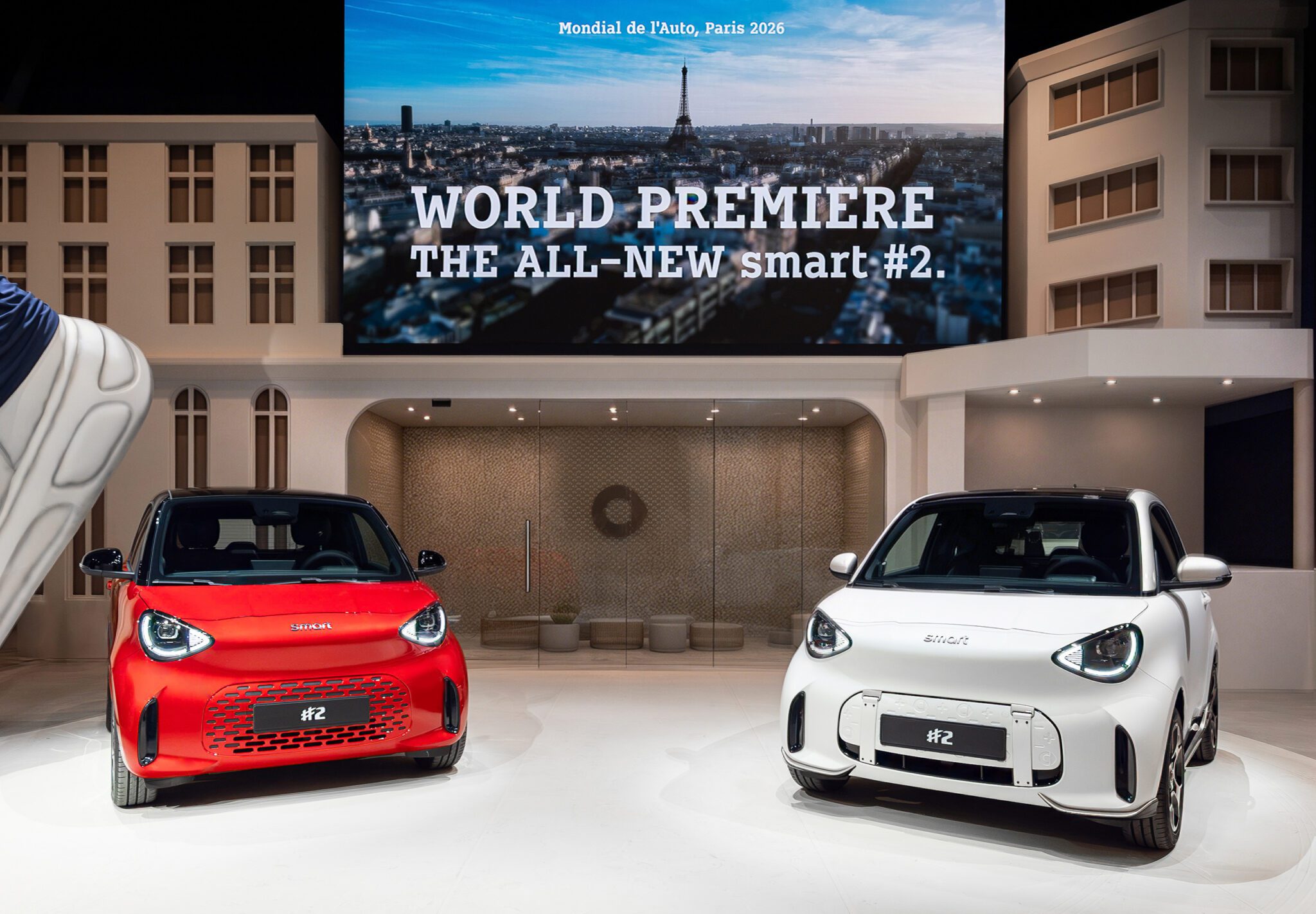
smart has pulled the wraps off the all-electric #2 at the Paris Motor Show, bringing a two-seat city car back to its lineup three decades after the original model made its debut in the same city. The unveiling marks a return to a niche that most European automakers have walked away from, and it doubles as a litmus test for whether buyers still have an appetite for genuinely tiny electric vehicles. Early orders are now being accepted in Europe and China, though final pricing and delivery timelines remain pending homologation and separate local announcements.
Underneath, the #2 sits on a newly developed Electric Compact Architecture. A rear-mounted motor produces 60 kW and 130 Nm, channeling drive to the rear wheels, while the car measures just 2,746 mm from nose to tail. Its structure is built around the Tridion Cell Evo, an evolution of the safety cell that has underpinned the brand’s models since its earliest days. European-spec cars carry a 35.8 kWh lithium iron phosphate battery, targeting 290 km of range, and support rapid charging at 65 kW, enough to move from 10% to 80% in 20 minutes. A 6.95-metre turning circle and a five-link rear suspension — which smart bills as a segment first — round out the urban-focused package.
The move is significant because the previous electric fortwo bowed out in 2024, leaving the two-seat city car segment largely abandoned across Europe. With the #2, smart is betting that a compact footprint and quick charging can offset the natural range limitations of a small battery. Much will hinge on pricing, which has yet to be revealed; a 290 km city car has to compete on cost against larger compact EVs that offer more space for similar money. The positioning challenge is central to whether the segment can be revived at scale.
European buyers will be offered Pure, Pure+ and Premium trim levels. A Couture Edition will be capped at 999 units each in Europe and China, adding a limited-run option for early adopters. Global Chief Executive Tong Xiangbei framed the car as a strategic addition to the portfolio and a test of what the brand can deliver in what he called the toughest urban segment. The #2 effectively returns smart to its roots while asking whether a modern electric two-seater can carve out a durable market in a landscape dominated by larger, longer-range EVs.
What do you think?