
Rust, a Strap and a 396: This 1968 Chevy Caprice Wagon Is a Tough Call
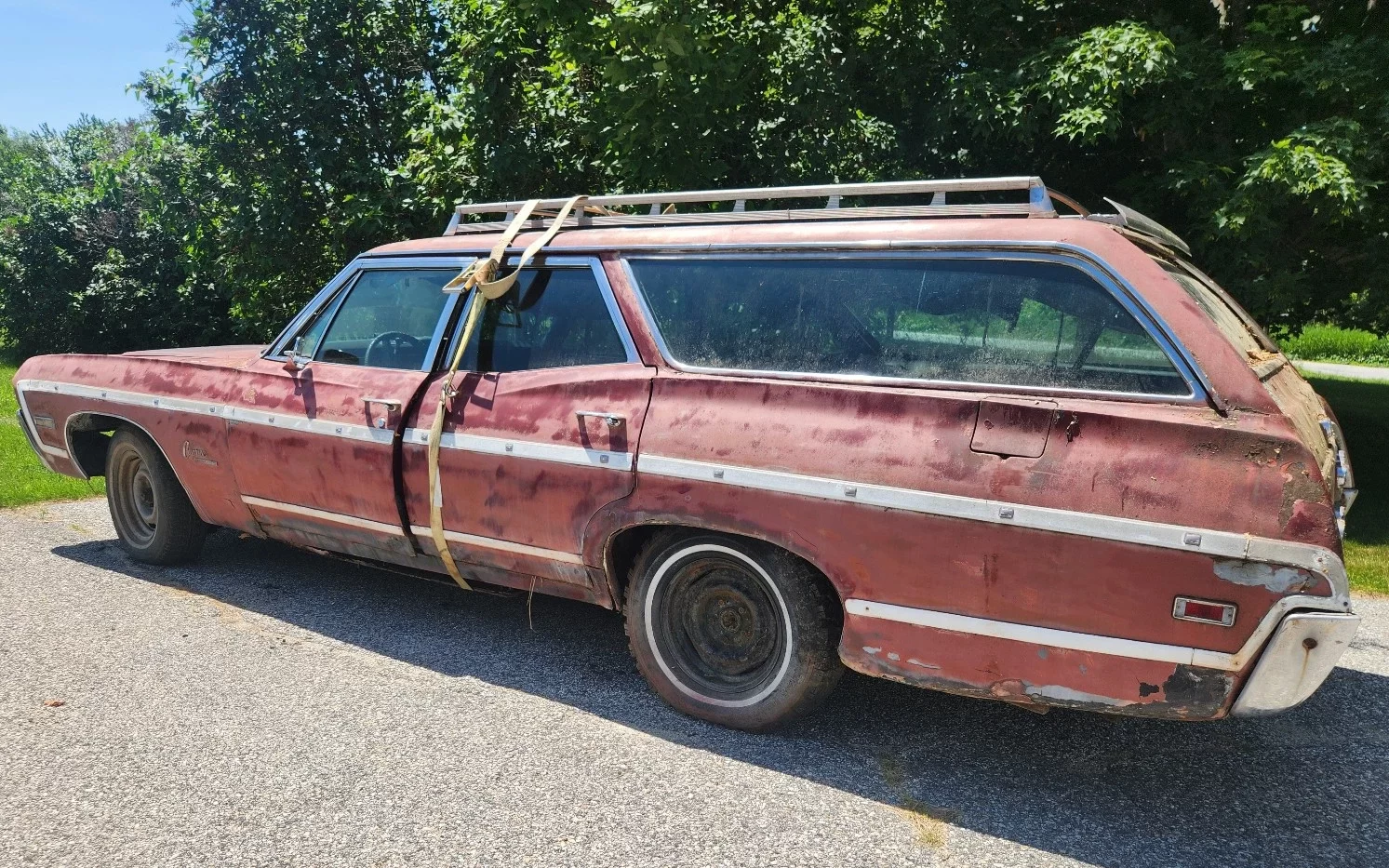
A station wagon held together by a ratchet strap tells you most of what you need to know before you even read the ad. That’s the situation with this 1968 Chevrolet Caprice wagon, currently offered out of Hebron, Maine, with an asking price of $6,500 or best offer.
For context, 1968 was a landmark year for Chevrolet. The division built roughly 2.1 million cars that year and finished first among domestic automakers. The Caprice sat at the top of the range, and about 116,000 of them left dealerships, with total wagon output for the year surpassing 176,000 units. Caprices of this era carried distinctive simulated woodgrain siding, a look that defined the model, though how many wagons specifically wore it isn’t documented.
The bad news is structural. The seller describes the body as very rusty, with old body filler applied by a previous owner simply to keep the car roadworthy. Chevrolet’s 1965-1970 B-body platform is well known for dissolving in the places that matter, and a life spent in Maine’s climate would accelerate that considerably. The frame, however, is the real problem: the seller says it is severely rusted, with a section of the left frame rail missing altogether. That missing piece is currently supported by a strap so the car can be rolled around. Most body panels show corrosion, though the hood, tailgate and bumpers are described as usable.
Mechanically, the wagon shows 114,000 miles and packs a 396 cubic-inch Turbo-Jet V8 rated at 325 gross horsepower, paired with a Turbo-Hydramatic 400 three-speed automatic and a heavy-duty twelve-bolt rear differential. That axle, notably, only fits other B-body cars, so it has no value to Camaro, Nova, Chevelle or El Camino builders. The seller is upfront that the engine hasn’t been started or even turned over, and the car is being sold in the same condition it was acquired, which suggests a quick flip rather than a project someone has poured time into.
Inside, the story is much the same: upholstery, door panels, headliner and flooring are all described as ruined. Even the steering wheel is a question mark, hidden under a lace-on cover, and intact original 1968 wheels are notoriously prone to cracking anyway. The seller pitches the Caprice as either a strong parts donor or a fixer-upper for the ambitious. Valuable pieces do exist, including the drivetrain, glass, front disc brake calipers and the aforementioned body components, but their true condition is unverified. Between the missing frame section and the price, the more realistic path looks like dismantling rather than restoring.
What do you think?