
Numbers-Matching 1972 Dodge Challenger 340 Rallye Heads to the Market
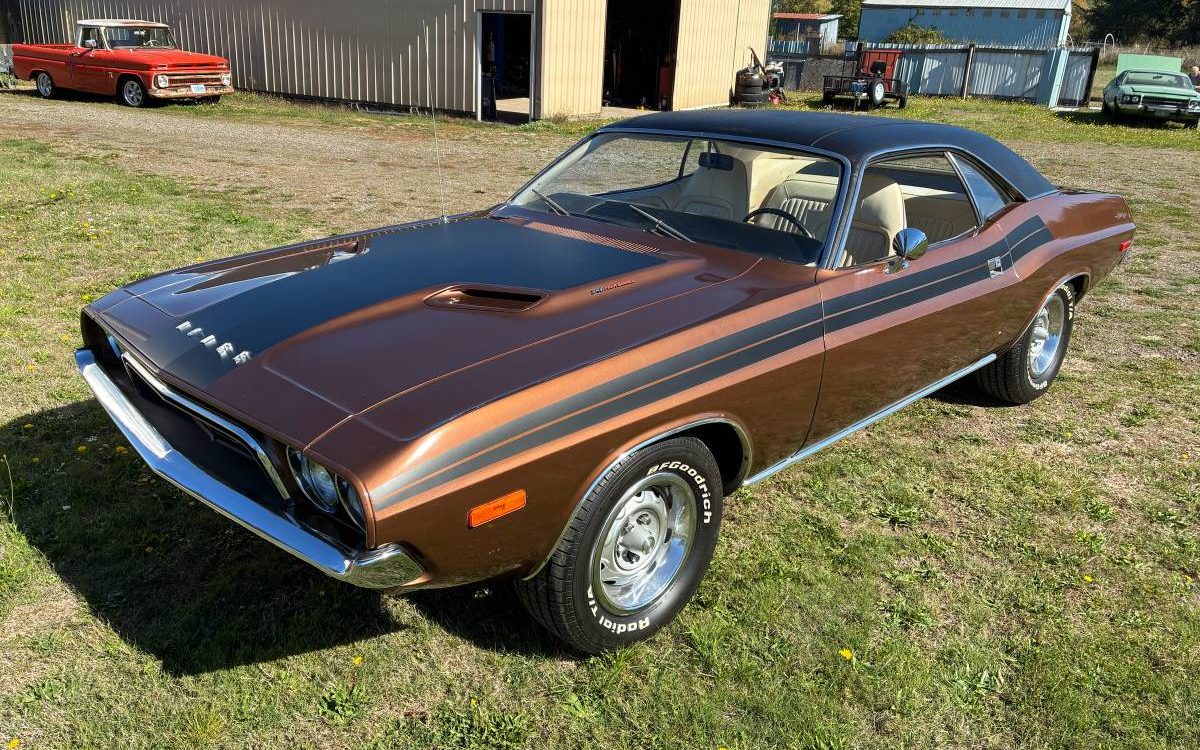
Among Detroit’s pony car class, the Dodge Challenger arrived last to the party, yet it left a mark that outlasted its brief showroom run. Built on Chrysler’s E-body architecture — the same foundation underneath the Plymouth Barracuda — the Challenger was produced between 1970 and 1974, and from 1972 onward the sportiest trim carried the Rallye badge. Gone by then were the big-block and Hemi powerplants, leaving the 340 cubic-inch V8 as the enthusiast’s pick. A surviving example of that era is now up for sale out of Salem, Oregon, listed on craigslist at $34,950, and it retains its original, numbers-matching 340 V8.
The Challenger’s sales arc tells the story of the whole muscle car segment’s decline. Roughly 77,000 examples moved in its debut 1970 model year, but by 1972 the figure had collapsed to under 27,000 units. Rising insurance premiums were the culprit, squeezing demand for high-output V8s across the board and hitting both the Challenger and its Barracuda sibling hard. Chrysler kept both cars in production through 1974 before retiring them. Even in that lean 1972 season, the Rallye accounted for about 30% of Challenger sales, and buyers who wanted less punch than the 340 could specify a 318 instead.
This particular car comes with more than just a story. The seller has assembled documentation that includes the factory broadcast sheet alongside a lengthy ledger of repairs and upgrades carried out over the years, which suggests the mechanical side may now be in better shape than it was when new. It has clearly been driven rather than stored, showing 122,000 miles on the odometer. Body, paint and the vinyl top are reported to look strong, while the interior is described as serviceable but carrying visible signs of age.
The seller calls it a “very nice driver,” a characterization that fits a car meant to be used rather than trailered. E-body Mopars have grown steadily more collectible since leaving production, and clean 1970-74 Challengers and Barracudas command serious money today. The most desirable are the 1970 and 1971 cars, simply because the 383, 440 and Hemi V8s were still on the order form then. This one sits in a more accessible tier, but with matching numbers and paperwork in hand, it occupies solid ground.
For anyone with a Mopar already in the garage, the seller is open to discussing a partial trade — specifically a B-body or E-body from 1968 through 1972. That widens the pool of potential buyers beyond cash-in-hand collectors and speaks to how these cars circulate within a dedicated enthusiast community. For a buyer who wants a genuine, documented driver rather than a museum piece, this Oregon Challenger presents a straightforward proposition.
What do you think?