
Rhenus Puts 51 Mercedes eSprinter Vans to Work on Last-Mile Deliveries
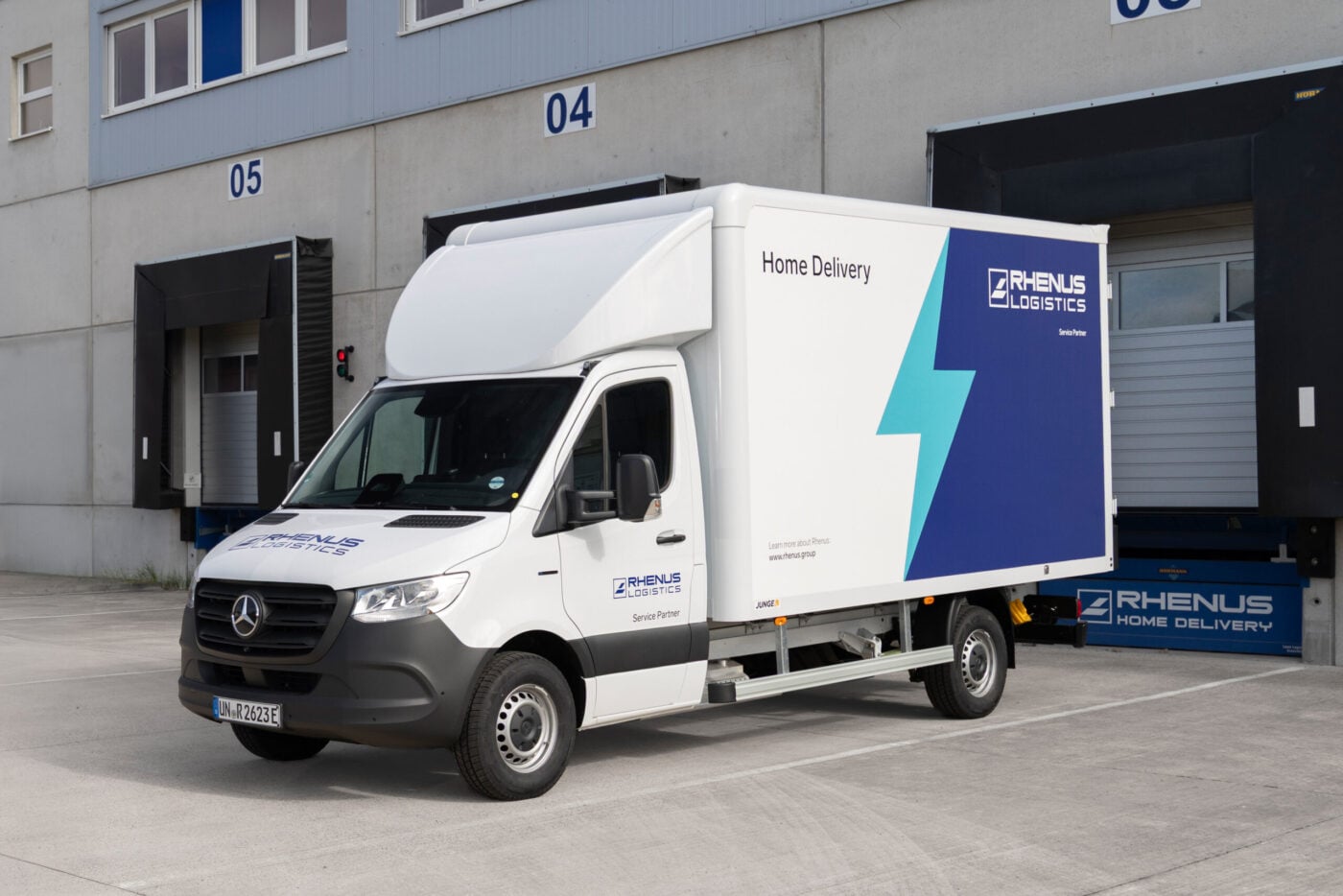
Logistics operator Rhenus is adding 51 fully electric Mercedes-Benz eSprinter vans to its delivery network, putting the battery-powered vehicles to work nationwide on final-mile customer drop-offs. The fleet will handle bulky freight such as furniture, large home appliances and consumer electronics as part of the company’s Home Delivery division, which combines warehousing and regional distribution with direct-to-customer service.
The technical package behind the order centers on the eSprinter chassis with rear-wheel drive, paired with an 81 kWh battery and a 100 kW electric motor. Charging is handled through an 11 kW onboard AC system, while DC fast charging tops out at 115 kW. Mercedes-Benz has not published a range figure for this particular configuration. The box bodies come from German bodybuilder Junge Fahrzeugbau, and the vans themselves rolled off the line at Mercedes-Benz’s Ludwigsfelde plant. Standard equipment includes the MBUX multimedia system, remote and navigation services, and a suite of driver assistance features spanning Active Brake Assist, Distance Assist, Blind-Spot Assist and Lane-Keeping Assist.
Battery-electric vans are a natural fit for last-mile work, where routes tend to be predictable and vehicles return to fixed depots on a regular schedule. That pattern makes charging planning simpler and helps operators get the most out of each vehicle’s daily duty cycle.
Rhenus is not limiting its electrification push to Germany. In Poland, the company grew its electric van fleet by nine units in August, bringing the total there to 33 vehicles. Those are used mainly for urban last-mile deliveries and for regions where access restrictions favor zero-emission transport. At the same time, Rhenus is exploring other low-emission drivetrains for heavier haulage, running a Mercedes-Benz GenH2 truck in regular logistics service at its Duisburg site since early 2026.
Mercedes highlights attractive total cost of ownership for the 51 new vans, though it has not released specific figures. How the vehicles perform economically in day-to-day operation will depend on factors including mileage, energy prices, charging infrastructure availability and how intensively each van is used. Meanwhile, the automaker is already preparing the next generation of its electric commercial vehicles, which is expected to bring 800-volt architecture, faster charging, the MB.OS operating system, expanded over-the-air capabilities and deeper integration of external fleet management tools.
What do you think?