
Renault's E-Space Concept Reimagines the Minivan for the Electric Age
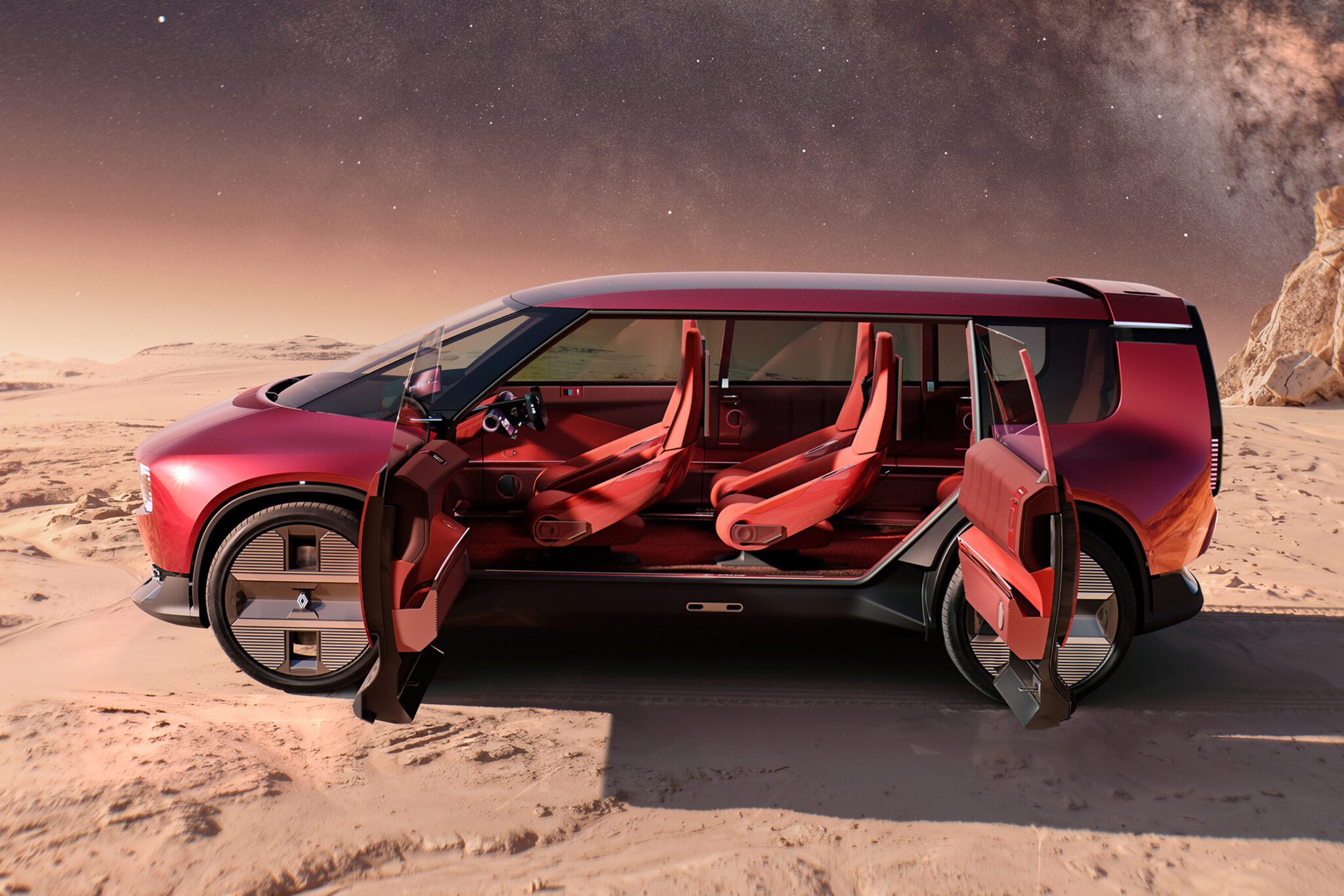
Renault used the Paris Motor Show stage to roll out the E-Space Concept, an electric multi-purpose vehicle that deliberately reaches back to the brand’s 1984 Espace for inspiration while asking a pointed question: are European car buyers finally ready to move past the SUV?
The concept’s footprint is central to its argument. At 4.70 metres long, 2.02 metres wide and 1.67 metres tall, it reproduces the stance of the original Espace almost exactly, but places 23-inch wheels at the extreme corners to free up interior space. A front splitter lowers itself at speed to manage airflow, and glazing extends below the body panels beneath a deliberately low waistline — a design choice that lets someone standing outside see clear through the cabin.
That low beltline enables a layout Renault calls pillarless, with rear-hinged doors opening onto six individual seats mounted on a flat floor. The middle row can swivel to face the rear pair or fold flat into a table, while a sliding centre console carries a refrigerator and an air purifier. The interior leans heavily on bio-based materials, among them straw marquetry, a wool carpet and a paint finish using 18% bio-based resin.
The most concrete production indicator inside is the OpenR Panorama display — a pillar-to-pillar screen measuring 1,130 mm by 110 mm. Renault says the setup will appear on future Rafale and Scenic models before anything else. Notably, the screen is not touch-sensitive; drivers interact through two flexible screens flanking a steer-by-wire wheel that has no mechanical connection to the road wheels. Peugeot’s RCZ Vision concept uses the same steering approach at the same show, suggesting the technology is climbing French automakers’ priority lists.
Romain Gauvin, Head of Advanced Design and Concept Cars for the Renault brand, framed the concept’s philosophy around visibility and openness: “With the low waistline, you can see into the cabin when standing next to the car. And once again, you can drive with your elbows on the door.” Whether that nostalgia-tinged pitch translates into showroom demand remains an open question, but Renault is clearly testing whether the MPV template it helped define four decades ago still has room to grow in an electrified lineup.
What do you think?