
Reader Mailbag: Do EVs Really Run Out of Range? And Does Tesla Still Lead?
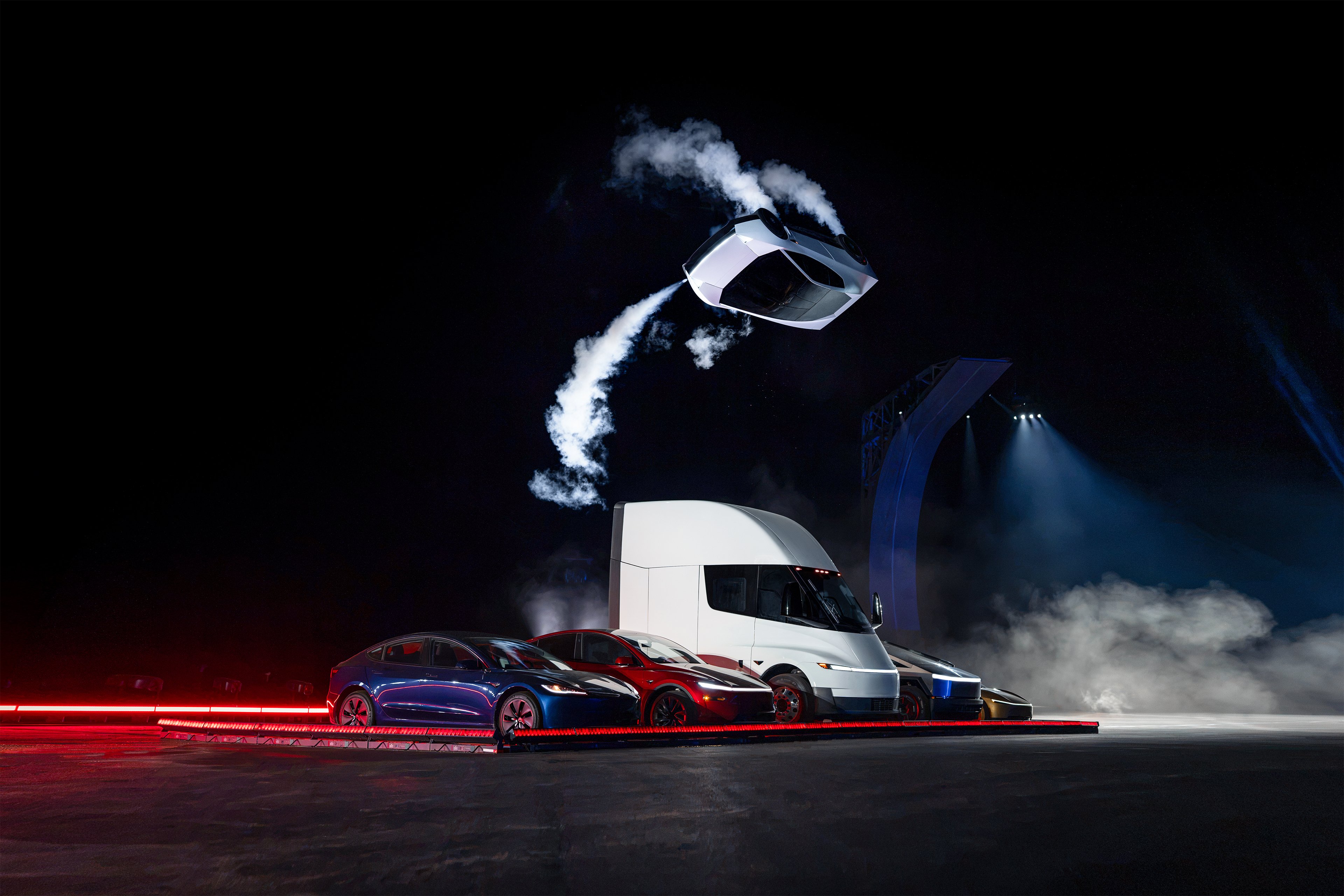
A set of questions from four Year 6 students has turned into one of the more useful EV primers we’ve read this year. Jayden, Tony, Owen and Mason asked Bryce Gaton — via The Driven — about range, charging speed, the new Tesla Roadster, recycling and the environmental bill for mass EV adoption. The answers are worth repeating, because most of them are questions grown-up buyers still ask.
Do electric cars die too fast?
The short answer is no — and the reputation is a leftover from 2010, when the Nissan Leaf and Mitsubishi iMiEV carried small, costly packs and managed barely more than 120 km of real-world range. That era is long gone.
Modern EVs now sit in the same ballpark as petrol cars: most combustion models carry enough fuel for 500–700 km, and plenty of today’s battery packs cover similar distances. The difference is where each drivetrain is happiest.
- Petrol: burns cleaner and goes further at steady highway speeds; stop-start suburban driving wastes roughly 15–20% more fuel than the rated figure.
- Electric: thrives on city stop-start thanks to regenerative braking and low aerodynamic drag, often beating its official range by 10–15% — then drops by a similar margin on the open highway where wind resistance dominates.
One detail worth pinning to the fridge: most of the energy in a tank of petrol or diesel leaves the car as waste heat.
“Slow charging” misses how EVs are actually used
Comparing a charging cable to a fuel bowser is the wrong mental model. Charging mostly happens while you’re doing something else — asleep, at work, at lunch.
- Standard wall socket: about 150 km of range added over a 12-hour overnight charge.
- Dedicated home wallbox: 500–600 km overnight, or roughly 100 km in a couple of hours.
- DC fast charger on a road trip: the quickest cars recover 100 km in a few minutes and approach a full pack in under 10 minutes.
And the ceiling keeps moving. BYD’s flash-charge setup is quoted at close to 100 km in under a minute.
Charging at a glance: ~150 km overnight on a household socket · 500–600 km on a home wallbox · 100 km in minutes on a DC fast charger
The students also asked about Tesla’s new Roadster. The reply was blunt: the flying and downforce tricks shown at the reveal won’t be legal on public roads, and this iteration looks unlikely to reach production — much like the Roadster 2.0 unveiled back in 2017.
That matters because Tesla’s early lead has narrowed. Design and EV technology leadership now looks more scattered — Xpeng with its robotics and flying-car work, Hyundai and Kia with V2L and V2G capability plus quick performance models, Renault with a lineup built around driving fun. Even in autonomous development, Tesla is no longer the one setting the pace.
What mass adoption does to the planet
The environmental verdict is straightforward: tailpipe pollution disappears entirely wherever EVs replace combustion cars. The harder questions sit upstream — how the electricity is generated and what happens to packs at end of life — and those are precisely where recycling policy and grid decarbonisation will decide the final score.
Not bad for a primary school exhibition.
Photo: The Driven · Official Press Kit / Editorial (Editorial / Press Kit)
Source: The Driven
Curious how this compares to other EVs? Try our comparison tool →What do you think?