
Rare Rides Icons: How the Ford Taurus Evolved Across Its First Generation
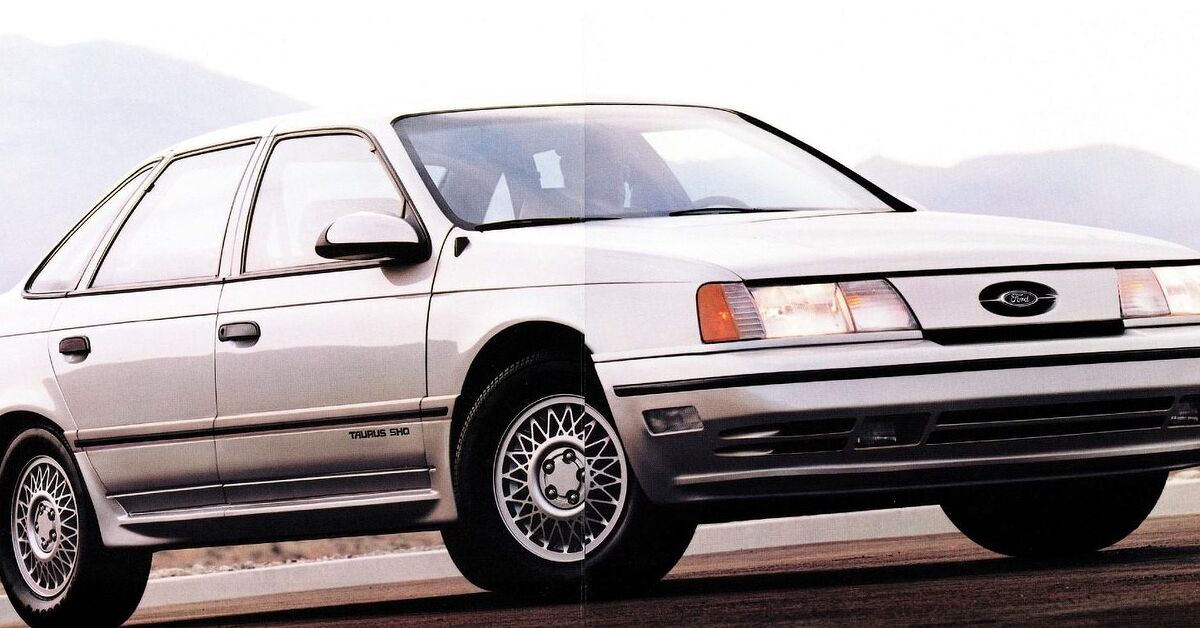
When Ford introduced the first-generation Taurus in 1986, it arrived in four trim levels and a long list of optional extras. To simplify ordering for dealers and buyers alike, the automaker bundled popular features into what it called Preferred Equipment Packages, offering them at a discount. Over the model’s six-year run, Ford kept refining the formula, even adding a sporty variant and a related Lincoln sedan along the way.
The second year brought no major changes to the sedan or wagon, and trim levels stayed put. By 1987, all Taurus and Sable models came with three-point rear seatbelts, replacing the lap belts found in some 1986 examples. To distinguish the two, the Sable became a V6-only offering from 1987 onward, with four-cylinder power reserved for its 1986 debut year. The first real revisions landed in 1988. The underpowered MT5 wagon, never a hit, was dropped after 1987, leaving the sedan as the sole manual-transmission Taurus. That year also brought a more potent engine option: the Essex 3.8-liter V6, available on GL and LX trims, which used multi-point fuel injection to produce 140 horsepower and 215 lb-ft of torque.
That same 3.8-liter V6 powered an entirely new Lincoln product for 1988: the front-wheel-drive Continental, the brand’s first. Riding on a Taurus platform stretched three inches to a 109-inch wheelbase, the Continental measured about 18 inches longer than the Taurus at 205.1 inches, and was slightly wider too. It was also the first Lincoln since 1948 without a V8 option. With its upright, formal design and expanded dimensions, it boasted the largest interior volume of any front-wheel-drive car that year, though it borrowed obvious Taurus door handles and skins in a cost-saving move. Lincoln marketed it to younger affluent buyers and European luxury intenders, and the front-drive Continental outsold its predecessor handily, setting sales records for the brand.
For 1989, the MT5 trim disappeared as Ford prepared a far more exciting manual Taurus. Interior updates included revised door panels, door locks, and handles, with chrome door-panel trim available for just one year and metallic pulls across all trims. The 2.5-liter inline-four was now limited to base L and GL sedans. Exterior tweaks brought a slimmer grille, narrower headlamps, sharper parking lamps, and horizontal lower grille slots instead of the previous eggcrate look. Sedans also traded their amber rear indicators for fully red lenses. The headline addition, though, was the range-topping SHO, or Super High Output, featuring a Yamaha-built 3.0-liter V6 with an aluminum head, dual overhead cams, 24 valves, and a variable-length intake manifold. It delivered 220 horsepower and 200 lb-ft of torque, revved to a 7,000-rpm redline, hit 143 mph, and reached 60 mph in 6.6 seconds.
A Mazda-engineered MTX-IV transmission, a revised version of Ford’s MTX designed for sporty duty, managed that power, and the same gearbox found its way into Vulcan V6-powered Tempo and Topaz models. Every SHO wore an exclusive dual exhaust, more aggressive tires to match suspension upgrades, and visual cues like a Sable-sourced smooth hood, ribbed bumpers, fog lamps, valances, scalloped side skirts, and body-colored B- and C-pillars for a monochromatic look. Inside, buyers got sporty bucket seats, often leather, a leather-wrapped wheel, and Sable-based instruments with a tachometer, set against gray dash trim rather than the LX’s wood tone. With the MT5 gone and the SHO in place, the Taurus entered its final years with a sharper identity, having silenced early critics who dismissed it as too futuristic.
What do you think?