
Range Rover Electric: How an Overheating Front Motor Delayed JLR's Flagship EV
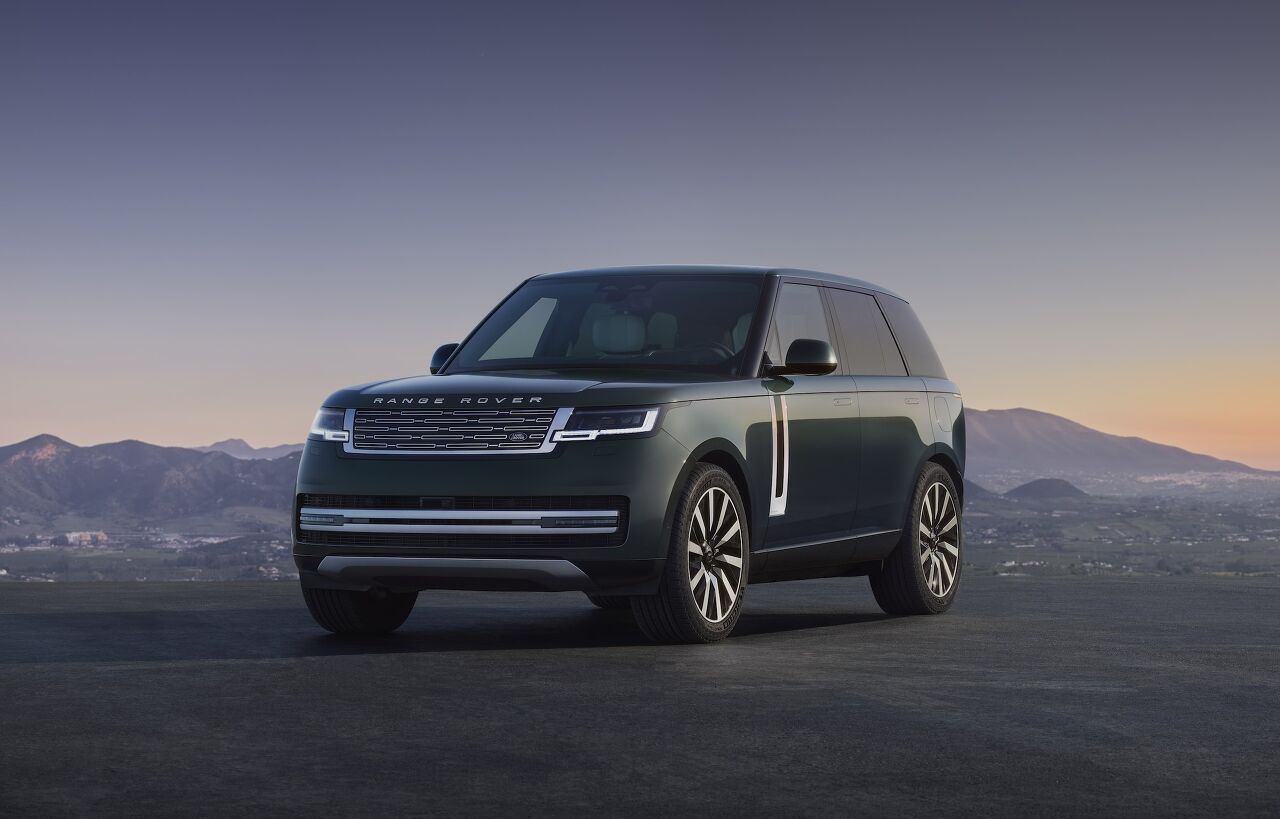
Jaguar Land Rover promised a battery-powered Range Rover more than five years ago. It finally arrives as a 2027 model, and the reason it took so long has less to do with software or supply chains than with a front motor that simply got too hot.
The original engineering plan paired an induction motor on the front axle with a permanent-magnet unit at the rear. The logic was sound on paper: an induction motor can be decoupled when all-wheel drive isn’t needed, trimming energy use and stretching range on long motorway runs.
Testing killed the idea. Program chief Simon Fairbrother has explained that the induction setup was overheating, which forced the team to dial back power. In high-temperature runs especially, the front axle couldn’t hold the off-road performance the badge is built on. A Range Rover that throttles itself when the mercury climbs isn’t a Range Rover — so the concept was scrapped outright.
Two Identical Motors Instead of One Clever One
The fix was almost stubbornly simple. Land Rover already had a sturdier permanent-magnet motor on the rear axle, so engineers mirrored it up front. The result is twin permanent-magnet synchronous drive units, each rated at 349 hp (260 kW).
Key Specs: Twin permanent-magnet motors · 542 hp combined · 627 lb-ft torque · 118.5 kWh usable battery (344 prismatic cells) · 800-volt architecture · 372 mi WLTP range · 10–80% in ~22 min on 350 kW DC
Combined output lands at 542 hp and 627 lb-ft, more twist than any Range Rover before it. JLR says the drive units deliver 20% more torque than rival motors of the same physical size, helped along by silicon carbide semiconductors.
Swapping motor types isn’t a matter of pulling a different part off a shelf. The whole propulsion system had to be re-modelled, retested and revalidated. That rework is a large part of why the vehicle landed later than planned.
The Off-Road Numbers Had to Hold
The brief never changed: a Range Rover first, an electric vehicle second. That’s why it looks nearly indistinguishable from the combustion versions, tailpipes aside.
- Fording depth: unchanged at 900 mm
- Approach and departure angles: match the gas model, bar a slightly reduced departure angle due to a new aero rear diffuser
- Ground clearance and break-over: marginally down versus petrol
- Climbing: single-pedal driving handles grades up to 45 degrees, and pulls away cleanly on 33-degree slopes
Fairbrother points to the completely flat underbody — a by-product of the battery pack’s structural rigidity — as partial compensation, letting the car slide over obstacles it would otherwise catch on.
Same Line, Same Platform, Slightly More Weight
The electric Range Rover rolls down the same Solihull line as its combustion and plug-in hybrid siblings, letting JLR adjust output to demand within weeks. That flexibility traces back to the MLA architecture, engineered over a decade ago to accept combustion, mild-hybrid, plug-in hybrid and full-electric drivetrains alike.
Ditching the front, centre and rear differentials plus the driveshafts recovers nearly as much mass as the battery and motors add. The electric version tips the scales just 165 lbs (75 kg) above the V8, with a lower centre of gravity.
There are trade-offs. The bulky rear motor rules out the seven-seat layout offered on the long-wheelbase petrol model.
Who’s Actually Raising a Hand
JLR reports over 80,000 genuine expressions of interest, and the geography surprised the team. Half come from North America, clustered in New York, California, Oregon and Washington. Around 70% are new to the brand, and roughly 20% already run an EV at home.
Product manager Rachel Hogg expects fully electric models to settle at 10–20% of Range Rover sales over time. Managing Director Martin Limpert has called the finished car the most accomplished Range Rover yet, backed by more than 250,000 hours of virtual testing and a physical fleet that covered mileage equal to circling the globe 38 times. Along the way the company filed 300 patent applications.
The delay, in other words, was a decision rather than a mishap. Pricing starts at £154,070 OTR in the UK and $138,000 in the US, with a Curated First Edition offered in three exterior colours for early buyers.
Source: The Truth About Cars
Curious how this compares to other EVs? Try our comparison tool →What do you think?