
Range Energy Says Its Battery-Powered Trailer Nearly Matches Tesla Semi Savings
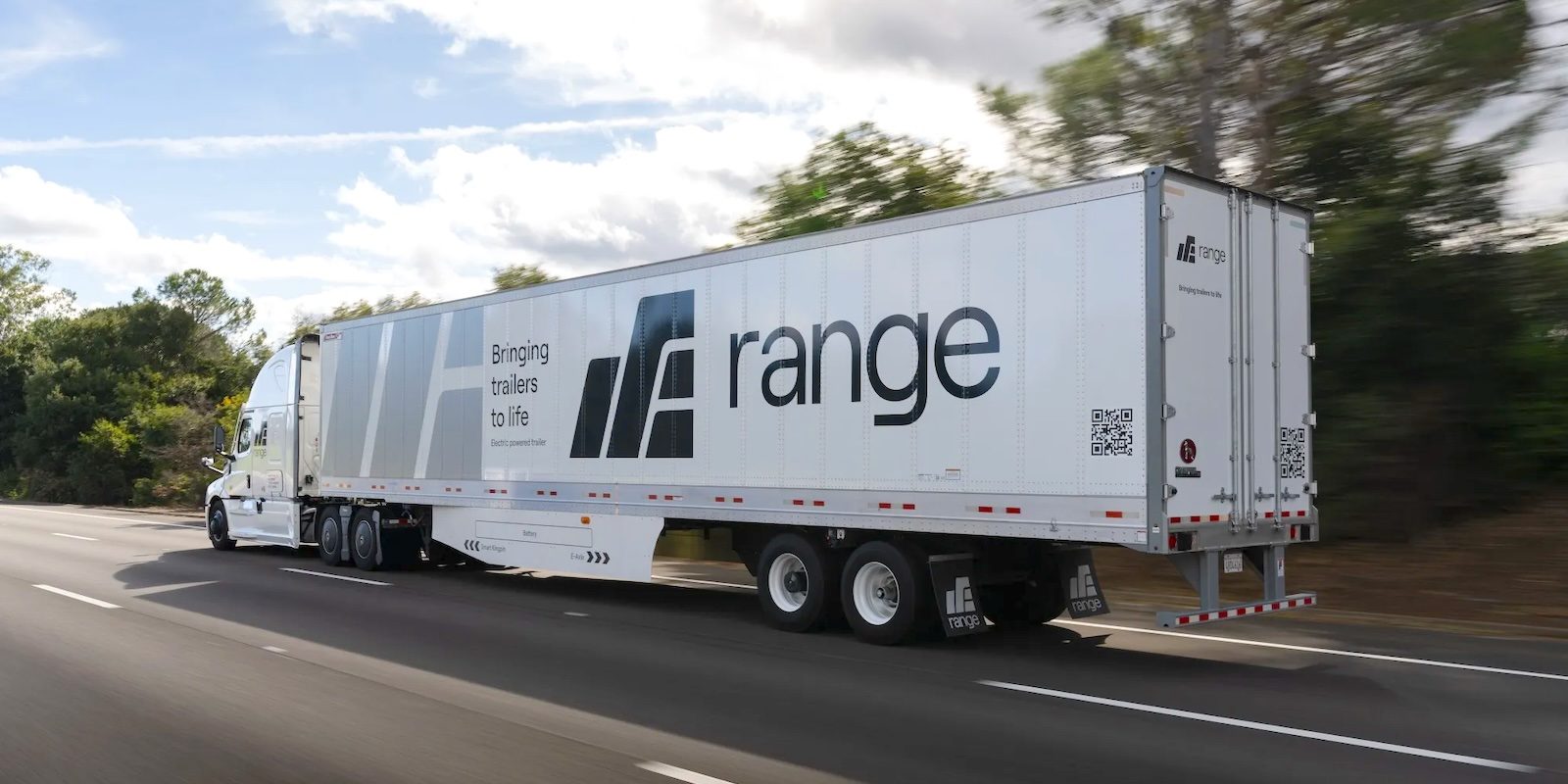
Range Energy has a pitch for trucking fleets staring down record diesel prices: don’t replace the tractor, electrify the trailer behind it. The California startup — founded and staffed largely by former Tesla hands — has published a white paper comparing what fleets can save with its eTrailer against a fully electric Tesla Semi, and the gap between the two turns out to be narrower than you might expect.
The core idea is simple. The eTrailer carries its own battery and motors, so it pulls part of its own weight and leaves the diesel tractor doing far less work. Nobody is pretending the truck stops burning fuel. It just burns a lot less of it.
The Numbers Behind the Idea
Range has tested this before. Early trials showed a 36% cut in fuel use, and a pilot with a California egg farm pushed the farm’s diesel fleet efficiency up by 50-70%. The new paper leans heavily on refrigerated trailers, or “reefers,” which happen to be Range’s first commercial target.
Reefers suit trailer electrification well. They tend to fill up on volume rather than weight — the industry calls it cubing out — so battery mass doesn’t steal payload. The pack also runs the refrigeration unit, which means no diesel generator bolted to the front of the trailer.
Key Specs: 36% fuel reduction in testing · 50–70% efficiency gain in egg farm pilot · eTrailer volume production targeted for late 2027
Where the Two Paths Diverge
On paper, a fully electric Semi can save a fleet more money than an eTrailer. In practice, that advantage swings wildly depending on how a depot is set up:
- Public charging only: the Semi gets expensive fast, because retail electricity rates undercut the case for a home-base charger.
- Depot charging: the upfront cost stings, but commercial utility rates make the math work over time.
- Two Semis sharing one charger: the best savings in the study, though it demands tight scheduling and overnight running.
The eTrailer’s edge isn’t raw savings — it’s speed and simplicity. A fleet can bolt one onto existing operations with barely a change to daily routines. An electric tractor usually drags a much bigger infrastructure project along with it.
Range found its trailer saves marginally more than the Semi in most of the scenarios it modeled. Marginal is the word here. Each option has clear strengths, and both beat diesel in most cases — but not every one.
The Fine Print Worth Reading
The white paper has real limitations, and Range doesn’t hide them. It estimates future diesel prices using a figure below today’s record highs but still elevated by historical standards. It excludes financing costs, lacks real-world Tesla Semi data, ignores rival electric tractor and trailer offerings, and skips regional incentive programs entirely.
Most notably, it doesn’t put a dollar figure on diesel emissions — a cost borne by everyone, and one that full electrification reduces more thoroughly than a hybrid trailer.
It’s also worth remembering that neither option offers relief today. Tesla has been taking Semi orders for close to a decade and has only recently claimed production is properly underway. Range says volume eTrailer output won’t begin until late 2027.
That leaves fleets planning for the next oil shock rather than this one. And there’s nothing stopping a company from pairing the two — an electrified trailer hitched to an electric tractor works exactly the same way, extending range on lighter long hauls while keeping the reefer running when disconnected from the cab.
Source: Electrek
Curious how this compares to other EVs? Try our comparison tool →What do you think?