
Public Charging Gets a Makeover: IONNA's Lounge-Style Rechargeries Set New Standard
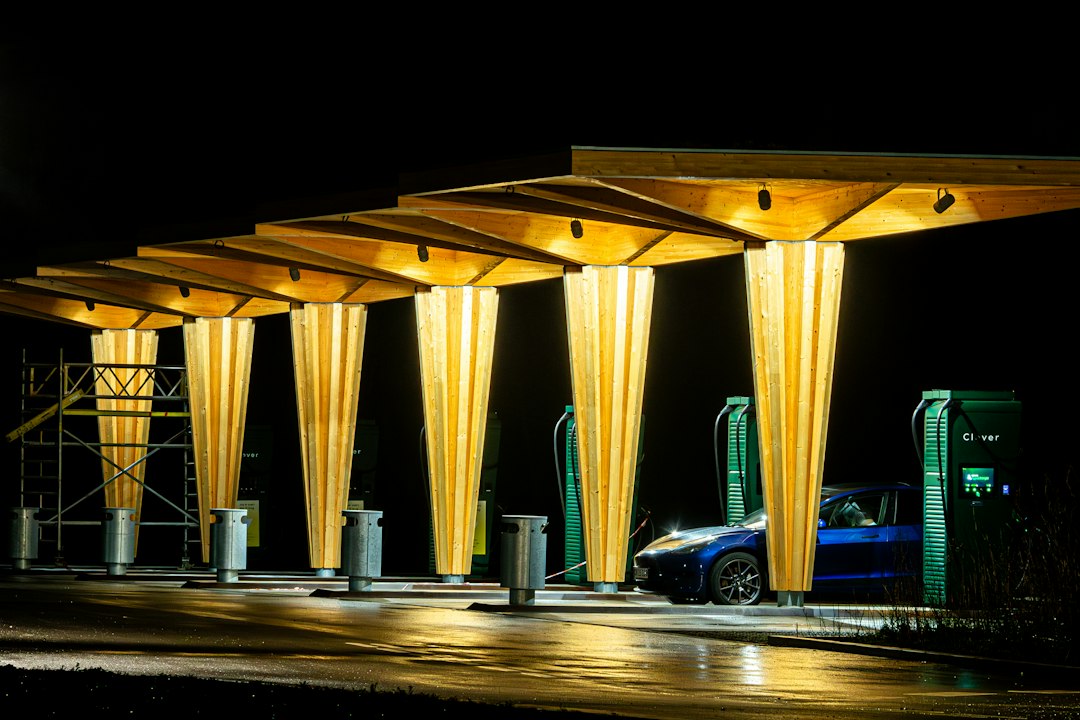
Public EV charging has long felt like an afterthought — chargers tucked at the far edge of a rest stop, exposed to weather, with little more than a cable to keep drivers company. That era is fading. A wave of automaker-backed networks is rewriting what a charging stop can be, and the results are drawing attention.
At the center of this shift is IONNA, a joint venture formed in 2023 by BMW, General Motors, Honda, Hyundai, Kia, Mercedes-Benz, and Stellantis, with Toyota joining later. Its “Rechargery” locations offer covered charging bays and a retro-styled lounge atmosphere complete with Wi-Fi, light food and drinks, and restrooms. The first site broke ground in North Carolina in 2024, and the network has expanded steadily since — reporting nearly 1,000 charging bays across more than 100 sites by March, with roughly 4,700 more under contract, including about 1,500 already under construction or awaiting final approval. IONNA aims for 30,000 ultra-fast charging points by 2030, and in April launched a partnership bringing its branded chargers to over 350 Circle K stores nationwide.
The strategy appears to be paying off. In August, IONNA topped JD Power’s 2026 U.S. Electric Vehicle Experience Public Charging Study for DC fast charging stations in its first year of eligibility, with the firm noting that newer, faster chargers, larger sites, and destination-style amenities are reducing failed charging attempts. IONNA has also addressed app fatigue by letting drivers use their existing charging apps rather than requiring a proprietary one.
Others are pushing forward too. Tesla continues expanding its Supercharger network with a factory-assembled station design that folds for easier transport — cutting installation costs and speeding deployment. EVgo unveiled a power-sharing station model in late September capable of delivering up to 750 kW, with dynamic output adjustment across ports. And startup Voltpost is installing modular chargers on lampposts in dense cities. For drivers without home charging, these developments matter — public infrastructure remains the key that unlocks broader EV adoption.
Photo: Eva Kristensen on Unsplash (Unsplash License)
Curious how this compares to other EVs? Try our comparison tool →What do you think?