
ProLogium and Rimac Map Out Solid-State Battery Road Tests by 2028
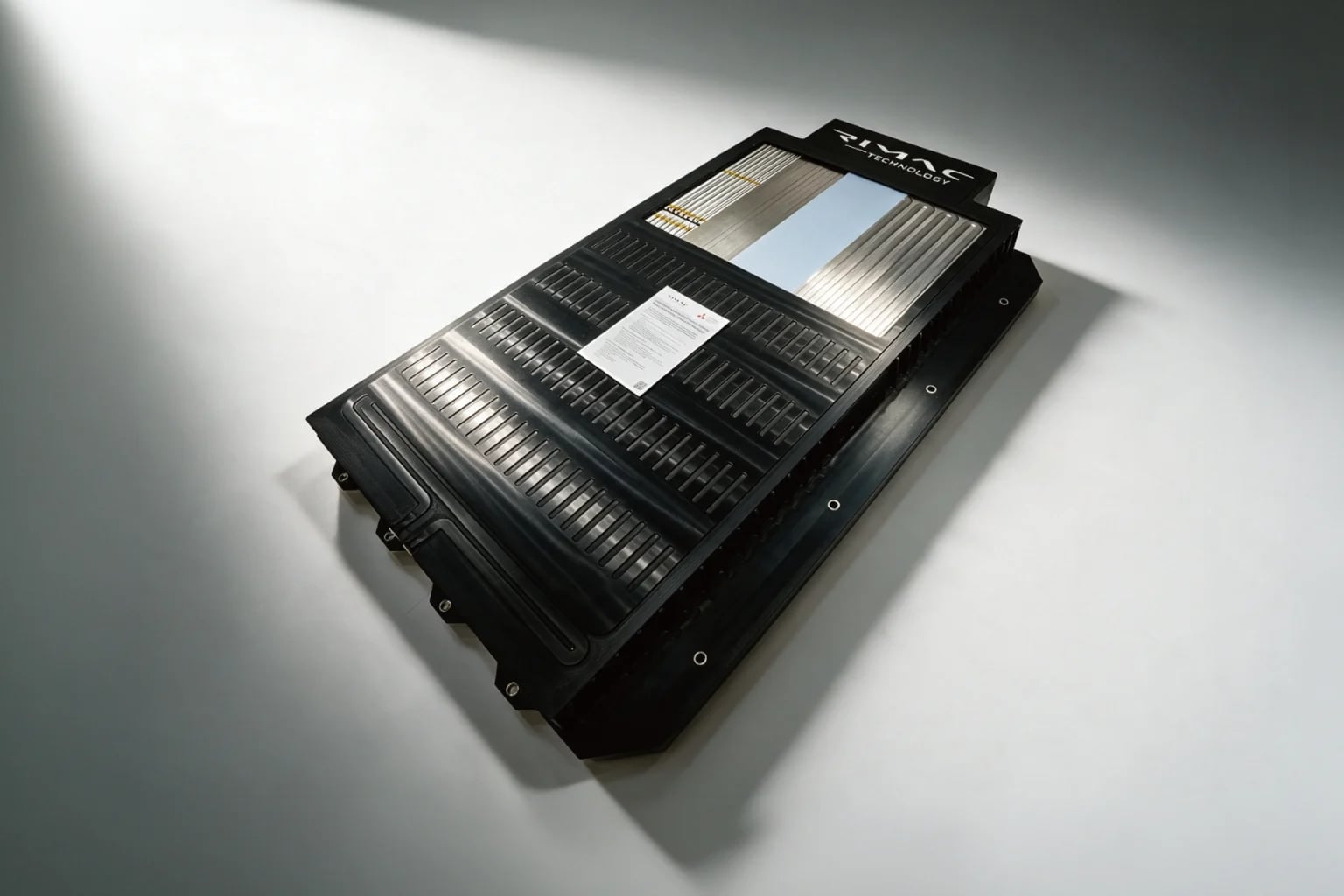
Solid-state batteries have long been billed as the next big leap for electric vehicles, and a partnership between Taiwan’s ProLogium and Croatia’s Rimac Technology is now putting a concrete timeline behind that promise. At the Paris Motor Show, the two companies pulled the wraps off a concept mock-up of their planned battery pack, offering the first tangible look at a collaboration that pairs ProLogium’s cell expertise with Rimac’s system-level engineering.
What was shown in Paris is deliberately not a working product. According to the partners, development will unfold in stages: a functional battery segment comes first, followed by a complete pack, and only then integration into an actual vehicle. That functional segment is slated to appear at CES 2027, a full pack is targeted for the second half of 2027, and public-road vehicle testing is pencilled in for the second half of 2028.
The technical approach centres on a cell-to-pack architecture built around pouch cells, which Rimac describes as a scalable integration solution for solid-state chemistry. ProLogium supplies the cells while Rimac takes charge of system development and integration. Rimac notes that it is simultaneously studying several integration variants, spanning different thermal management strategies, ways of managing cell swelling, mechanical cell mounting and overall system design. Some concepts lean toward maximum energy density and a smaller footprint, while others prioritise high performance. The stated aim is to design from the vehicle outward, consolidating components and trimming weight without sacrificing charging power or output.
If the concept holds up at vehicle level, the payoff could take several forms. Automakers might keep battery weight unchanged and gain extra range, shrink the pack while holding range steady, or blend both approaches. ProLogium CEO Vincent Yang has stressed that moving from the cell lab to a road-going vehicle demands far more than strong cell performance, arguing that the technology only becomes viable once it is packaged to meet thermal, architectural and mechanical requirements.
The wider context adds weight to the effort. ProLogium’s latest cell generation, which it calls its Superfluidized Inorganic Next-Generation Lithium Ceramic Battery, is said to blend characteristics of solid-state and liquid-electrolyte designs while remaining suitable for industrial-scale output. Mercedes-Benz has been evaluating ProLogium’s Gen4 cells at its own and external facilities since September 2026, though no series-production decision has been announced. ProLogium is also building a gigafactory in Dunkirk, France, with a first phase rated at 4 GWh annually and a long-term target of up to 44 GWh, complementing an R&D centre opened in Paris-Saclay in 2024. Rimac, meanwhile, continues to grow as a battery supplier, developing a high-voltage storage system for BMW’s updated i7 that combines 4695-format cylindrical Gen6 cells with a Gen5 module design, built in Croatia and shipped to BMW’s Dingolfing plant.
What do you think?