
Paris Motor Show 2026: Europe's Automakers Fight Back With Retro Revivals and Compact EVs
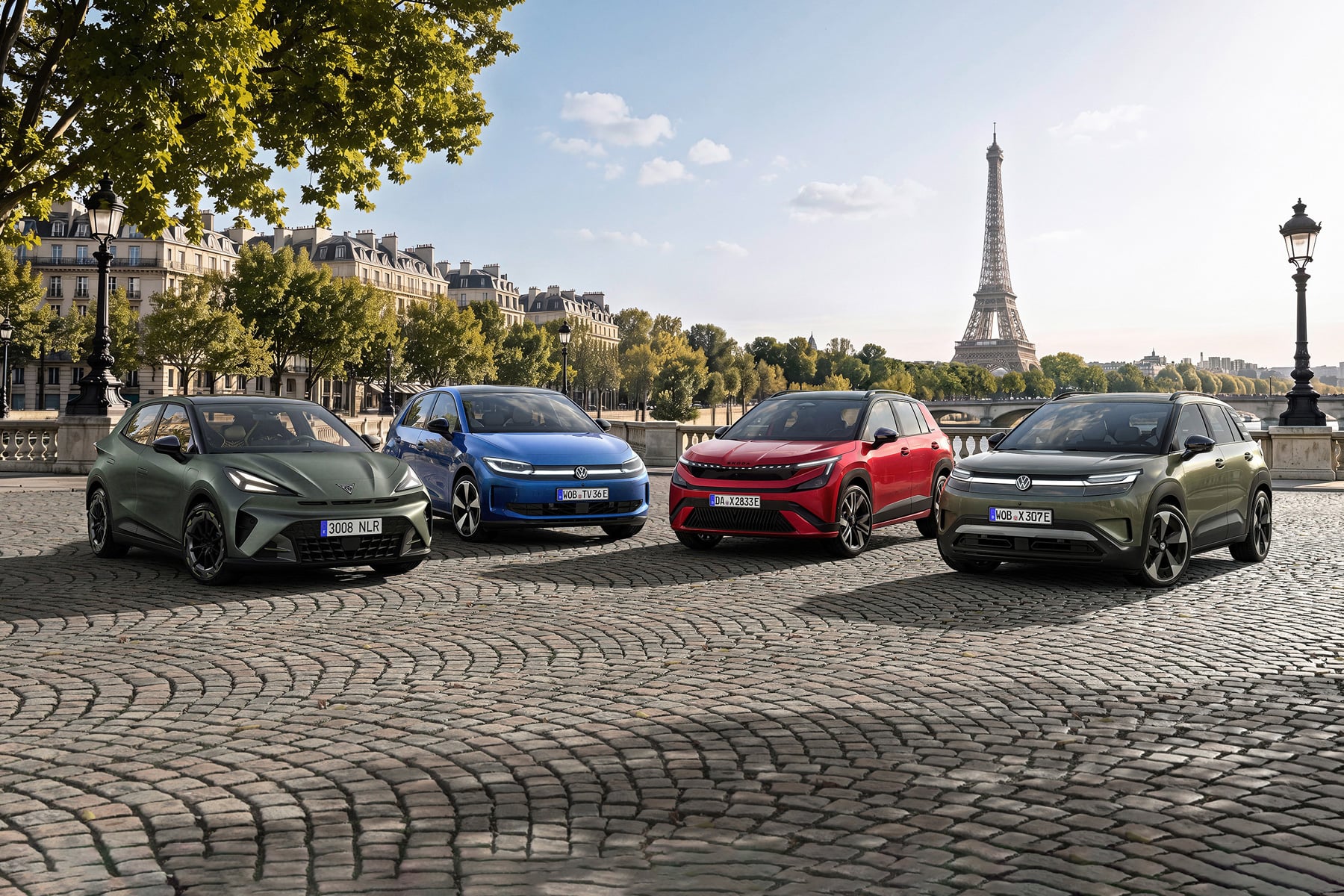
The Paris Motor Show has rediscovered its swagger. After years in which the French capital’s auto gathering seemed to be fading, this week’s edition tells a different story: Europe’s manufacturers have arrived with substantially refreshed lineups and a clear message that they have no intention of surrendering the electric vehicle arena to China without a fight.
Stellantis is leaning hard into character and nostalgia. Citroën has dusted off the 2CV as a concept — a sub-one-tonne EV slated for production in 2028 with a price tag of roughly €15,000, aimed squarely at budget-conscious buyers. Fiat, meanwhile, is reviving the Multipla, a nameplate that arguably never earned icon status, with a show stand styled as an Italian piazza. Opel’s Corsa GSE adds a sporty compact to the mix: a 281 PS hatchback that, on its familiar 54 kWh battery, won’t win endurance contests but stands out in a market flooded with bulky SUVs. Stellantis’s technical ambitions are buttressed by its partnership with Leapmotor, which was again on display in Paris.
Volkswagen’s core brand used the event to put flesh on its “True Volkswagen” strategy, now roughly a year old. The idea is to make electric models feel familiar rather than futuristic, and the visual alignment of the ID.Polo, ID.Cross and ID.Tiguan with their combustion-engine counterparts has been pulled off more convincingly than many expected — even if the underlying technology hasn’t shifted dramatically. The Group’s broader push into smaller segments is captured by its “Urban Electric Car Family,” spanning the Škoda Epiq, Cupra Raval and the ID.Cross/Polo trio. Audi, for its part, has reimagined the original A2 as the A2 e-tron, adapting the MEB platform to echo the original’s distinctive details.
Outside the retro spotlight, Korean brands quietly impressed again. Hyundai showed the Ioniq 3, Kia the closely related EV2, giving the two marques a credible electric offering from compact to full-size. Mercedes-Benz, which co-owns Smart with China’s Geely, is steering attention back toward compact and mid-size vehicles; with a thin current lineup in those segments, the eight-year-old A-Class has been thrust forward as evidence of a strategic reset.
Not everyone came to Paris. Porsche, BMW and almost all Japanese automakers stayed away, and some Chinese brands have also scaled back — Hongqi is absent, GWM skipped the last edition too, and even MG, a European success story, opted to remain at home. Yet the prevailing mood suggests the obituaries for the traditional motor show were premature. European industry has drawn a line in the sand, and French political backing for battery factories and reindustrialisation added to the sense that Paris, this year, mattered again.
What do you think?