
Obrist Files for Insolvency: The Firm That Stuffed a Gas Engine Into a Tesla Owes $37 Million
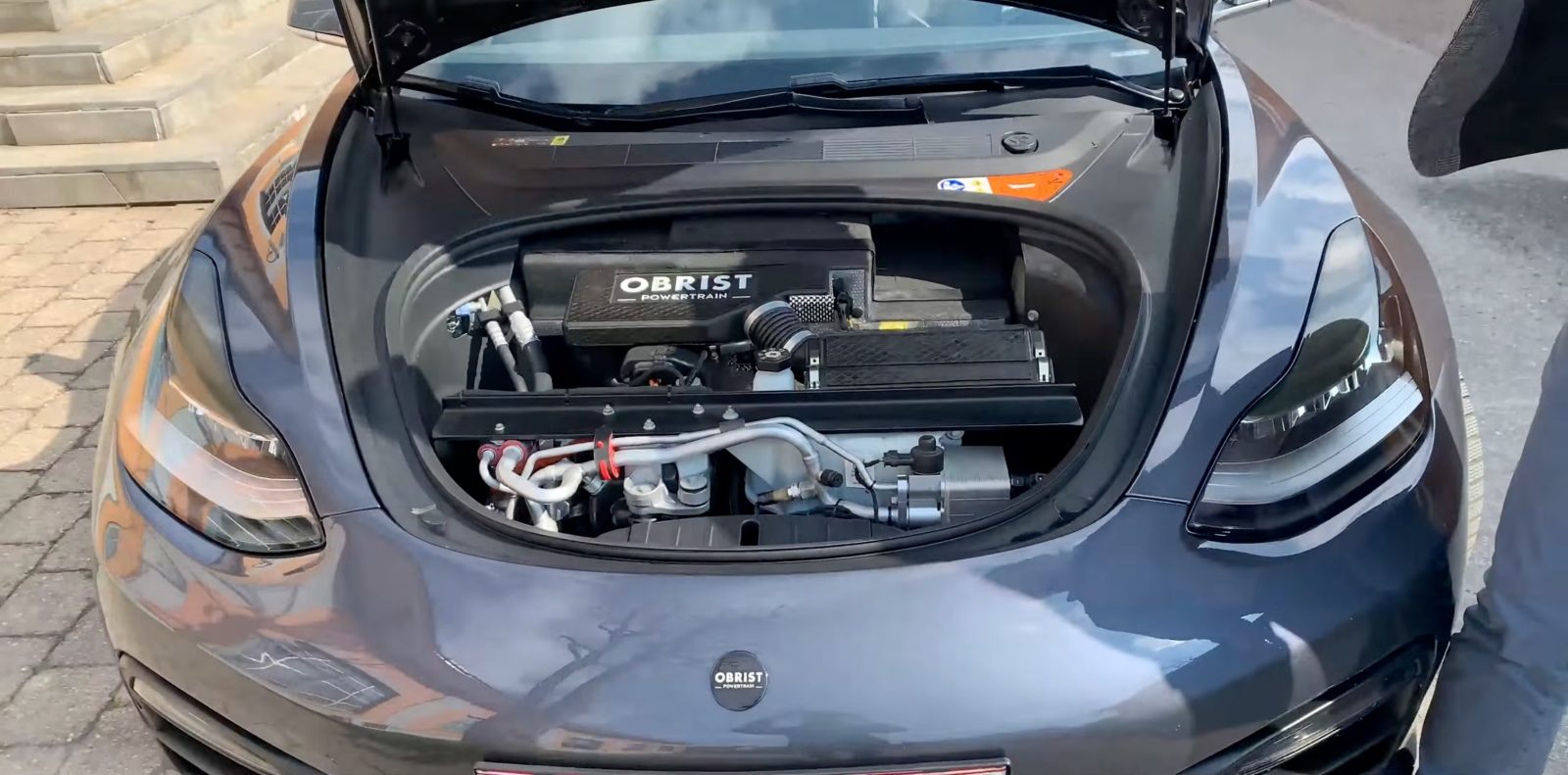
The Austrian engineering outfit that became a fixture of European auto shows by converting Tesla electric cars into gas-burning hybrids has collapsed. Three entities within the Obrist Group have entered insolvency proceedings, carrying combined liabilities of roughly €31.8 million — about $37 million — with no restructuring plan on the table.
At the end of September, the Feldkirch Regional Court in Vorarlberg opened proceedings against Obrist Powertrain GmbH and Obrist Technologies GmbH, both headquartered in Lustenau, after the companies petitioned for bankruptcy themselves.
- Powertrain unit’s burden: Obrist Powertrain, the division responsible for the “HyperHybrid” range-extender concept, owes around €18.85 million to 34 creditors and was down to nine employees at the time of filing.
- Patent-holding arm: Obrist Technologies, which controlled the group’s intellectual property for methanol production and CO2 capture, carries roughly €6.08 million in debt to 10 creditors and had already let its entire workforce go.
- German subsidiary: A third entity, Obrist DE — the group’s sales and development operation in Lindau — is also insolvent, with liabilities reported at about €6.8 million.
- No rescue attempt: Both Austrian companies informed the court that neither continuation nor restructuring was feasible, and they agreed to immediate shutdown. The parent firm, Obrist Engineering, which builds air-conditioning and thermal management components and employs about 30 people, was not included in the filings.
- Stated causes: Founder Frank Obrist pointed to years of steep development spending, unsuccessful investor negotiations and the broader crisis in Europe’s auto sector. Creditor protection group AKV added another factor: European manufacturers pivoting decisively toward battery-electric vehicles.
Why It Matters
Obrist’s signature demonstration was a Model 3 whose battery pack had been shrunk to 17.3 kWh and supplemented by a 40 kW two-cylinder generator mounted up front, with a claimed combined range of 1,000 km. The company said in 2020 that the powertrain had been licensed to an unnamed international partner, that vehicles using it would reach production by 2023, and that volume pricing would land near €4,500. No partner was ever identified and no vehicle shipped.
The messaging escalated over time — a Model Y prototype running on synthetic methanol branded “aFuel,” claims of climate-positive driving, and eventually an announced alliance with an Abu Dhabi-based fund for methanol plants across Namibia, Egypt, Thailand and the United States. Parallel to that, the firm lobbied Brussels to revisit the EU’s 2035 combustion ban, positioning its technology as a lifeline for the European industry.
Range extenders themselves are not a fringe idea; EREVs are posting strong sales in China and are spreading to other markets. The distinction is that Obrist never transitioned from licensing pitches to delivered product, and the problem it was designed to solve — limited EV range — shrank each year as batteries got cheaper and electric models improved. Its own bankruptcy filing now lists the industry’s electric shift among the reasons for its failure.
Source: Electrek
What do you think?