
Chery Brings iCaur to the UK as Fifth Brand Ahead of Possible Tariffs
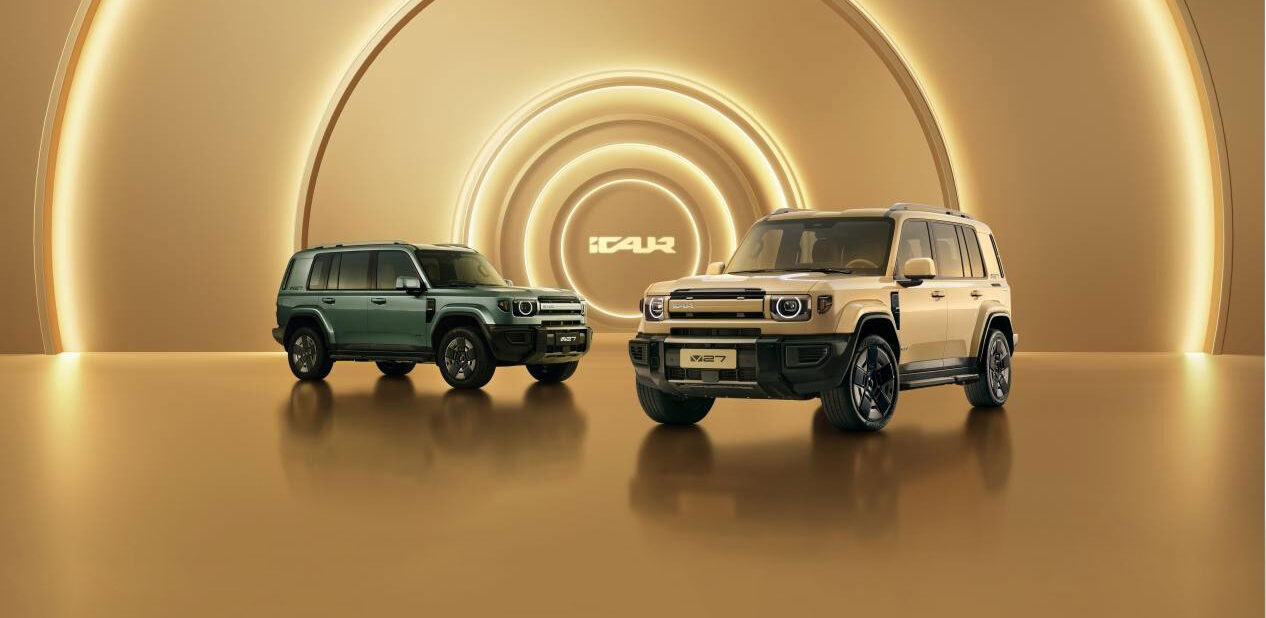
Chery is doubling down on Britain. The Chinese automaker has confirmed that iCaur will become its fifth UK nameplate, with a launch planned for early 2027 headlined by the V27 — an electrified SUV with squared-off styling that draws obvious comparisons to the Land Rover Defender. The strategy is straightforward: expand as widely as possible while the UK stays Europe’s most permissive market for Chinese-built vehicles, before London potentially mirrors Brussels and imposes duties of its own.
iCaur will not simply be folded into Chery’s existing local operation. It gets its own UK team and a dedicated dealer network, with partner Vertu lined up to open three iCaur sites by the middle of 2027. The five-seat V27 will be tuned for British roads at Chery’s new research and development facility at UTAC Millbrook. Elsewhere the model is sold chiefly as an extended-range electric vehicle, though UK specifications and pricing remain under wraps for now.
The numbers behind Chery’s UK push are hard to ignore. Its existing brands — Omoda, Jaecoo, Lepas and Chery — accounted for 7% of UK sales in 2026 to date, placing the group second only to Volkswagen, and combined share climbed to 9.4% in September. Chinese marques collectively now represent more than 20% of new UK registrations. Hybrids have done most of the heavy lifting; the Jaecoo 7 SUV, nicknamed the ‘Temu Range Rover’, has become one of the country’s best-selling vehicles outright in 2026, with plug-in hybrid versions making up over 80% of its volume.
That performance creates an uncomfortable situation with Jaguar Land Rover, Chery’s joint venture partner in China. JLR, which pointed to fierce competition when it announced 4,000 job cuts last month, maintains its models appeal to different customers, but its legal avenues are narrow after it failed in a 2020 attempt to trademark the original Defender’s silhouette — a ruling that had already opened the door for Ineos’ Grenadier. As JLR pushes further upmarket, Chery is chasing mainstream buyers who like Land Rover looks but cannot stretch to Land Rover prices.
Timing is the sharpest detail here. Earlier in October, reports suggested the UK government is weighing tariffs on Chinese-made EVs under pressure from Brussels to align with EU duties, though whether and at what level such levies would land is still unclear. Chery’s UK momentum would largely survive EV-specific tariffs, since the EU does not apply dedicated duties to hybrids — but only days ago the bloc negotiated a 350,000-unit annual cap on hybrid imports from China, effective from December. Should Britain decline to follow suit, excess Chinese volume could be redirected there; the V27’s extended-range layout might sidestep duties modelled on the EU’s EV-only regime, yet the hybrid quota shows how quickly such loopholes can shut. Chery appears to be hedging by localising production: it already builds cars in Spain through a joint venture, signed a June memorandum of understanding to share capacity at Nissan’s Sunderland plant, and is exploring options in France — with its French business chief Hanbang Yu telling Bloomberg that the company is “much faster than everybody” and that rooting itself in each market requires investment first. For now, the playbook is brands first, factories later.
Source: Automotive World
What do you think?