
Nio's William Li Reacts to Tesla's Flying Roadster: 'This We Really Don't Have'
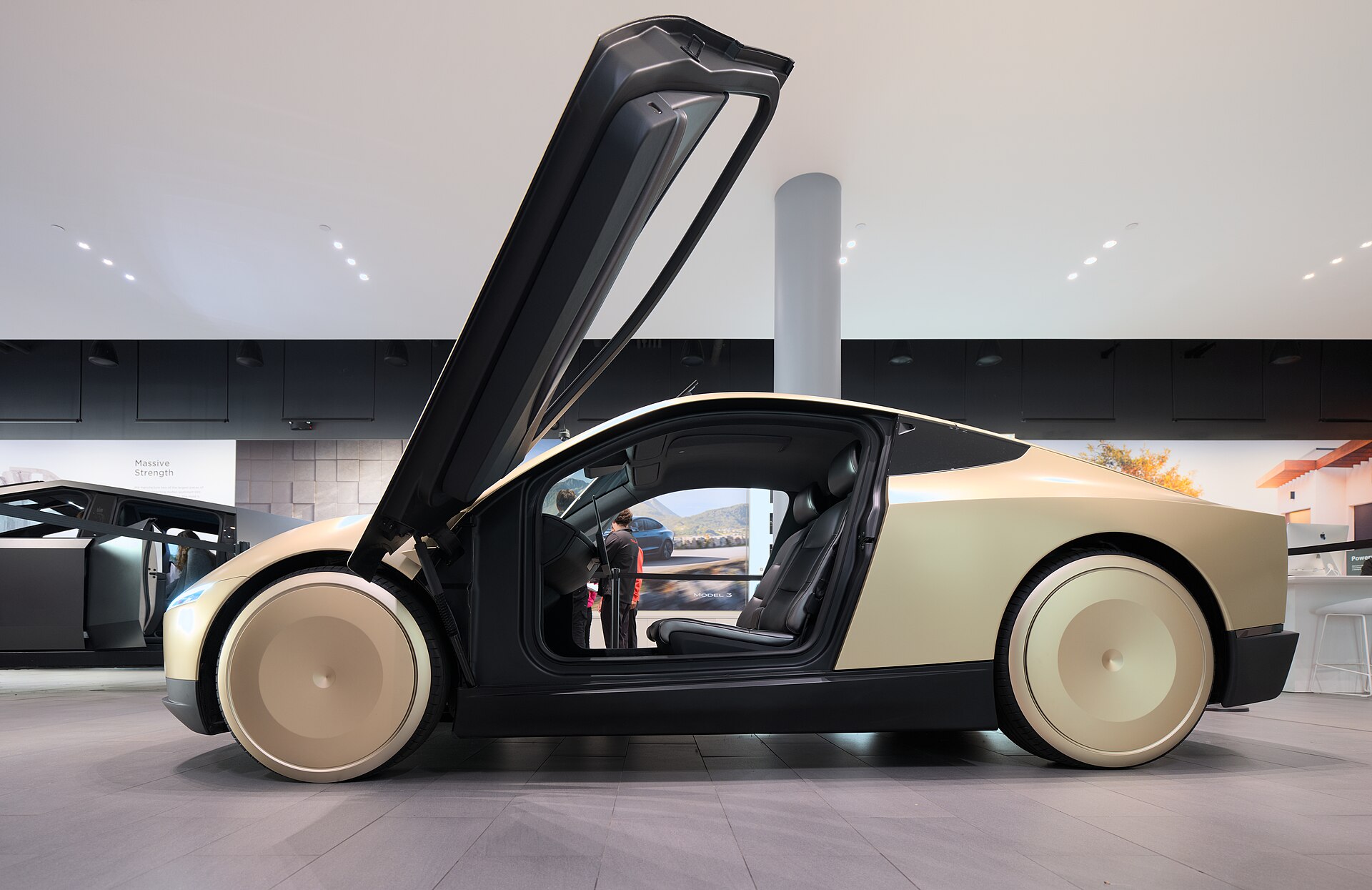
When Tesla showed off a second-generation Roadster lifting off the ground and hopping over one of its own Semi trucks at SpaceX’s McGregor, Texas test site, the stunt did more than turn heads — it dragged one of the Chinese EV industry’s most quoted lines back into the spotlight. Nio founder, chairman and CEO William Li took to Weibo on Friday to share a clip of the demonstration, writing: “Amazing! This we really don’t have. Kudos to Tesla.” He paired the post with a laughing-while-crying emoji, a nod to how far the comparison game has traveled since he first played it.
The line being resurfaced dates to 2018, when Li spoke at Tencent Academy about competing with Tesla and declared that whatever Tesla had, Nio had — and that Nio possessed things Tesla did not. At the time Nio was still readying deliveries of its first production vehicle, the ES8, and Tesla’s Model 3 had not yet reached Chinese buyers, so the boast landed without much friction. Years of Model 3 and Model Y volume growth, plus Tesla’s advances in Full Self-Driving and robotics, have kept the quote circulating in comment sections ever since, and the Roadster reveal gave it fresh fuel.
What Tesla actually demonstrated is a vehicle using a fan-based suction system and cold-gas thrusters to drive up a ramp, flip midair, land and clear other Teslas. The thrusters, engineered jointly by Tesla and SpaceX staff, produce lift by releasing high-pressure gas rather than burning fuel. Tesla’s US site lists three Roadster variants — Performance, Thrust and Rocket — with only the Rocket version capable of flight. That trim seats a single occupant, supports brief lift-offs using body-mounted thrusters for upward thrust and attitude control, is offered to invited customers only and has not been cleared for public roads.
In China, Tesla’s site is taking reservations solely for the Performance version, which does not carry the full flight system, against a fully refundable deposit of 332,000 yuan (about $49,390). Elon Musk has pointed to 2028 for production, a target that has slipped repeatedly since a prototype was first shown in 2017.
The spectacle also drew a measured response from Xpeng chairman and CEO He Xiaopeng, who called the car “a very cool flying car in another form” on Weibo. He cautioned that real-world deployment hinges on flight safety and figures such as range, and that no company can sidestep flight certification — type certification in particular — which demands sustained effort worldwide. He said he hopes progress on that front speeds up. Xpeng’s flying-car arm, Aridge, is developing its own aircraft and aims to reach mass production using automotive-style assembly lines, putting the two companies on converging paths even as one jokes about what it lacks.
Source: CnEVPost
What do you think?