
Turning a 2JZ-Swapped BMW E46 M3 From Track Weapon Into Street Car
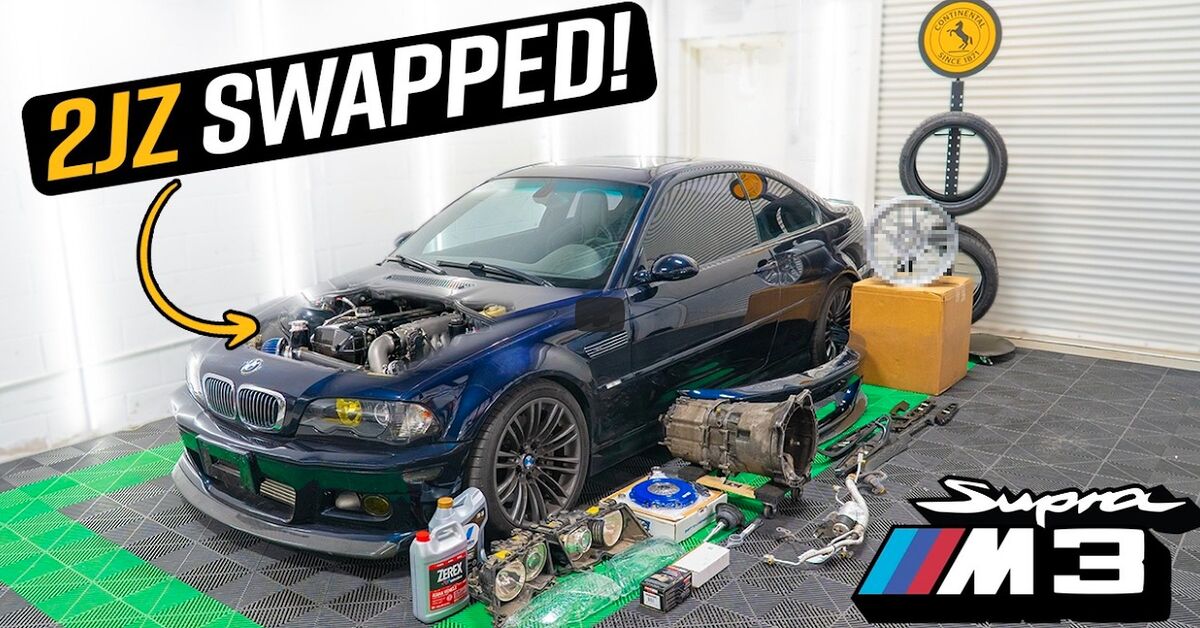
Swapping Toyota’s celebrated 2JZGTE inline-six into a BMW E46 M3 is one way to build a serious track machine, but living with such a car every day is another matter entirely. Speed Academy’s Peter Tarach and Dave Pratte built their 2JZ-powered M3 roughly five years ago with competition use in mind, and in their latest build episode they set about undoing some of the compromises that come with a motorsports-first setup. The aim is straightforward: keep the performance while dialing in comfort and road manners.
The centerpiece of this round of work is the shift mechanism. The car had been running a pure racing shifter, and the team wanted something closer to a factory BMW unit. The engine swap complicates that ambition. Because the 2JZ sits behind an adapter plate, the gearbox is pushed farther rearward than BMW intended, so the shift rod had to be shortened. An initial test fit proved inconclusive, pushing the crew to pull the transmission entirely. That job fought back: the engine’s oil pan blocked access to the upper bellhousing bolts, forcing them to drop the subframe slightly for clearance.
With the gearbox on the bench, two changes went in. The harsh motorsport clutch gave way to a more street-friendly 2 Plus unit whose organic friction material should engage more smoothly while still coping with the engine’s output. The transmission also received detent hardware to center the shifter and restore a conventional feel, which required machining and threading the original SMG housing to accept the parts, a practical workaround given how scarce complete manual bellhousings have become. Reinstalling everything brought a fresh snag: the clamp on the shortened shift rod fouls the driveshaft’s flexible guibo coupling, and an attempt to weld the rod ended with too much heat damaging the piece. The team openly acknowledged the error, leaving that detail for later.
Brake work delivered the episode’s cleanest win. A rear line had corroded above the fuel tank, so the tank came down (easier than expected) and only the damaged section was cut out. Using copper-nickel tubing for its bendability and corrosion resistance, the crew flared new fittings, bent replacement lines along the original route, joined them with unions and bled the system, confirming no leaks before the tank went back in. Separately, a team member looked into the clicking from the front two-piece floating StopTech rotors, a normal trait of motorsport hardware that owners of street cars find irritating. Converting them to a fixed setup turned out to be trickier than assumed, since this early rotor design uses flat Inconel washers and taller bobbins rather than the reversible conical washers of later versions. A specialist at Mountain Pass Performance suggested swapping washer types and orientation, but the hardware is not yet in hand, so that job waits for a future installment.
The broader theme is one familiar to anyone who has modified a car beyond factory spec: every track-oriented choice carries a daily-driving tax. Clutches, shifters and brake hardware that shine on circuit become noise and effort in traffic, and undoing those choices often means re-engineering packaging that the original manufacturer never had to solve. For fans of the E46 and the 2JZ alike, the build remains an appealing case study in balancing two very different briefs in one chassis.
Source: The Truth About Cars
What do you think?