
Nio Hits 500 Battery Swap Stations in Guangdong as Provincial Swaps Top 17 Million
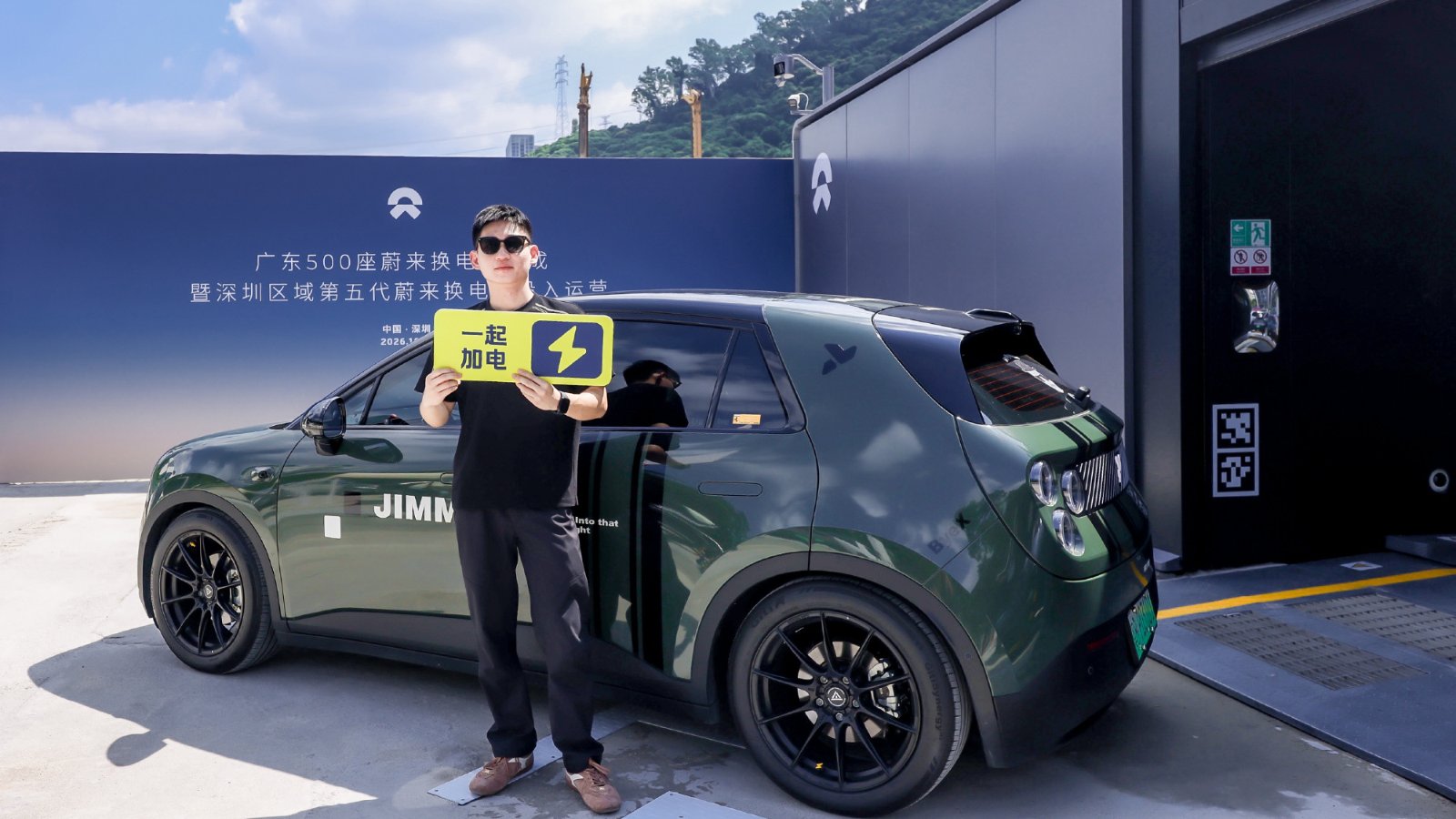
Nio has pushed its battery swap footprint in Guangdong past the 500-station mark, a symbolic threshold for the company’s energy arm in one of China’s wealthiest and most densely populated provinces. The automaker said the milestone was reached after new fifth-generation swap sites opened simultaneously in six cities — Guangzhou, Shenzhen, Huizhou, Dongguan, Foshan and Zhuhai — each contributing one station to the provincial total.
The numbers behind the network help explain why Nio keeps pouring resources into Guangdong. Roughly 13 percent of all battery swaps the company has ever completed in China happened in the province. Nio also reported that its vehicle sales there climbed 76.3 percent year-on-year across the first eight months of 2026 — a steeper gain than its national performance, where deliveries for the same period reached 262,893 units, up 57.92 percent. Guangdong’s weight is hard to overstate: it is among China’s largest provincial economies, with a permanent population of 129 million as of 2025, making it a natural testing ground for high-frequency energy services.
Nio’s strategy in the region has visibly shifted. Rather than chasing first-time coverage, the company is now focused on densifying its footprint. It says both its charging and swap networks already reached all 122 county-level administrative areas in Guangdong during 2025, part of its broader Power Up Counties initiative. When Nio announced full county-level swap coverage in April 2025, it operated 428 stations in the province — meaning 72 more have been added since. Highway travel is a parallel priority: 101 stations line Guangdong’s expressways, supporting more than 3 million swaps along corridors such as the Shenyang-Haikou Expressway, the Beijing-Hong Kong-Macao Expressway and the Pearl River Delta Ring Expressway.
Nationally, Nio reported 9,584 charging and swap stations in China as of October 11, including 4,176 swap locations, 1,073 of which sit along highways. Its highway network spans nine north-south routes, eleven east-west routes and sixteen major urban clusters, linking more than 550 cities. The company frames this infrastructure as a differentiator that drives vehicle sales rather than a cost center, an argument it has been making as swap usage accelerates — nationwide cumulative swaps crossed the 100 million mark in February 2026 and had already passed 120 million by August.
Guangdong’s new milestone also lands amid a changing ownership picture for Nio’s energy business. Geely agreed in late September to take a 30 percent stake in Nio Power, contributing battery swap assets and cash, a deal Nio chief William Li described as an effort to share infrastructure and ease destructive price competition in China’s EV market. How that partnership shapes the pace of station rollouts in Guangdong and beyond will be a key question for the months ahead.
What do you think?