
Musk Signals Thanksgiving Window for Starship's First Ship Catch
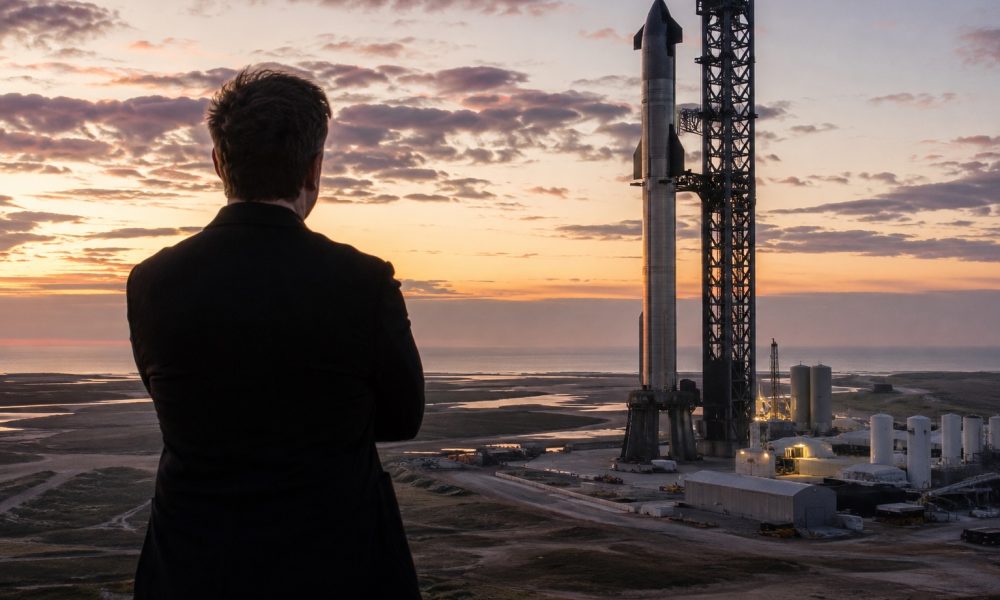
SpaceX is preparing to attempt something it has never done before: plucking Starship’s upper stage out of the sky with the launch tower’s mechanical arms. Speaking to a crowd of roughly 2,000 people at the X Takeover gathering at Giga Texas, Elon Musk said Flight 15 sits about four to six weeks out and will likely lift off shortly before Thanksgiving. That timing marks a delay from earlier reports that had pointed to a launch as soon as October 19.
According to Musk, the schedule keeps sliding because SpaceX keeps reworking the vehicle between each test. He noted that the changes often number in the hundreds, sometimes thousands, and this round is comparatively short — though a few items require crews to enter the propellant tank itself. If the catch succeeds, Musk argued, it would represent the first full recovery of an orbital-class rocket. SpaceX has already caught the Super Heavy booster with the tower arms and has discussed catching the ship since late 2025, but the upper stage has never been recovered this way.
The broader ambition is reusability on both halves of the stack. Musk described Flight 16 as a milestone in which every part of an orbital rocket would be flown again. Up to now, each Starship upper stage has ended its mission in the ocean, and SpaceX anticipates most of those splashdowns ending in destruction. A ship that returns to Starbase in one piece could instead be inspected and relaunched, which ties directly into the company’s stated goals of slashing launch costs and enabling high-tempo operations — its IPO filing describes Starship V3 as capable of delivering 100 metric tons to orbit in a fully reusable configuration and tower catches as a path toward multiple launches per day.
The stakes extend well beyond launch economics. The next-generation Starlink V3 satellites are too big for Falcon 9 and can only ride Starship, carrying up to 60 per flight. During the September 28 Flight 14, the vehicle reached orbit and deployed the first 26 of them despite an early engine shutdown; Musk attributed the cutoff to engine computer software and praised the heat shield’s durability. NASA’s lunar architecture relies on the same capability, with an inspector general report describing a lander mission that needs a propellant depot in low Earth orbit and more than ten tanker flights, targeting one tanker launch every six days. None of that cadence works unless ships and boosters return quickly — and ship-to-ship propellant transfer remains untested. Another open question is what happens when the ship comes back over land toward the launch site, a scenario certain to draw intense aviation safety scrutiny.
What do you think?