
Ohio State Opens Federal-Funded Lab to Put Trucks and Buses Under the Microscope
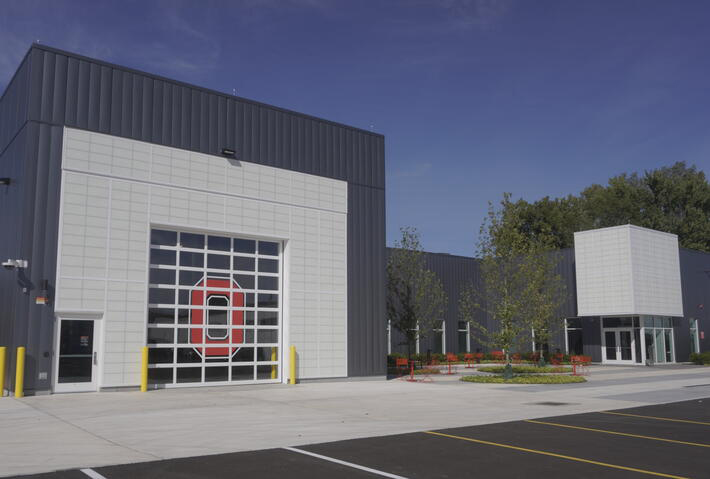
Ohio State University has wrapped up construction on a new research hub devoted to heavy-duty vehicles, the Commercial Vehicle Innovation Laboratory (CVIL), a 10,000-square-foot site built with backing from the US Federal Transit Administration. Under the agency’s Component Assessment Program, the university has drawn roughly US$28.5m since 2017, money that has gone toward construction, testing work and ongoing research.
The rationale for federal involvement comes down to a striking fuel mismatch. Trucks and buses account for less than a tenth of the vehicles on US roads, yet they burn more than a quarter of the nation’s transportation fuel, per Department of Energy figures. That gap is why even small efficiency improvements across a fleet can translate into outsize savings, according to David Cooke, Senior Associate Director of the university’s Center for Automotive Research (CAR).
Inside CVIL’s high-bay building, labs are set up to evaluate powertrain and energy systems for transit buses and trucks. CAR also carries out testing of public transport technologies under FTA agreements. Because bus and truck powertrains are diversifying, independent verification of this sort gives transit agencies a yardstick that goes beyond what manufacturers report. The programme also envisions new test procedures and training for fleet managers, and students take part in every initiative.
CAR Director Giorgio Rizzoni framed the facility as a natural fit for the region. Ohio, he noted, sits at a logistics crossroads and hosts commercial vehicle manufacturers and suppliers, making passenger and freight operations central to the state’s economy. The new lab, he said, will support applied research aimed at advancing the next generation of commercial vehicle technologies.
By anchoring testing capacity in a state where freight and transit activity converge, the facility positions academic researchers as a neutral party in a sector where electrification and alternative fuels are multiplying the number of powertrain options fleets must weigh.
What do you think?